
 Museum
Luminaries · Born this day, 23 June 1912
Alan Turing
Mathematician, codebreaker, and one of the founders of computer science
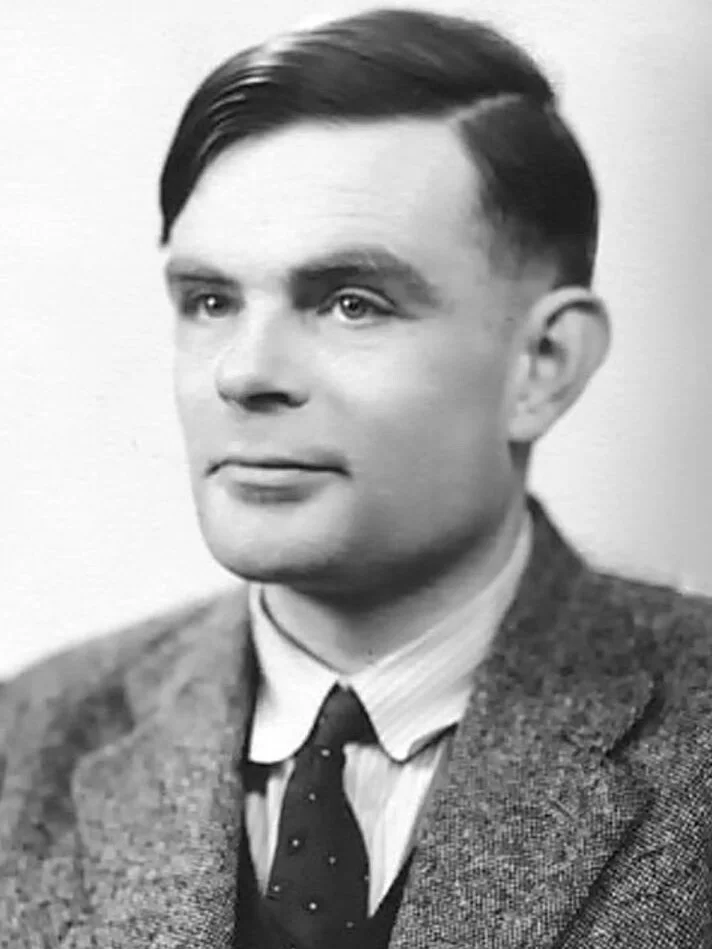
He imagined the modern computer before one existed, and his codebreaking helped bring the Second World War to a faster end. He is also one of the clearest examples of what this museum exists to remember: a person of extraordinary gifts whom the law of his own country punished simply for being who he was. Alan Turing was prosecuted in 1952 for a relationship with another man. The state that owed him so much chose to break him. The apology came in 2009, the royal pardon in 2013, and his face on the fifty pound note in 2021. He did not live to see any of it.
We mark his birthday, 23 June, by telling his story plainly, sourced to the published record, and by being honest about the one part of it that historians still debate.
1912
Born in Maida Vale, London, on 23 June.
1936
Describes the "universal machine," the idea at the root of every computer.
1939–45
Leads Hut 8 at Bletchley Park, breaking German naval Enigma.
1950
Asks "Can machines think?" and proposes what we now call the Turing test.
1952
Convicted of "gross indecency" for a relationship with a man.
1954
Dies at 41 of cyanide poisoning, on 7 June.
2013
Granted a royal pardon, 59 years after his death.
2021
Honored on the Bank of England fifty pound note.
The machine in his mind
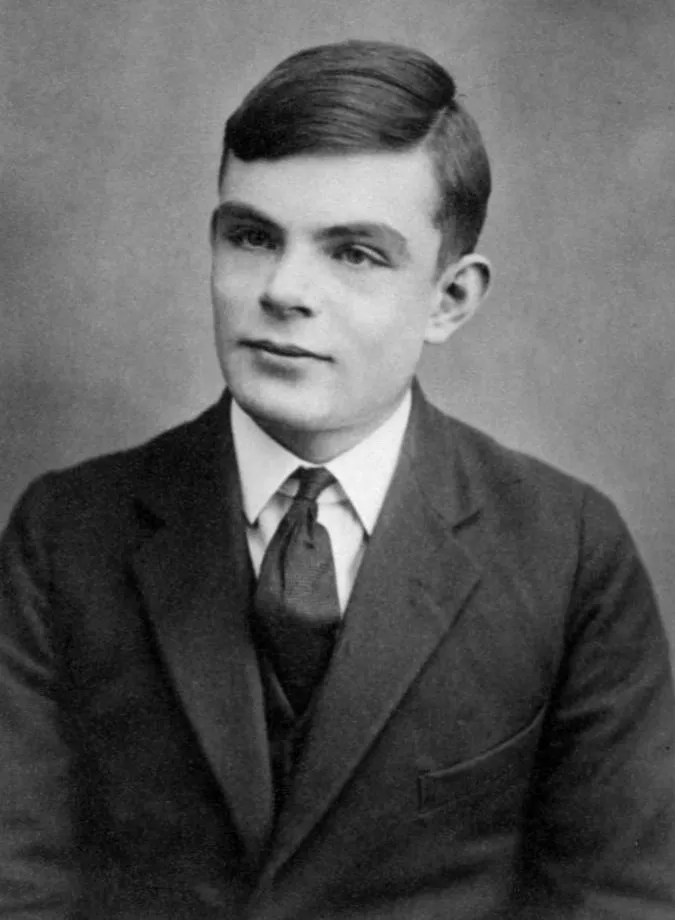
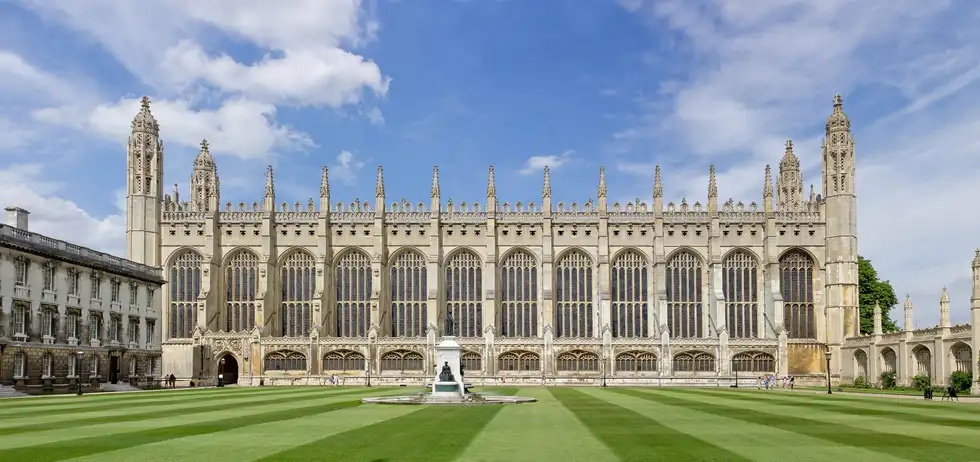
In 1936, while still in his twenties, Turing published a paper with a forbidding title, On Computable Numbers, with an Application to the Entscheidungsproblem. Inside it he described an imaginary device, a machine that could read and write symbols on an endless strip of tape and follow a simple table of rules. He showed that a single such machine, given the right instructions, could carry out any calculation that any other could. We call that idea the universal Turing machine, and it is the conceptual seed of every computer and phone in the world today. He went on to earn his doctorate at Princeton in 1938, under the logician Alonzo Church.
The war he helped end
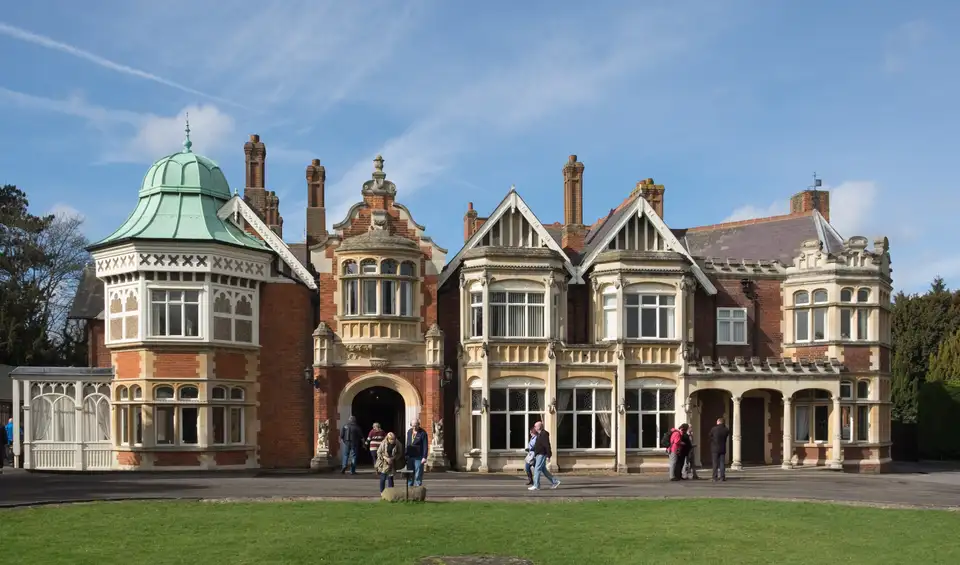
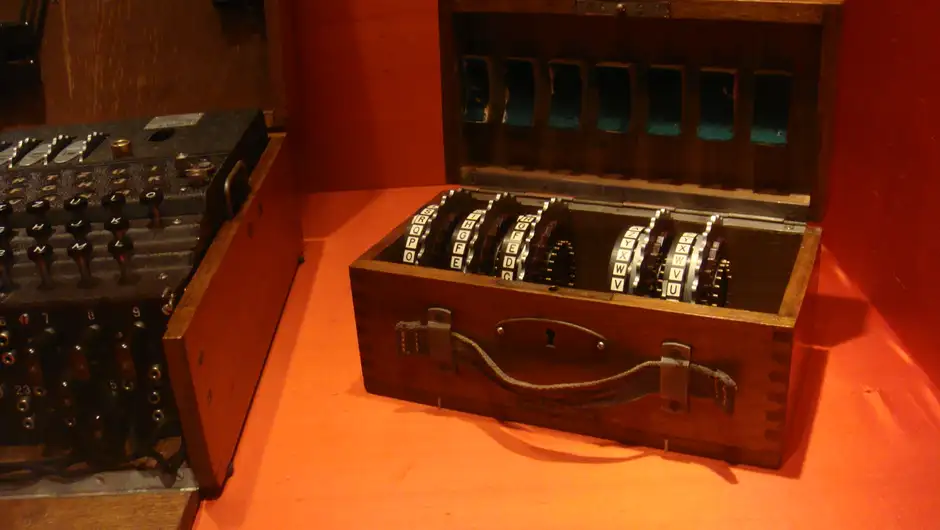
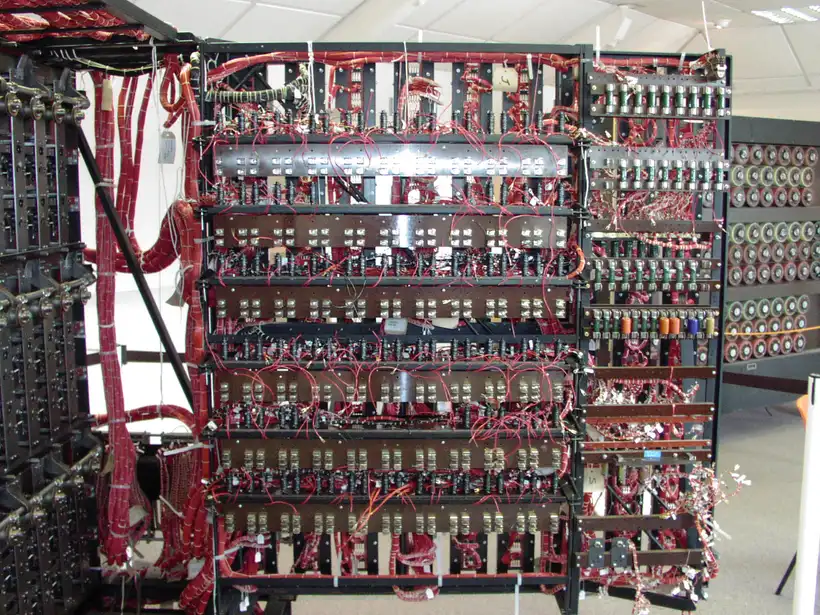
When war came, Turing went to Bletchley Park, Britain's secret codebreaking center, and led Hut 8, the section attacking the German navy's Enigma cipher. Building on earlier work by Polish mathematicians, he and Gordon Welchman designed the Bombe, an electromechanical machine that could tear through millions of Enigma settings to find the day's key. The intelligence it unlocked, known as Ultra, helped protect the Atlantic convoys that kept Britain fed and armed.
How much did it matter? The official historian of British wartime intelligence, Sir Harry Hinsley, estimated that Bletchley Park's work shortened the war in Europe by more than two years. That is an estimate, not a measured fact, and it credits the whole of Bletchley rather than any one person. But it gives a sense of the stakes of the work Turing led. He was appointed an Officer of the Order of the British Empire in 1946 for his wartime service, an honor given quietly, since the work itself stayed secret for decades.
Can a machine think?
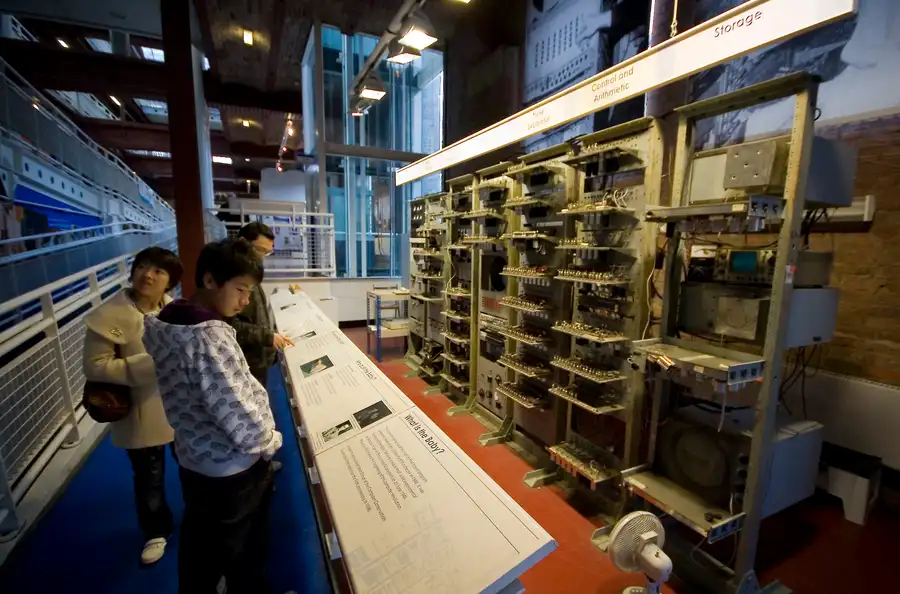
After the war Turing kept building. He helped design some of the earliest stored-program computers, in London and then in Manchester, and in 1951 he was elected a Fellow of the Royal Society. In 1950 he published a paper in the philosophy journal Mind that asked a question people are still arguing about: can machines think? Rather than try to define thought, he proposed a game. If a person trading written messages cannot reliably tell a machine from another human, he argued, then the question of whether the machine is "really" thinking may not be worth asking. He called it the imitation game. We call it the Turing test, and it remains a touchstone every time a new artificial intelligence appears.
"We can only see a short distance ahead, but we can see plenty there that needs to be done."
Alan Turing, closing line of "Computing Machinery and Intelligence," Mind, 1950.Prosecuted for who he loved
In January 1952 Turing's house in Manchester was burgled. When he reported it to the police, he spoke openly about his relationship with a young man named Arnold Murray. The police charged them both under Section 11 of the Criminal Law Amendment Act 1885, the same "gross indecency" law that had sent Oscar Wilde to prison in 1895. Turing did not deny the relationship. He was convicted.
Given a choice between prison and probation conditioned on medical "treatment," he chose the treatment: a course of injections of synthetic oestrogen meant to suppress his sex drive, what is now plainly called chemical castration. He lost the security clearance that had made his wartime work possible. A man who had served his country at the highest level was now, in the eyes of its law, a criminal to be managed.
A death still debated
On 8 June 1954 Turing was found dead at his home. He was 41. The cause was cyanide poisoning, and a half-eaten apple lay beside his bed. The coroner's inquest ruled it suicide, and that has been the common account ever since.
It is worth saying clearly what is settled and what is not. The suicide verdict is the official inquest finding. But some scholars, the philosopher and Turing biographer Jack Copeland among them, have argued that the evidence would not meet today's standard for that conclusion. Turing had been electroplating spoons with a cyanide solution in his small spare room, and Copeland holds that accidental inhalation is at least as consistent with the facts. The apple was never tested for cyanide. We present the suicide ruling as the official one, and the dispute as a real and unresolved question, because the museum does not turn a contested point into a certainty.
An apology, a pardon, a banknote
For decades Turing's name was kept out of the public story of the war by the secrecy around Bletchley Park, and out of the public story of gay rights by the shame the law had attached to him. That changed slowly. In 2009, after a public campaign, Prime Minister Gordon Brown issued an official government apology for the way Turing had been treated. In 2013 he received a royal pardon, which came into effect on 24 December that year. And in 2017, the law that did so became the basis for what the press named the "Alan Turing law," extending pardons to thousands of other men who had been convicted under the same repealed offenses.
The honors that his lifetime denied him have since multiplied. The most prestigious award in computing, given each year by the Association for Computing Machinery, is the Turing Award, often called the Nobel Prize of computing. And on 23 June 2021, his birthday, the Bank of England issued a new fifty pound note bearing his face, his birth date written in the binary code he helped make legible to machines, and a technical drawing of the Bombe.
How we hold this story
Turing was prosecuted under a law written to punish sex between men, and he is rightly remembered as a gay man. We describe his persecution in the terms the record supports, we keep the official inquest verdict and the scholarly dispute over his death clearly separate, and we attribute estimates, like the length of war his colleagues' work may have saved, to the people who made them. The point of telling it carefully is not caution for its own sake. It is that a life this consequential deserves the truth, not a tidy legend.
Connected in the museum
Sources
- Stanford Encyclopedia of Philosophy, "Alan Turing." plato.stanford.edu/entries/turing (the 1936 universal machine, the 1950 Mind paper, Fellowship of the Royal Society).
- Wikipedia, "Alan Turing." en.wikipedia.org/wiki/Alan_Turing (birth, Princeton 1938, Hut 8 and the Bombe, OBE 1946, the 1952 charge with Arnold Murray, the oestrogen treatment, Hinsley's estimate).
- UK Government, "Royal pardon for WW2 code-breaker Dr Alan Turing," 24 December 2013. gov.uk (the 2009 apology and the 2013 pardon).
- Bank of England, the polymer fifty pound note. bankofengland.co.uk (issued 23 June 2021; the binary birth date and Bombe drawing).
- Association for Computing Machinery, the A.M. Turing Award. amturing.acm.org.
- On the disputed cause of death, see the work of Jack Copeland, summarized in History News Network, "Alan Turing: Inquest's Suicide Verdict 'Not Supportable.'"
History you can trust, kept on purpose
The South Coast LGBTQ+ Museum gathers and verifies the LGBTQ+ history that was so often left out. Walk the halls, or help us add a name we are missing.