Where New Bedford, Fall River & the regionWhen the 1980s onwardFor the ones we cannot yet name
This exhibit tells the history of the AIDS epidemic on the South Coast. It describes serious illness, death, and grief, and honors the people the community lost. Please take it at your own pace.
If you need support right now: call or text 988, the Suicide and Crisis Lifeline, or reach The Trevor Project.
Chapter 0
Before you enter
This exhibit is about an epidemic, the people it took, and the people who refused to look away. It is a memorial first.
Content note
What follows describes serious illness, death, and grief, in a time when fear and stigma made both worse. Take it gently. Support resources are at the end.
How we tell this story
We will never name an individual's HIV status, then or now. We do not out the living or the dead. And we will not invent what the record does not hold: this region's AIDS history is, in large part, undocumented, and we say so plainly rather than fill the silence with guesses. What we can prove, we honor. What we have lost, we hold space for.
Chapter I
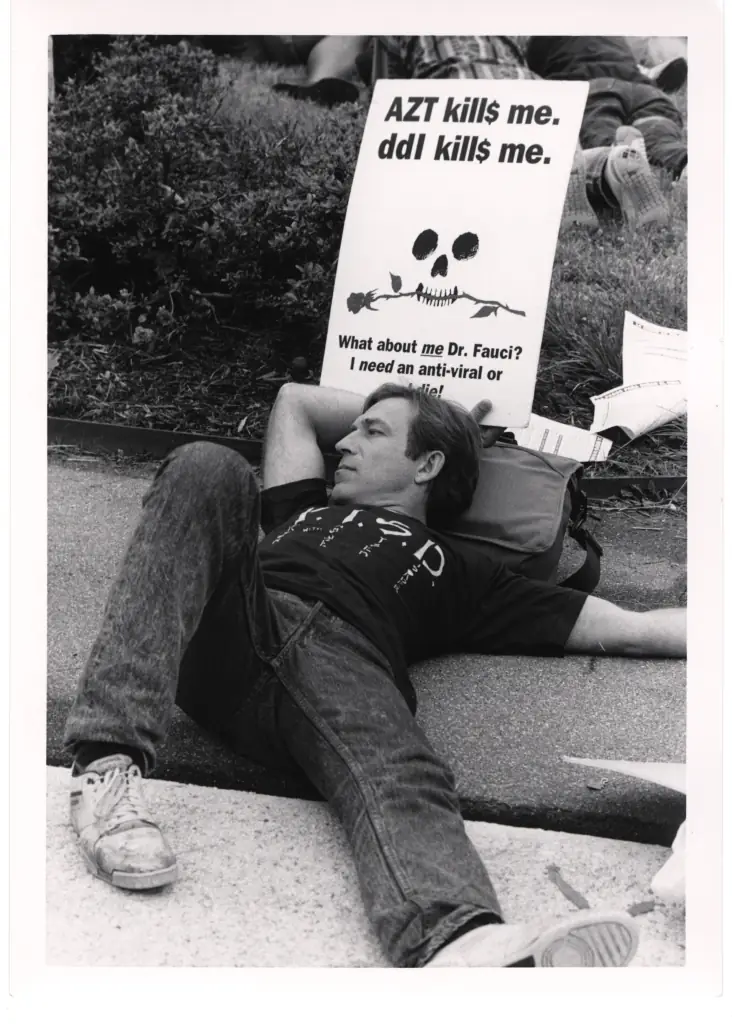
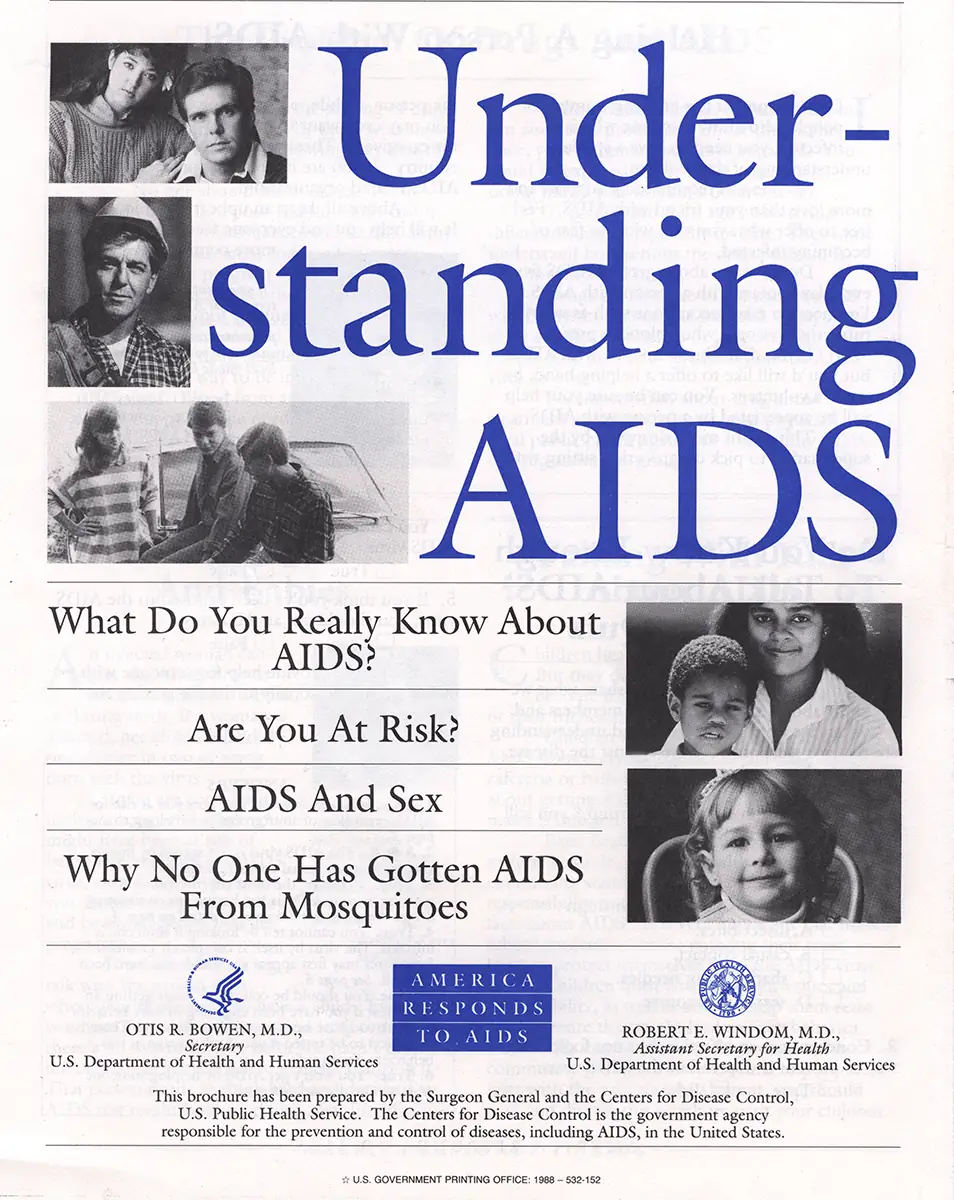
May 1990, about a thousand activists march on the NIH campus demanding faster AIDS research. NIH History Office (National Institutes of Health). Public domain.Understanding AIDS, 1988, the federal mailing that reached every American household. U.S. Surgeon General and Centers for Disease Control, U.S. Public Health Service. Public domain.
A silence on the coast
Nationally, the story is well known. AIDS was identified in 1981; within a decade it had killed tens of thousands of Americans, fell hardest on gay and bisexual men, and forced a community to become its own caregivers, fundraisers, and activists when institutions turned away.
On the South Coast, the story is harder to tell, because so little of it was written down. We have found no named, standalone South Coast AIDS organization from the 1980s or 1990s, no record of a local ACT UP chapter, and no surviving local death toll. That absence is not the same as absence of suffering. It is the documentary silence that this exhibit, and this museum, exist to break.
National context, labeled
The wider history of the epidemic and its activism is national context here. The South Coast's own record is what we are working to recover.
Verified the national arc. Unknown the local organizational and mortality record.
Chapter II
The bar became a lifeline
Where the bigger institutions hesitated, a gay bar stepped in. During the crisis, a New Bedford support group raised thousands of dollars at fundraisers held at Le Place, the city's gay bar, for local people living and dying with the disease. The dance floor became a place of care.
Verified the fundraisers. Unknown the support group's full name, its organizers, and the totals raised.
Source: The New Bedford Light, 2022.
Chapter III
Where care was found
The most fully documented thread of the region's AIDS history is the building of care, much of it through community health institutions that quietly carried HIV patients for decades.
Greater New Bedford Community Health Center.Verified
The center received its first Ryan White HIV grant in 1990 (about $110,000), launched an HIV pediatric program in 1992, and in 2010 dedicated the Laurel A. Miller Center, where HIV primary care is still delivered in an integrated model that protects patients' privacy.
SSTAR, Fall River.Verified
Founded in 1977, SSTAR runs Project AWARE, providing HIV case management and street outreach, including a mobile outreach vehicle, across Fall River and New Bedford.
Steppingstone, Fall River.Verified
Founded in 1972, Steppingstone ran an HIV/AIDS Residential Support Service Program from 2006, and in 2012 opened "Welcome Home," fifteen subsidized apartments in New Bedford for people living with HIV/AIDS.
Seven Hills Behavioral Health.Verified
Runs HIV and STI screening and Community Wellness Centers across New Bedford, Fall River, and Taunton, with street outreach to shelters and local jails.
The care came from the community itself, long before the commemorations did.
From the museum's research
Unknown the founding date of Project AWARE and the full early history of HIV care at both institutions.
Sources: Greater New Bedford Community Health Center history; SSTAR program materials; Steppingstone Inc. history; Seven Hills Behavioral Health.
Chapter IV · In memoriam
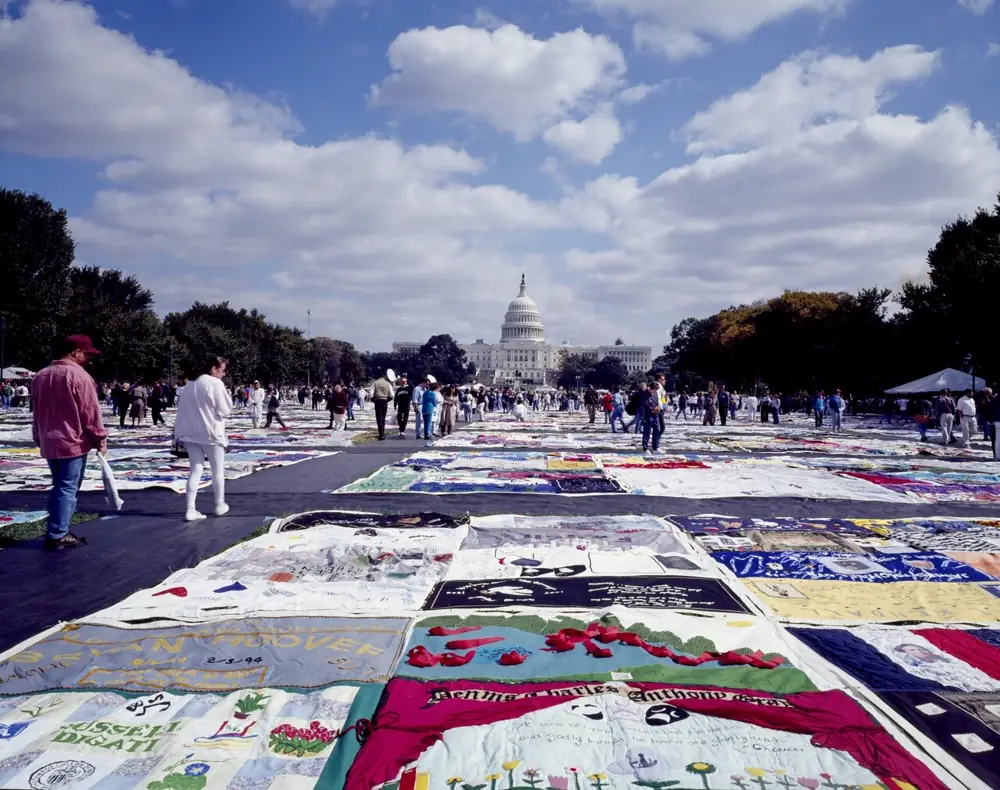
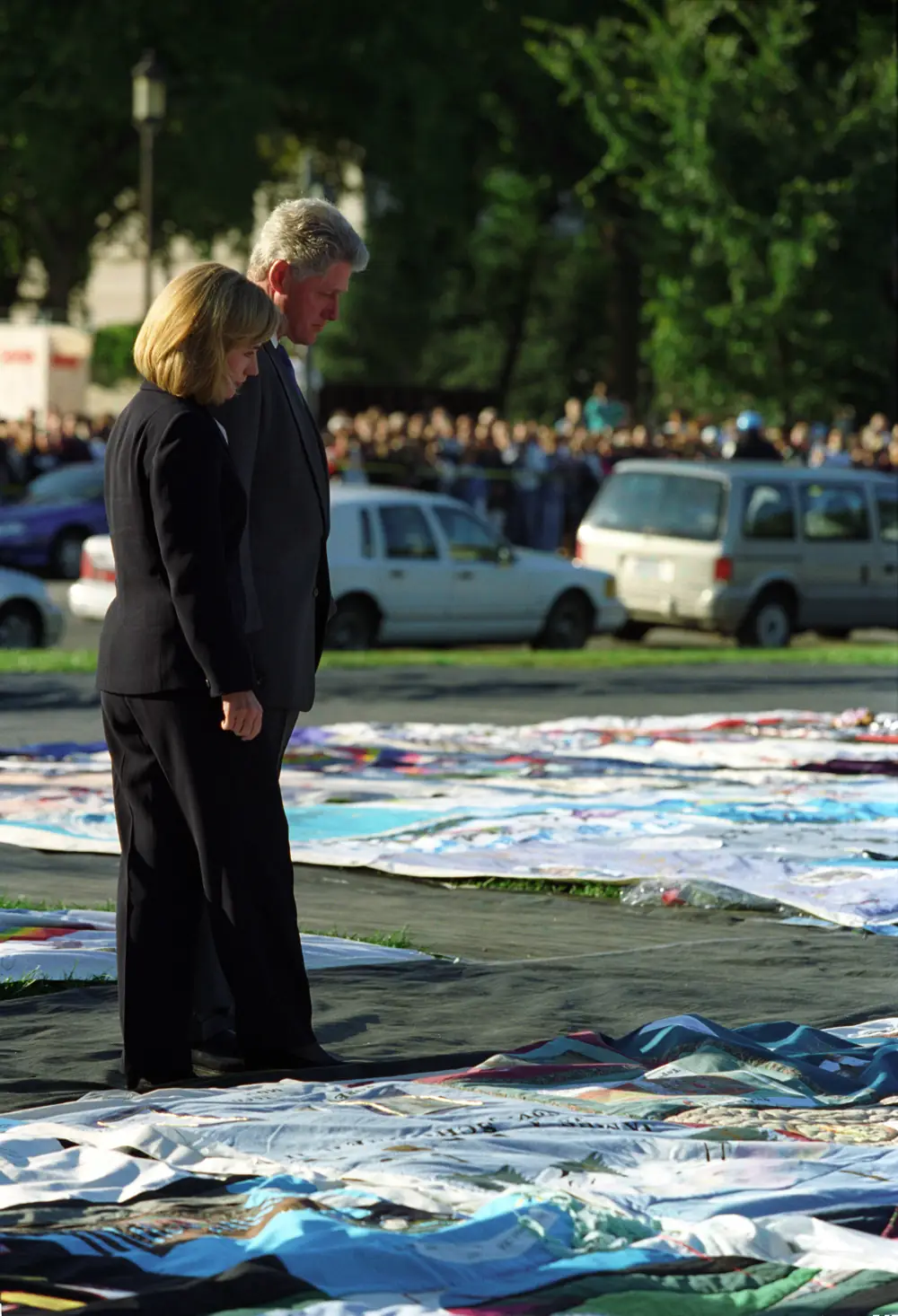
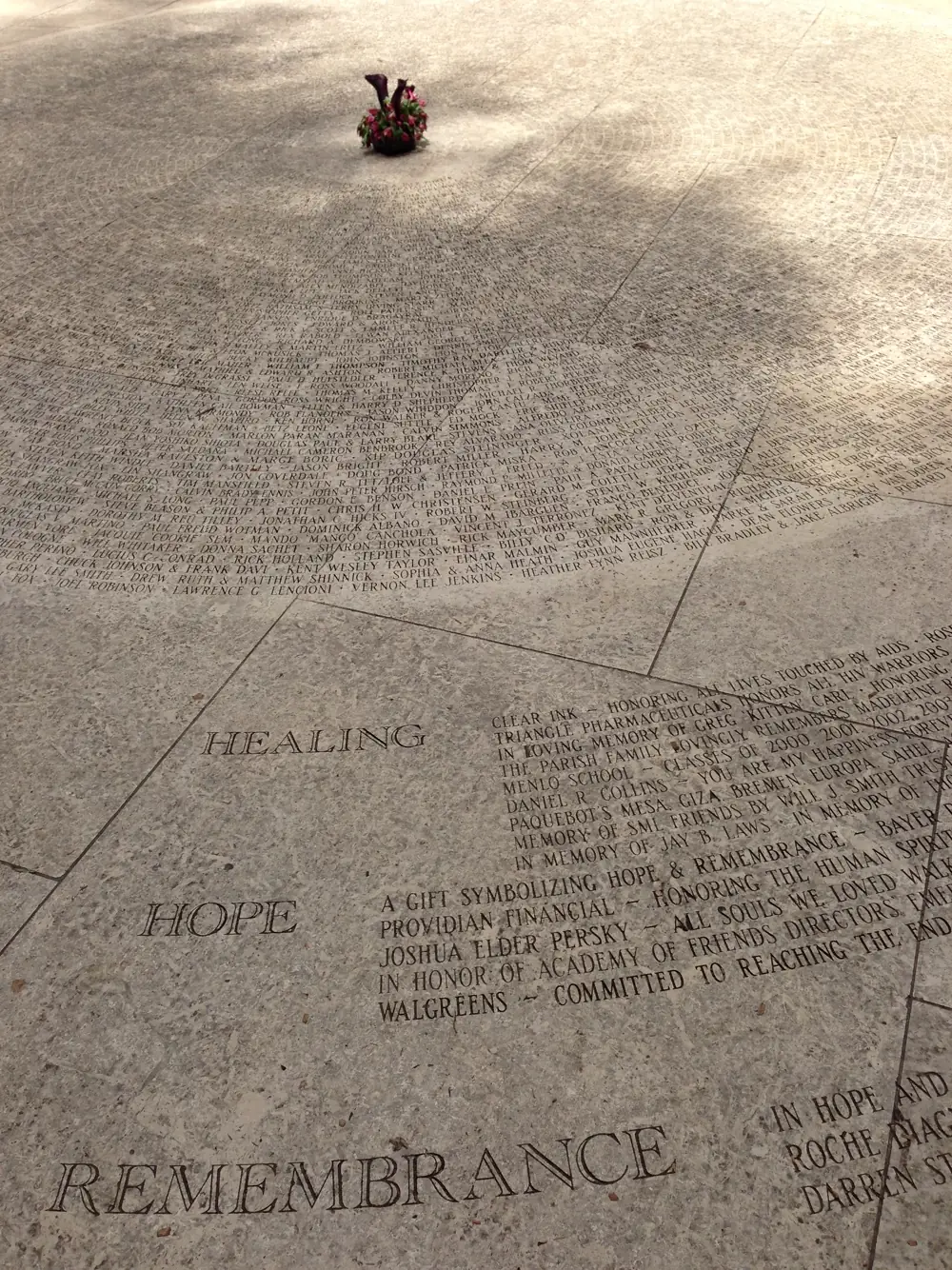
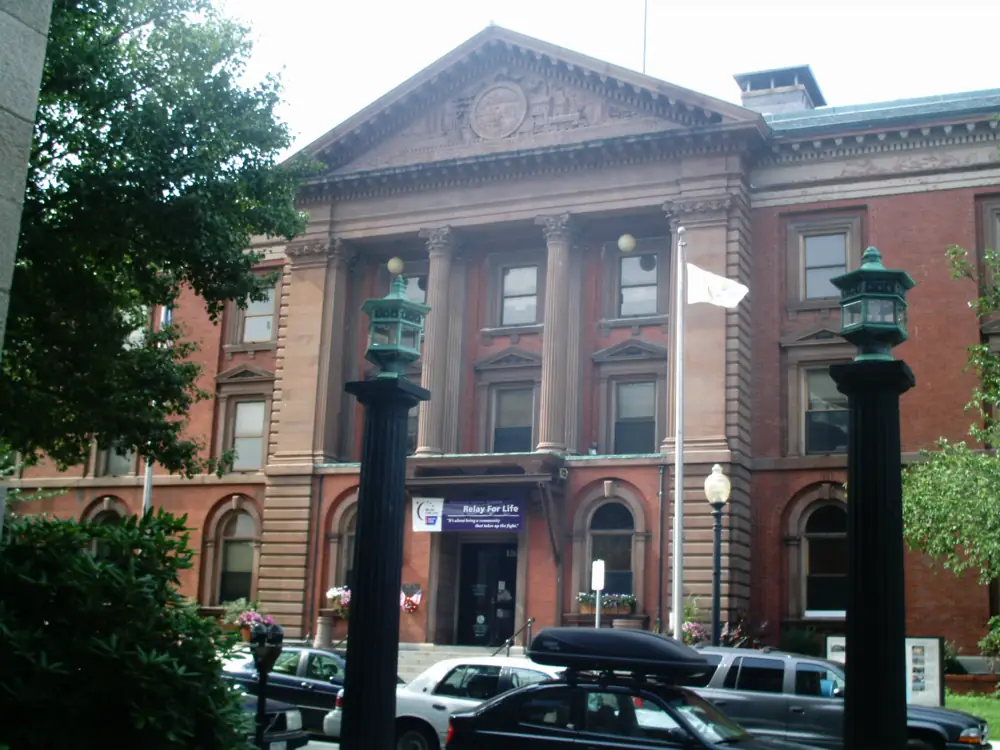
The AIDS Memorial Quilt spread across the National Mall, each panel a life remembered. Carol M. Highsmith, Library of Congress Prints and Photographs Division. Public domain.October 1996, the last time the full Quilt was shown on the National Mall. Ralph Alswang, White House Photograph Office (Clinton Presidential Library). Public domain.At the National AIDS Memorial Grove, the names of the lost are carved in stone. Runner1928 (Wikimedia Commons). CC BY-SA 3.0.New Bedford City Hall, where the city's World AIDS Day commemoration gathers on the steps. LGagnon (Wikimedia Commons). CC BY-SA 3.0.
Naming the loss
Here the museum must be honest about its own limits. We do not have the names. No local death toll survives in any record we have found. The people the South Coast lost to AIDS are, in the documentary sense, largely unrecorded, and we will not invent a number or a name to comfort ourselves.
In memory
For the ones we cannot yet name
the South Coast lives lost to AIDS
Held here until the record can hold them too.
Nationally, the AIDS Memorial Quilt holds tens of thousands of hand-sewn panels, each a life. We have not yet found South Coast panels of record. The region does remember: New Bedford holds a recurring World AIDS Day commemoration, a gathering on the City Hall steps and a candlelight walk to Pilgrim United Church, and in 2021 UMass Dartmouth held its first dedicated World AIDS Day conference. Public remembrance came, in its own time.
Unknown the local toll and the names. Corroborated the 2021 commemoration.
Chapter V
What we don't know
This is the most important page in the exhibit, because it is the work itself. The silences we are trying to fill:
The organizersUnknown
The full name and people behind the Le Place support group, and any other South Coast AIDS organizing of the 1980s and 1990s.
The lostUnknown
Names, numbers, obituaries, and any local AIDS Quilt panels. We seek them with consent and great care.
The caregiversUnknown
The nurses, doctors, clergy, and volunteers who carried this region through the crisis, most of them never named in any record.
An accuracy guard
The widely reported 2015 to 2018 HIV outbreak tied to injection drug use was in Lawrence and Lowell, not the South Coast. We do not conflate the two.
Chapter VI
How we know, and how to help
This exhibit is built on a handful of institutional records and one newspaper account, which is exactly why it leans so hard on what we do not know. Help us change that.
If you carried this history
If you cared for someone, lost someone, organized a benefit, or kept a name alive, we would be honored to hold it, with your consent, on your terms, and never outing anyone.
HIV testing, treatment, and support are available locally through the Greater New Bedford Community Health Center and SSTAR. For confidential emotional support, The Trevor Project serves LGBTQ+ young people at 1-866-488-7386, and the 988 Suicide & Crisis Lifeline is available to anyone by call or text to 988.
Key sources: The New Bedford Light (2022); Greater New Bedford Community Health Center history; SSTAR; UMass Dartmouth (2021 World AIDS Day). Full citations are held in the museum's research record.

 Museum