A clinic in Weimar Berlin, a front page in 1952, a cup of coffee thrown at the police, and a century-long fight to be recognized in your own name.
Span 1919–todayReach Berlin, Copenhagen, San Francisco, New York, and gender-diverse traditions far olderMethod Every claim sourced, confidence-tagged, gaps left visible
Chapter 0
Before you read
Transgender people did not begin in the twentieth century. What began then was the record: clinics, court files, newspapers, and the names people chose and defended. This exhibit follows that record, and marks where it runs out.
We move from the world's first sexology institute in 1919 Berlin, through the mid-century surgeries and the front-page fame of Christine Jorgensen, into the street resistance of the 1960s and the slow, uneven arrival of legal recognition. We end with gender-diverse traditions far older than any of it, and with the honest map of what we still do not know.
Three careful distinctions we hold throughout
We do not put modern labels on historical people. Where someone used their own words, we use those words and let the evidence stand. We treat gender-diverse cultural roles on their own terms, not as older versions of a Western identity; "third gender" is an outsider's umbrella that flattens distinct meanings, and Chapter V is flagged for cultural-authority review with the communities themselves. And living people appear on the basis of public, documented facts only; a person's public self-identification is not the same as their consent to appear in this museum, which is a separate gate before publication.
A note on care
This history includes Nazi-era destruction, the loss of medical records, and lives cut short. We tell it with gravity and without sensationalism, and we quote period headlines as artifacts of their time, not as our own voice.
Chapter I
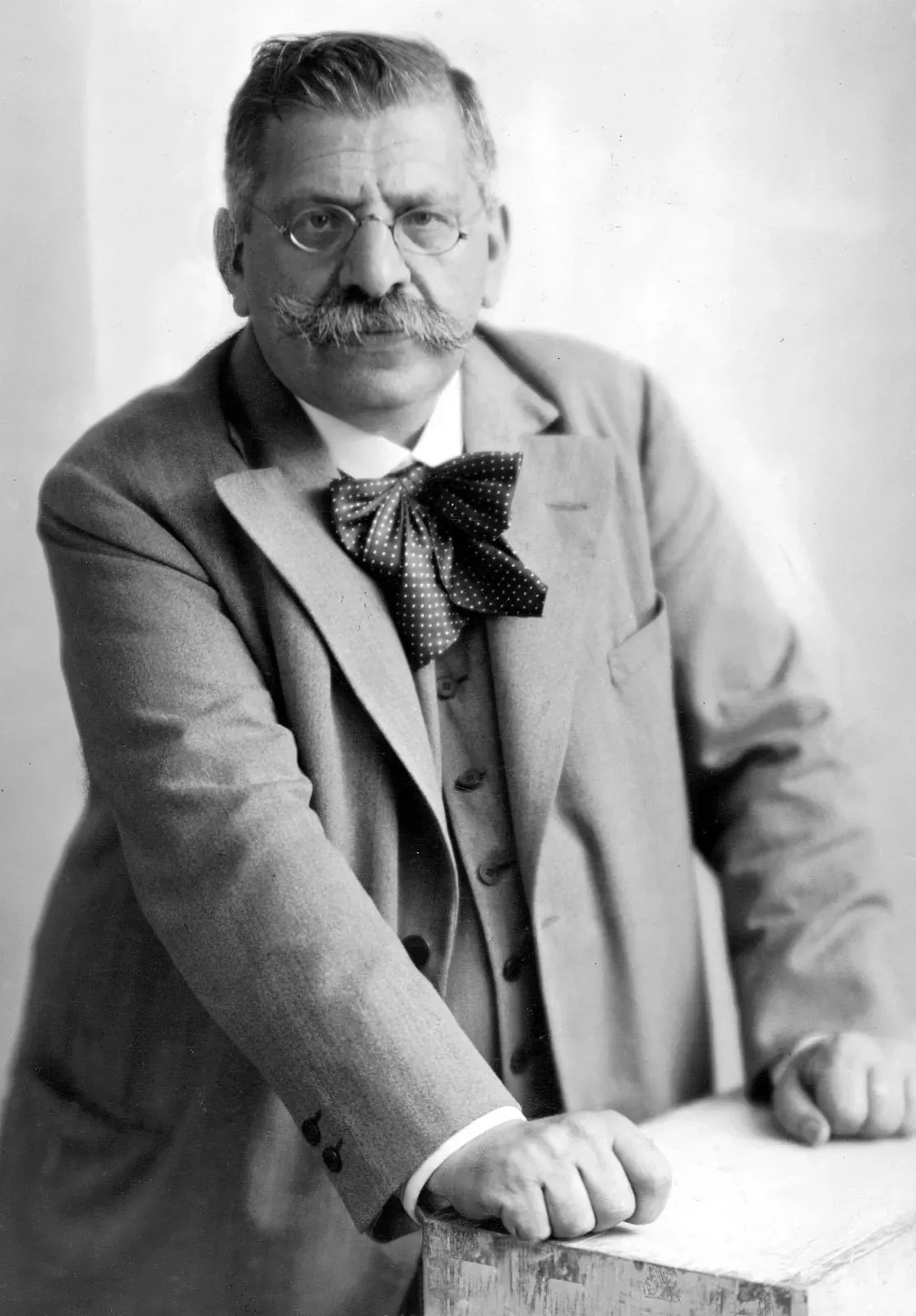
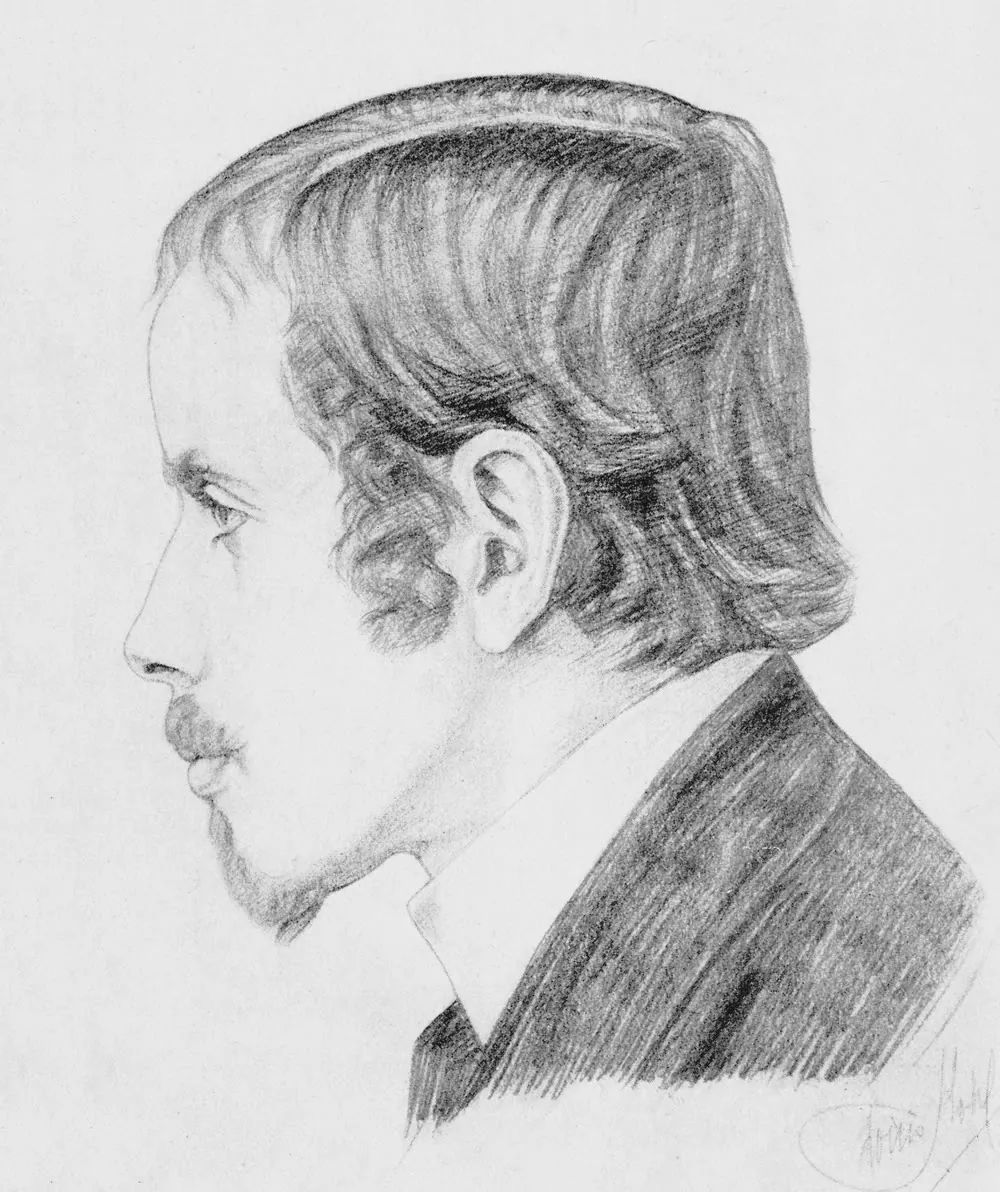
Magnus Hirschfeld, c. 1928. He founded the world's first sexology institute in Berlin in 1919. Public domain, via Wikimedia Commons.Lili Elbe, c. 1920. The Danish painter was among the earliest recipients of gender-affirming surgery. Wellcome Collection, CC BY 4.0, via Wikimedia Commons.
The first clinic
Before there was a language, there was a building in Berlin where, for a few short years, trans people could be treated with something like understanding, until it was burned.
The Institut für Sexualwissenschaft (Institute for Sexual Science) opened in Berlin on July 6, 1919, founded by the physician Magnus Hirschfeld (1868–1935), a Jewish, gay German doctor who had already started the world's first homosexual-rights organization in 1897. The Institute offered counseling, sex education, and medical care, and it was among the first places in the world to perform gender-affirming genital surgery. It was also a place of employment and refuge for trans people at a time when there was almost nowhere else to go. Verified
Dora "Dorchen" Richter (1891–1933) is widely described as the first known person to undergo complete male-to-female genital reassignment, through a series of operations connected to the Institute: an orchiectomy in 1922, a penectomy in early 1931, and a vaginoplasty in June 1931. Corroborated The Danish painter Lili Elbe (1882–1931) underwent her own series of operations in 1930–1931 at the Dresden Municipal Women's Clinic under surgeon Kurt Warnekros, legally changed her name, and died on September 13, 1931 of complications from an experimental uterus-transplant attempt. Which of them was "first" is contested, and we do not resolve it; we present both. Elbe's life verifiedSurgical specifics corroborated
On May 6, 1933, four months after Hitler took power, Nazi students looted the Institute and burned its library and archives in the street. The patient records went with them.
The destruction of the Institute for Sexual Science
That fire is why so much of this chapter carries a caution. The Institute's complete records were destroyed, so the full scope of its care, including how many surgeries were performed, is unrecoverable. Dora Richter's own fate after 1933 is uncertain and often presumed tragic, but not confirmed. We state what the surviving sources support and mark the rest as lost. Records destroyed 1933 · scope unrecoverable
Sources: Britannica and Wikipedia, "Institute for Sexual Science"; Scientific American, "The Forgotten History of the World's First Trans Clinic," and NPR (Mar 1, 2023); Wikipedia and the Bundesstiftung Magnus Hirschfeld on Hirschfeld and Elbe; Wikipedia and PubMed (PMID 39097423, 2024) on Dora Richter; the Lili Elbe Digital Archive. Surgical "first" claims are flagged for primary-source verification.
Chapter II
Christine Jorgensen, 1954; photo Maurice Seymour. Her 1952 transition became international news. Public domain, via Wikimedia Commons.
A name on the front page
In 1952, a New York tabloid turned one woman's private medical decision into a global sensation, and made a subject that had been whispered about into one the whole world argued over.
Christine Jorgensen (1926–1989) was an American who traveled to Denmark for care under the endocrinologist Christian Hamburger, undergoing hormone therapy and surgeries including an orchiectomy on September 24, 1951 at Gentofte Hospital. On December 1, 1952, the New York Daily News ran her transition on its front page. Overnight she was one of the most famous people in America. She took her chosen name in Hamburger's honor, and she spent the rest of her life as a public figure who made transsexuality a subject of mass conversation. Verified
She was not the only one being cared for in these years. In Britain, Michael Dillon (1915–1962) is described as the first trans man to receive a successful phalloplasty, through a series of operations from 1946 to 1949 by the pioneering plastic surgeon Sir Harold Gillies; Dillon also wrote Self (1946), an early text making the medical case for transition, and later became a Buddhist monk after the press involuntarily outed him in 1958. Life verified"First" corroborated
The framework that would govern trans medicine for decades took shape here too. The German-American endocrinologist Harry Benjamin published The Transsexual Phenomenon in 1966, the first major scientific work to argue for an affirming medical path rather than an attempt at a "cure." His name and casework grounded the 1979 founding of the Harry Benjamin International Gender Dysphoria Association, known today as WPATH. Verified
Whose voice is the headline?
The 1952 coverage was sensational and often cruel, and it framed Jorgensen for a Cold War audience. When we quote those headlines, we quote them as period artifacts, evidence of how the public was taught to see trans people, not as the museum's description of her. The precise sequence and dates of her later procedures vary across sources and are flagged for primary-source verification.
Sources: Wikipedia and the Royal Danish Library on Jorgensen and Hamburger; the Washington Post (Jun 12, 2023), the National WWII Museum, and the New-York Historical Society; Wikipedia and the University of Aberdeen on Michael Dillon; Wikipedia and Britannica on Harry Benjamin and WPATH.
Chapter III
Coffee, and a movement
Three years before Stonewall, in a San Francisco cafeteria, trans women and drag queens fought back against a police raid. Much of what we know was pieced together decades later, and we say so.
The Compton's Cafeteria riot took place in the Tenderloin district of San Francisco in August 1966. It is described as one of the first documented instances of militant collective resistance by transgender and queer people against the police in the United States, and it reportedly began when a trans woman threw a cup of coffee at an officer who was arresting her. It is tied to the trans social services that grew in the neighborhood afterward, and, much later, to the Compton's Transgender Cultural District, established in 2019 and described as the first legally recognized transgender district in the world. Corroborated
Documented fact, and later reconstruction
Contemporary press coverage of Compton's was sparse. Much of the surviving account was reconstructed decades later, notably by the historian Susan Stryker. The exact date in August 1966, the number of people involved, and the names of participants are largely undocumented. We keep the line between what was recorded at the time and what was recovered afterward visible, rather than smoothing it into a single confident story.
In New York, three years later, two figures became central to the movement that followed the Stonewall uprising of June 1969. Marsha P. Johnson (1945–1992) and Sylvia Rivera (1951–2002) co-founded STAR, the Street Transvestite Action Revolutionaries, in 1970, to shelter and feed homeless trans and gender-nonconforming street youth. The organization's own historical name keeps a period term we retain only in that context. Verified: their activism and STAR
Their words, not ours
Johnson described herself with the words of her time, including "transvestite" and "gay"; mapping a single modern label onto her is contested, and we let her own words stand. The popular claim that she "threw the first brick" at Stonewall is not documented and is widely disputed. Rivera said in a 2001 interview that she did not throw the first Molotov cocktail that night, but the second. We present their Stonewall roles as their own later testimony, tagged as such, and we handle Johnson's death in 1992, ruled and later reinvestigated, with care. First-night specifics: oral, contested
Sources: Wikipedia and the GLBT Historical Society ("Reconstructing the Compton's Cafeteria Riot") on Compton's; the National Women's History Museum, the Smithsonian, and Wikipedia on Johnson, Rivera, and STAR. First-night Stonewall accounts rest on later oral testimony and are tagged accordingly.
Chapter IV
To be known in law
For most of this history, the law refused to recognize a trans person's gender. The fight to change that was won case by case, country by country, and it is still being fought.
The restrictive era has a name: Corbett v Corbett. In the United Kingdom, a court annulled the marriage of the model April Ashley, a trans woman, with Justice Ormrod defining legal sex by biological criteria fixed at birth. That test governed UK law for decades. It was finally undone after Christine Goodwin v United Kingdom (2002), in which the European Court of Human Rights held that Britain's failure to recognize a trans woman's gender breached her rights to privacy and to marry, forcing the reform that became the Gender Recognition Act 2004, in effect from April 4, 2005. Verified
In the United States, an early landmark came from sport. In 1977, the New York Supreme Court ruled in Renée Richards v. USTA that requiring a chromosome test was discriminatory under New York's Human Rights Law, allowing Richards, a trans woman and ophthalmologist, to compete in the women's US Open. VerifiedLiving person · public facts only · consent gate
1987
Iran: a fatwa on sex reassignment
After advocacy by Maryam Khatoon Molkara, Ayatollah Khomeini issued a fatwa holding that sex reassignment surgery was not contrary to Islamic law.
Corroborated
May 9, 2012
Argentina: the Gender Identity Law
Act No. 26,743 became the first law in the world to allow legal gender change by self-declaration alone, with no medical diagnosis, surgery, or judge required.
Verified
April 2014
India: NALSA v. Union of India
The Supreme Court of India recognized a legal "third gender" and the right to self-identify without mandatory surgery, and ordered welfare measures.
Verified
Recognition is not always progress: Iran
The 1987 fatwa gave trans people in Iran a legal route to change documents and marry. But scholars and advocates document that the same framework can pressure gay and gender-nonconforming people into surgery they do not want, as the state's preferred "correction" of homosexuality. We record the legal fact and the critique together, and we do not present it as unqualified progress. The gap between the 1987 ruling and Molkara's own surgery in 1997 is part of that complicated story.
Argentina's 2012 law marked a turn the field calls depathologization: the idea that being recognized in your own gender should not require a diagnosis, an operation, or a judge's permission, only your own word. India's ruling two years later affirmed self-identification while intersecting with the distinct cultural identity of the hijra community, a line we are careful not to blur. Verified
Sources: Wikipedia and LGBT History UK on Corbett v Corbett; Wikipedia and Vice on Goodwin and the Gender Recognition Act 2004; Quimbee and HISTORY on Richards v. USTA (1977); the Library of Congress Global Legal Monitor and Wikipedia on Argentina's Act 26,743; Britannica and Wikipedia on NALSA (2014); Wikipedia and IranWire on Molkara and the 1987 fatwa. Sources vary on the exact date of the Corbett judgment (1970 vs. Feb 1971).
Chapter V
Older than the binary
Gender beyond a strict two has been part of human societies for a very long time. These are not older versions of a modern Western identity, and they are not ours to define.
Read this chapter differently
Every role below belongs to a living culture with its own language and meaning. "Third gender" is an outsider's umbrella that flattens distinct traditions, so we center local terms and do not translate them into "transgender." These records are secondary-source and are flagged for review and, ideally, partnership with knowledge-holders from each community before they are treated as settled. We name that as a requirement, not an afterthought.
Two-Spirit is a pan-Indigenous English umbrella adopted in 1990 to describe a range of gender-variant roles across many Native nations; it is not a single traditional identity. Among the figures often cited is We'wha (c. 1849–1896), a Zuni lhamana, a mixed-gender social role, who was a celebrated weaver and potter and a cultural ambassador; We'wha traveled to Washington, D.C. in 1886 and met President Grover Cleveland. We use the Zuni term, and we do not call We'wha "transgender." We'wha's life and the 1990 coinage verified
The hijra communities of South Asia, documented in the Mughal courts and with distinct kinship structures of their own, were criminalized under British colonial law (the Criminal Tribes Act of 1871) and have more recently won legal third-gender recognition in India, Pakistan, and Nepal. Existence and colonial criminalization verified Across the Pacific, Samoa recognizes fa'afafine and fa'afatama roles, long described as integral to family and community care. In Thailand, kathoey is a gender category some scholars connect to Buddhist frameworks of more than two genders. In the Isthmus of Tehuantepec in Oaxaca, Mexico, the Zapotec muxe are honored today in the annual Vela de las Intrépidas festival. CorroboratedKathoey record is thin; antiquity claims need scholarly confirmation
The point of this chapter is not to claim these traditions for one movement. It is to remember that the binary so many laws assume is neither universal nor old.
On reading gender across cultures
Sources: Kosmos Journal and Making Queer History on Two-Spirit and We'wha, with the Library of Congress LGBTQ+ Studies guide; Britannica, Wikipedia, and the LSE Engenderings blog on hijra; the Natural History Museum of Los Angeles County on fa'afafine and fa'afatama; CNN Travel and an NCBI/PMC study on muxe; secondary scholarship on kathoey, flagged as needing stronger peer-reviewed sourcing. This entire chapter is flagged for cultural-authority review.
Chapter VI
Gay and trans, and the difference
One man's life did more than almost any other to establish a distinction we now take for granted: that who you are and who you love are two different questions.
Lou Sullivan (1951–1991) was, as far as the record shows, the first trans man to publicly identify as gay. That combination, a man who had transitioned and who was attracted to men, was one the medical gatekeepers of his era refused to believe could exist, and it was often grounds to deny transition care outright. Sullivan insisted, in his own life and in his advocacy, that gender identity and sexual orientation are distinct. He founded the support group that grew into FTM International, one of the first organizations for trans men, and he lobbied the American Psychiatric Association and the Harry Benjamin association, now WPATH, to stop excluding gay trans people from care. He died of AIDS-related complications in 1991. Verified
The gatekeepers of his era treated a gay trans man as a contradiction in terms, and used it to refuse care. Sullivan's life and advocacy made the category real to the very institutions that had denied it.
On Lou Sullivan and the orientation the clinics could not see
Sullivan's fight is why the acronyms and standards of care that followed treat orientation and identity as separate axes. It is one of the clearest cases in this whole exhibit of a single person changing what the institutions were able to recognize. Verified
Sources: Wikipedia, the Wisconsin Historical Society, and the GLBT Historical Society / Making Queer History on Lou Sullivan and FTM International. The exact date FTM International formally adopted that name is flagged for confirmation.
Chapter VII
Quinn playing for the Washington Spirit in June 2018. At the Tokyo 2020 Games, held in 2021, Quinn became the first openly transgender and nonbinary athlete to win an Olympic medal. Photo by Jamie Smed, CC BY 2.0, via Wikimedia Commons.
Here, now
This history is not finished, and it is not only a history. The people in it have descendants, and the arguments in it are live.
The through-line of this exhibit reaches the present in two directions at once. On one side, recognition has spread: openly trans and nonbinary people compete at the Olympics, sit in legislatures, and are counted, named, and known in ways the people of Chapter I could not have been. On the other, the same recognition is contested in courts, clinics, and statehouses right now, and this exhibit deliberately keeps to the documented historical record rather than refereeing today's fights. When we add contemporary figures, they appear on public, documented facts only, with consent treated as a separate gate. VerifiedLiving people · consent-gated
A living thread on the South Coast
The through-line reaches home, too. The South Coast LGBTQ+ Network runs a weekly drop-in group for trans* and nonbinary young people at its New Bedford space, a place to make art, craft, and simply be among people who get it. It is a small, ordinary, radical thing, exactly the kind of refuge the Institute in Chapter I tried to be a century ago, and it is happening now. History, in other words, has a Monday-night version.
Sources: GLAAD and CNN on Quinn (Tokyo 2020, held 2021); the South Coast LGBTQ+ Network's own program listing for its trans* and nonbinary group. Contemporary named figures are gated for consent before any public launch.
Chapter VIII
Gaps, and how we know
A history is only as honest as the holes it admits to. Here are ours.
This record leans German, British, and AmericanFinding
The clinics, the famous cases, and the legal landmarks we can document best are concentrated in a few countries. That is a fact about the surviving sources and our own reach, not about where trans lives happened.
Whole regions are thin or missingFinding
Gender-variant roles and modern trans histories across Africa, East Asia, and much of Latin America beyond Argentina and Mexico are barely represented here. We mark these as findings to research with community partners, not as absences of history.
Trans people of color beyond Johnson and RiveraFinding
The archive too often stops at two names. Figures such as Miss Major Griffin-Gracy, a living elder, and the trans dimension of ballroom and house culture deserve their own dedicated, consent-first passes.
The present belongs in the record tooTo build
The contemporary rollback of trans rights is itself history being made. We intend to document it to the same sourced, even-handed standard as everything else here, rather than leave the record ending in the past.
Primary sources and images are still owedVerifying
Much of this is a secondary-source sweep; archival records, surgical case papers, and court filings are the next step before any of it is treated as settled museum fact. The portraits shown here are public-domain or Creative Commons, credited. Living people are gated for consent before any public launch.
If you hold a piece of this
A family story, a photograph, a South Coast trans elder the record forgot, a local chapter of this history we have not found yet? Help us keep it, sourced and with care.
Key sources: the per-figure citations above, drawn from institutional, encyclopedic, and scholarly references and held in full in the museum's research record. Confidence tags mark what is verified, corroborated, or resting on contested oral history. This exhibit is a secondary-source foundation; primary-source verification is a required next step before publication as museum-grade fact.

 Museum