From Acushnet and New Bedford to the center of the art world.
Who Rene Ricard & David B. BoyceFrom the South CoastTo the Factory, and the Stonewall monument
Chapter 0
Local kids, global story
Queer creativity does not only happen in capitals. Sometimes it starts in a small town on the South Coast and travels to the very center of the culture.
Two men prove it. Rene Ricard, raised in Acushnet and New Bedford, became a poet and critic at the heart of the New York art world and helped a generation see Jean-Michel Basquiat. David B. Boyce, of New Bedford, became part of the most famous monument to gay liberation in America. Both were openly gay. Both came from here.
Chapter I
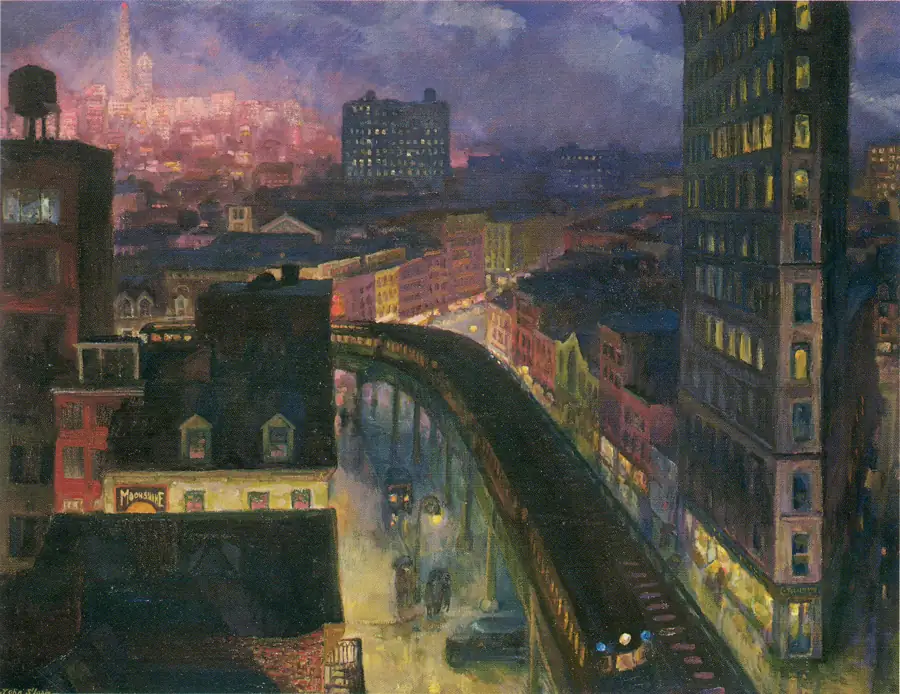
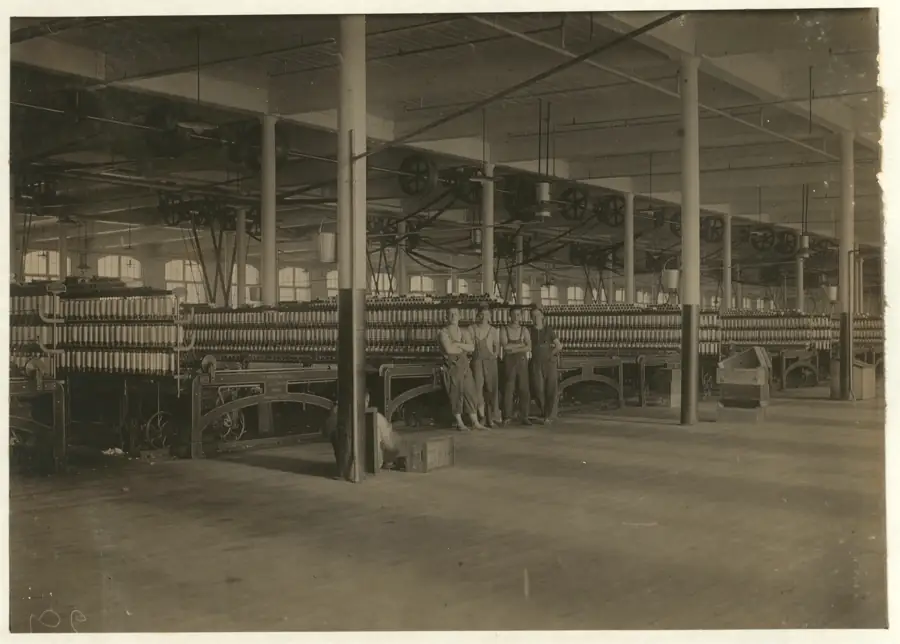
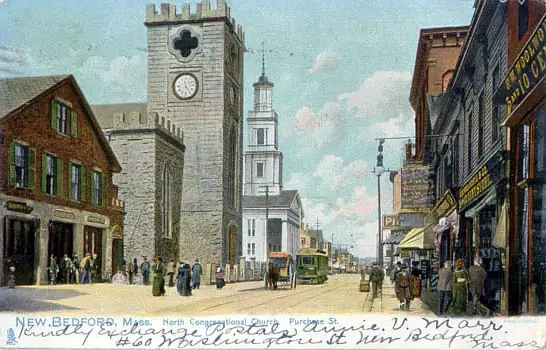
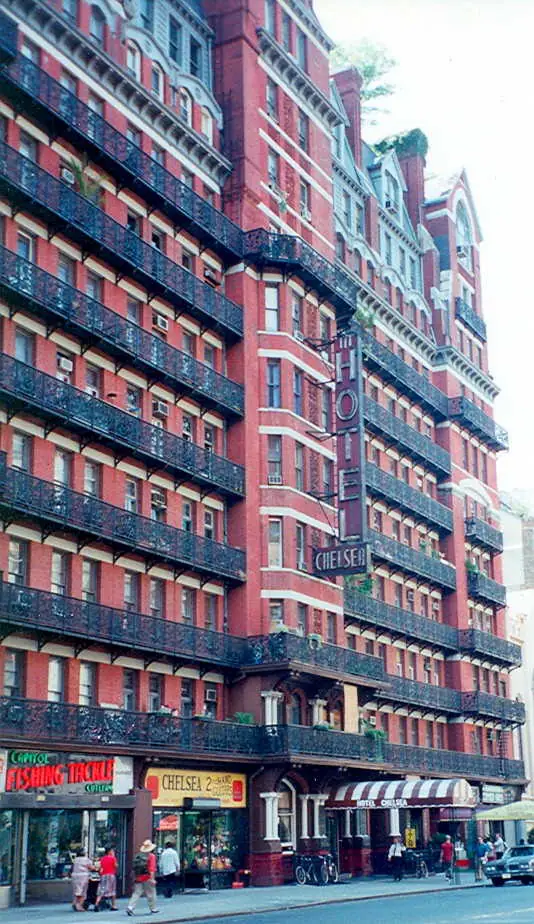
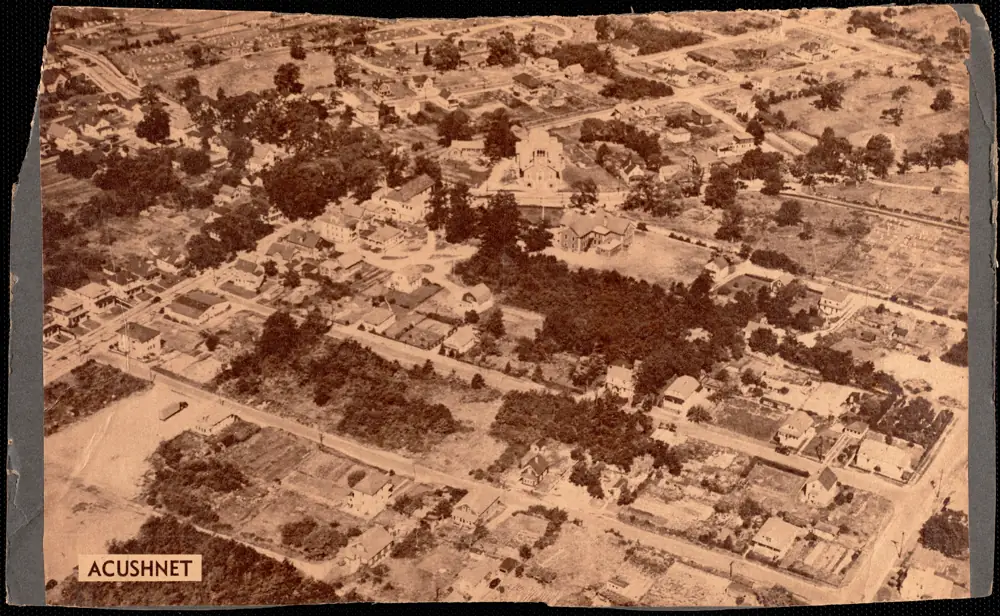
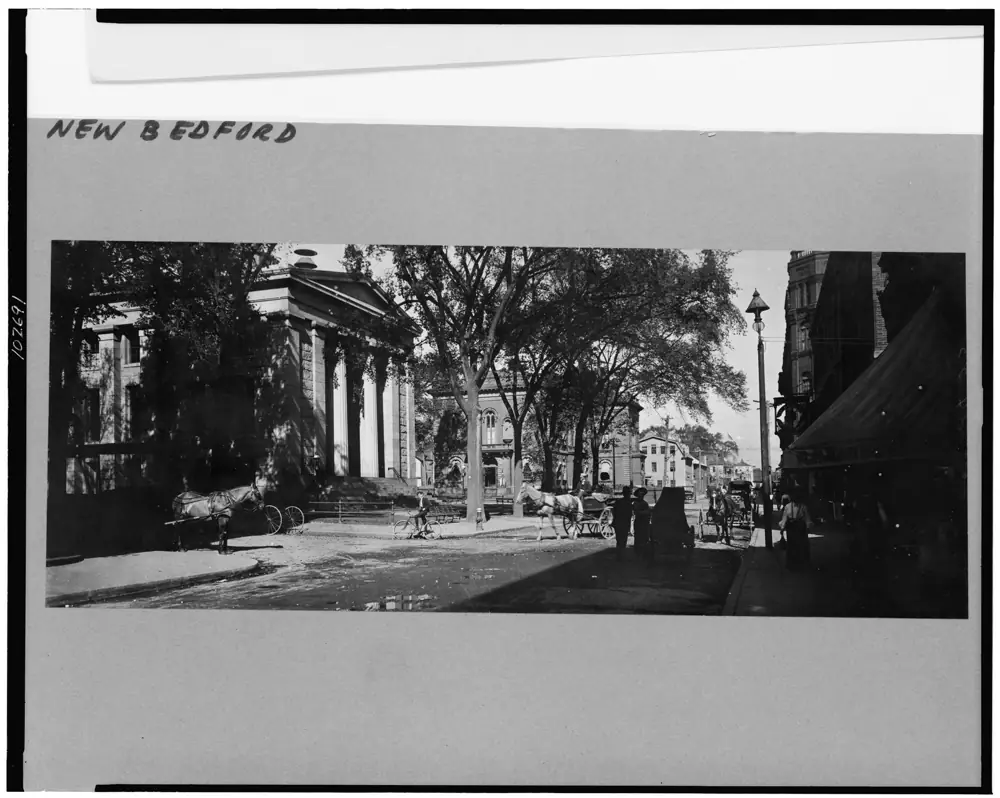
John Sloan's 1922 view of Greenwich Village, the downtown New York art world that Rene Ricard joined as a poet and critic. John Sloan, The City from Greenwich Village, 1922, oil on canvas. National Gallery of Art, Washington, D.C. (accession 1970.1.1). Public domain.. Public domain.The mule room of a New Bedford cotton mill in 1912, the textile-city working world of the South Coast where Rene Ricard and David Boyce grew up. Lewis Wickes Hine, 1912. Library of Congress, Prints and Photographs Division, National Child Labor Committee Collection (LC-DIG-nclc-02476).. Public domain.Purchase Street in New Bedford in 1906, showing the North Congregational Church in the South Coast city of Ricard's and Boyce's youth. Unknown photographer, postcard published 1906. Via Wikimedia Commons (Penny Postcards from Massachusetts). Public domain.. Public domain.The Hotel Chelsea in Manhattan, the longtime home of poet and critic Rene Ricard. Photo by Wikimedia Commons user Gyrofrog, CC BY-SA 2.5. CC BY-SA 2.5.Acushnet Center seen from the air in 1930, the small South Coast town where Rene Ricard was raised. New Bedford Public Library via Digital Commonwealth, CC BY 4.0. CC BY 4.0.
Rene Ricard: from Acushnet to the Factory
He was born Albert Napoleon Ricard in 1946 and raised in Acushnet and New Bedford. He left school after the eighth grade, ran to Boston, where the poet John Wieners took him under his wing and he audited classes at Harvard, and reached New York by around eighteen, where he became a protege of Andy Warhol.
At the Factory he appeared in Warhol's films, including Kitchen (1965) and Chelsea Girls (1966). He lived for decades at the Chelsea Hotel and was a muse and model for photographers including Robert Mapplethorpe and Nan Goldin. He was, by every account, openly and unmistakably himself.
Verified birth, South Coast upbringing, and the Warhol years.
Sources: New York Times obituary (2014); Wikipedia; estate biography. Acushnet specifics being locked against the original obituary.
Chapter II
The Radiant Child
In December 1981, Ricard published an essay in Artforum called "The Radiant Child." It is widely credited with bringing the young Jean-Michel Basquiat to national prominence, and it remains one of the most influential pieces of art criticism of its era. Ricard had an eye for genius and the prose to make others see it.
It's as if Cy Twombly and Jean Dubuffet had a baby and gave it up for adoption.
Rene Ricard on Basquiat, "The Radiant Child," 1981
He was a poet as much as a critic, with several books to his name, and a famously incandescent presence in downtown New York. He died on February 1, 2014, of cancer.
In memory
Rene Ricard
1946–2014 · poet, critic, and the eye that saw Basquiat
Verified the 1981 essay and its influence. We say "widely credited," not "single-handedly," with care.
Sources:Artforum, December 1981; multiple art-historical sources; New York Times obituary (2014).
Chapter III
A New Bedford street scene in 1905, the South Coast city of Rene Ricard's and David Boyce's youth. Library of Congress, Prints and Photographs Division (LCCN 91720432); public domain. Public domain.
David B. Boyce: New Bedford to Stonewall
David B. Boyce, of New Bedford, was a writer and art historian who had been a figure in the 1970s New York art world, an assistant to artists including Jasper Johns. Later he wrote for New Bedford's Standard-Times and served as a curator for the New Bedford Art Museum. His connection to national history is striking, and it is one he documented himself: he was one of the models used in the creation of George Segal's sculpture Gay Liberation, the monument that stands today at Christopher Park beside the Stonewall Inn.
He also wrote the definitive making-of history of that sculpture, published in the Harvard Gay & Lesbian Review in the spring of 1997, so the record of his role comes, in part, from his own pen.
In memory
David B. Boyce
1949–2014 · New Bedford · a face in a national monument
Verified his role as a model (from his own author bio). Verifying his exact death date and the full scope of his museum work.
Sources: Boyce's author bio and his history of Gay Liberation, Harvard Gay & Lesbian Review, Spring 1997. (Note: a living artist with a similar name is a different person; we keep them distinct.)
Chapter IV
The monument
George Segal's Gay Liberation was commissioned in 1979 by the Mildred Andrews Fund and cast in 1980: four white-painted bronze figures, two standing men and two seated women, a quiet portrait of ordinary queer life. It took twelve years and a long fight to find a home. One cast stood at Stanford from 1984; another waited in storage and then in Madison, Wisconsin from 1986 to 1991, where it was repeatedly vandalized. Finally, on June 23, 1992, it was dedicated at Christopher Park, across from the Stonewall Inn, unveiled by Mayor David Dinkins.
The sculpture has four figures, and Boyce was one of the four models. Which figure he sat for is not something the record settles, and we will not invent it. That a man from New Bedford is literally cast into the most prominent monument of the American gay-rights movement is enough.
Labeled as context
The monument's history is national context here; Boyce's documented participation in it is the South Coast thread.
Verified the monument's history. Unknown which figure Boyce modeled.
Sources: NYC Parks; Boyce (Harvard Gay & Lesbian Review, 1997); standard art-historical accounts of Segal's Gay Liberation.
Chapter V
The throughline
Ricard and Boyce did not work together, and this exhibit does not pretend they did. What binds them is a pattern worth naming: queer kids from a small Massachusetts coast who carried something with them into the wider culture and left a mark on it, one in the prose that framed a generation of painting, the other in the plaster of a national monument.
It is also a reminder for this museum's own mission. If two such figures came from here, others did too, and many of their stories are not yet told. The South Coast's queer creative history is deeper than two names. We are looking for the rest.
Key sources:Artforum (1981); New York Times (2014); Harvard Gay & Lesbian Review (1997); NYC Parks; UMass Dartmouth. Full citations are held in the museum's research record.

 Museum