From a Cupid in a Roman studio to a spill of candy that is a portrait of a dying man.
Span c. 1600–todayForms Painting, photography, photomontage, activist artReach Global, with honest gaps marked
Chapter 0
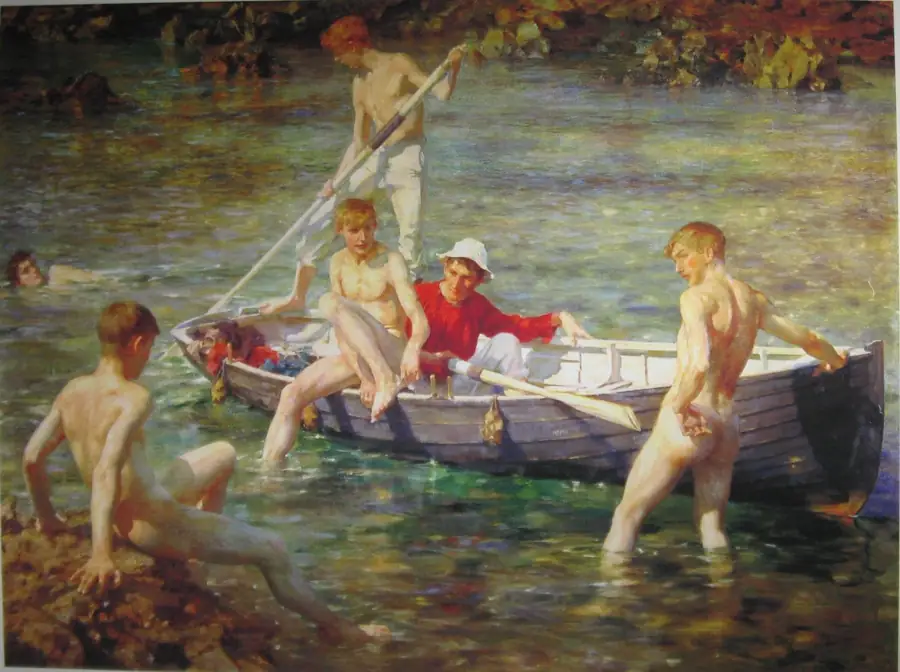
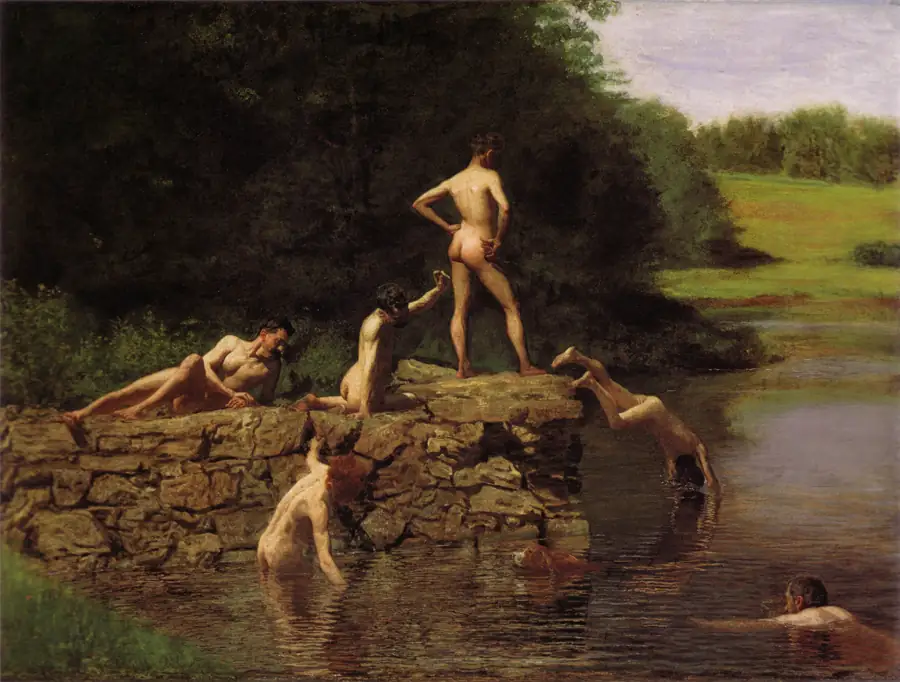
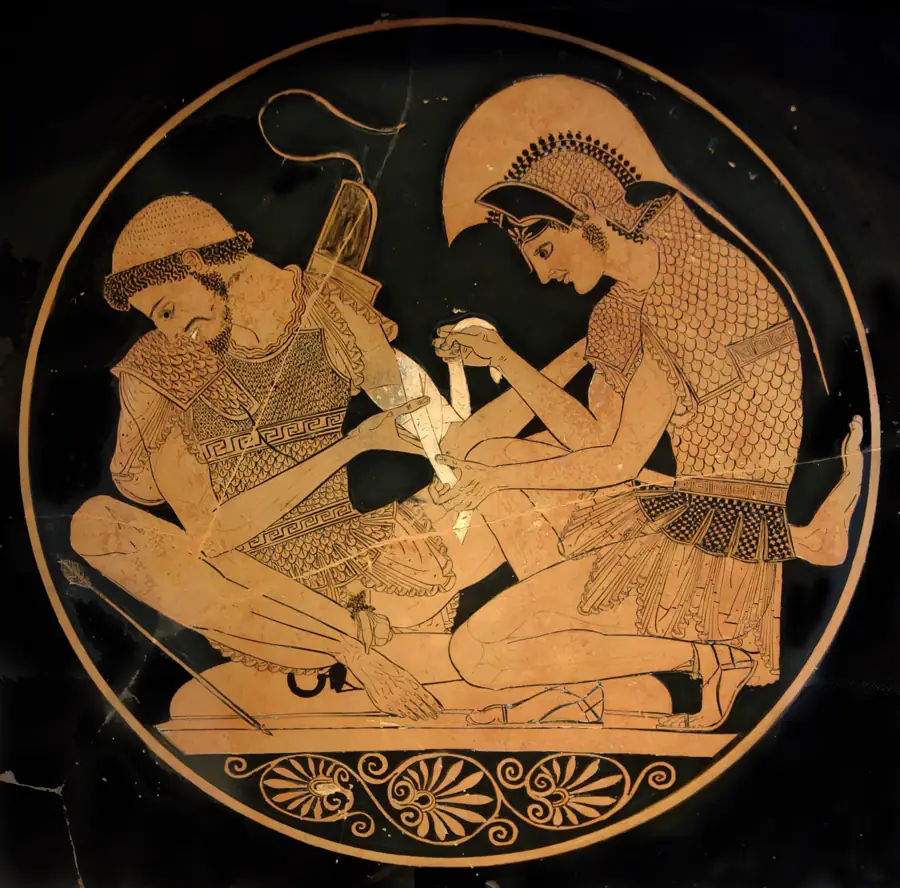
Henry Scott Tuke, Ruby, Gold and Malachite, 1902, oil on canvas. Guildhall Art Gallery, London. Young male bathers around a boat, a recurring subject of Tuke's en plein air painting. Henry Scott Tuke (1858-1929), 1902. Guildhall Art Gallery, London, via Wikimedia Commons.. Public domain.Thomas Eakins, Swimming, 1885, oil on canvas. Amon Carter Museum of American Art. Eakins's study of male bathers, returned by its patron and tied to his dismissal from the Academy over the nude. Thomas Eakins (1844-1916), 1885. Amon Carter Museum of American Art, via Wikimedia Commons.. Public domain.Achilles binding the wounds of Patroclus, Attic red-figure kylix, c. 500 BCE. Antikensammlung Berlin. A classical image of intimate male devotion read within the Greek tradition. Attic red-figure kylix, c. 500 BCE; photo Bibi Saint-Pol (2008), via Wikimedia Commons. Antikensammlung Berlin F2278.. Public domain.
Reading the room
In art history, "was this artist queer?" has three different answers: sometimes a documented self-identification, sometimes a scholarly consensus, and sometimes a contested interpretation. This exhibit never collapses the three.
We move from the Old Masters, where over-claiming is easiest and we are most careful, through the open lesbians of Paris and the queer figures of the Harlem Renaissance, to the gay men of mid-century painting, the artists who turned the AIDS crisis into some of the most powerful art of the century, the largest piece of community folk art ever made, and the global, living artists redrawing the field now.
What the label means
For each artist we attach the basis of the claim: self-identified, scholarly consensus (documented relationships, but no modern label used, common before the twentieth century), or debated / historical interpretation. We do not state flatly that Michelangelo or Leonardo "were gay"; we state what the documentary record holds and that its meaning is contested. Most twentieth-century works here are still in copyright; the images shown are public-domain works, and the rest are described in text until they can be licensed. We will not reproduce in-copyright artworks from web grabs.
Chapter I
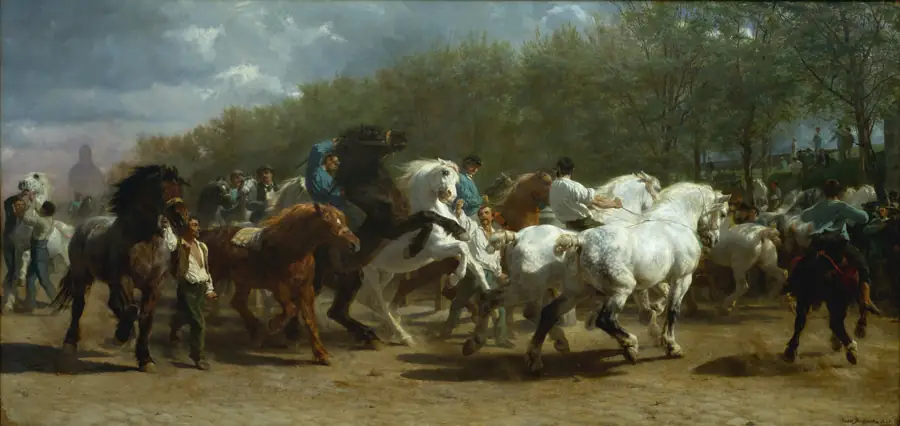
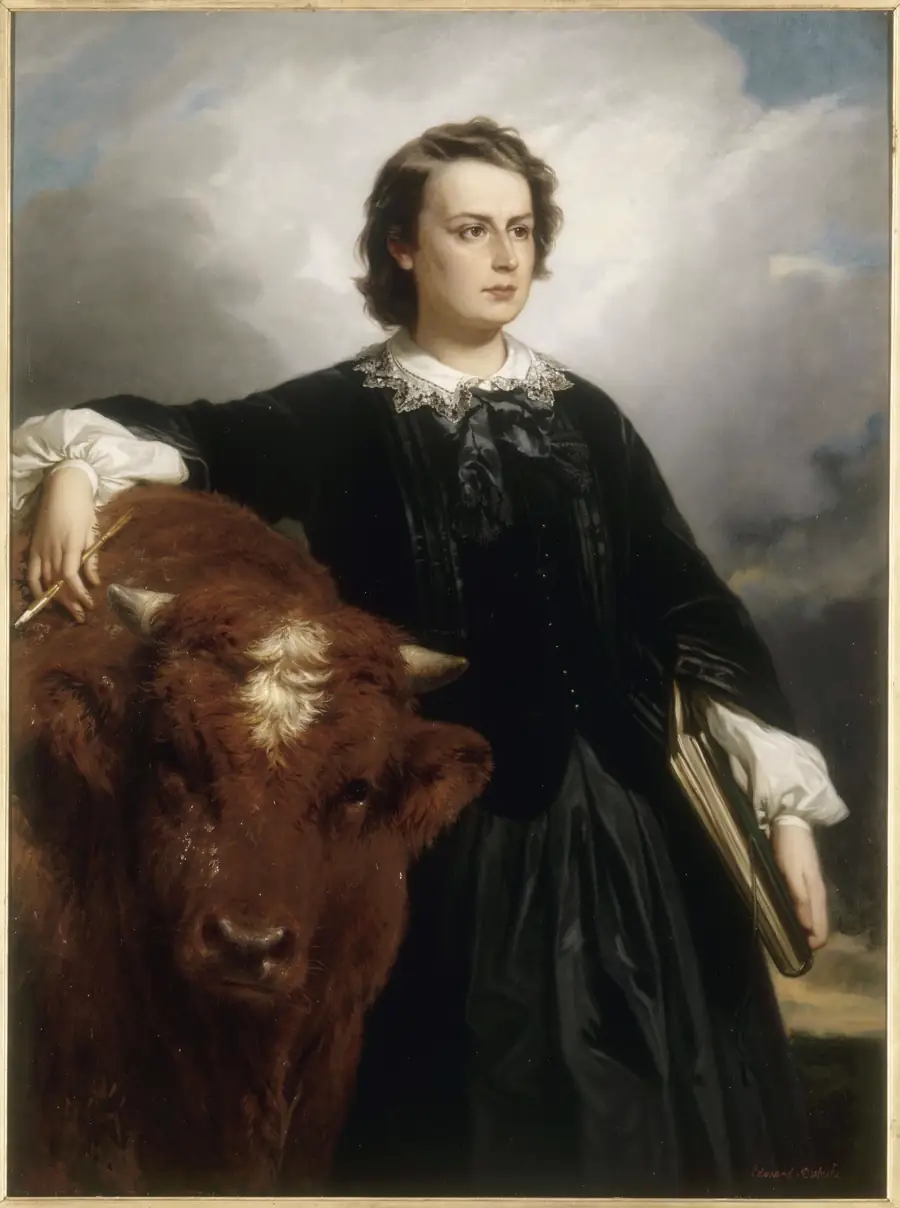
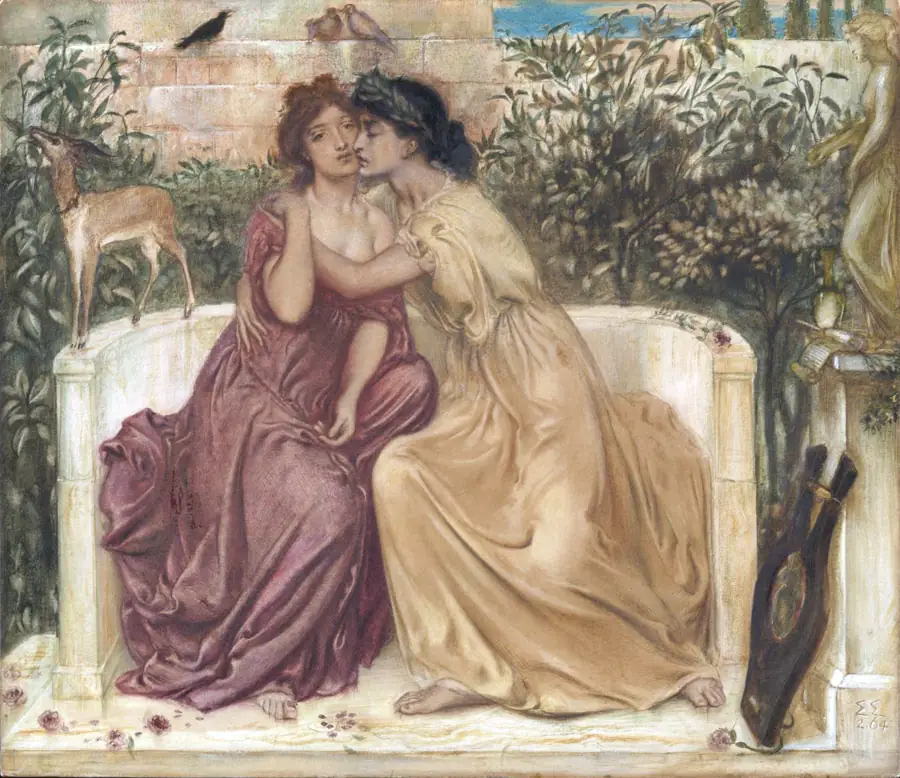
Rosa Bonheur, The Horse Fair, 1852 to 1855, oil on canvas. The Metropolitan Museum of Art. Bonheur, named in Chapter I, lived openly with Nathalie Micas and Anna Klumpke. Rosa Bonheur (1822-1899). The Metropolitan Museum of Art, via Wikimedia Commons.. Public domain.Rosa Bonheur beside a bull she painted, portrait by Edouard Louis Dubufe, 1857. Palace of Versailles. A portrait of the nineteenth century's most celebrated woman painter. Edouard Louis Dubufe (1819-1883), 1857. Palace of Versailles, via Wikimedia Commons.. Public domain.Simeon Solomon, Sappho and Erinna in a Garden at Mytilene, 1864, watercolour. Tate. Two women poets of Lesbos in tender proximity, by a Pre-Raphaelite artist later prosecuted for his sexuality. Simeon Solomon (1840-1905), 1864. Tate, London, via Wikimedia Commons.. Public domain.
The canon: Renaissance to early modern
The Old Masters are where over-claiming is easiest, so this is where we are most careful, and where the documentary record is often stranger and more specific than the legend.
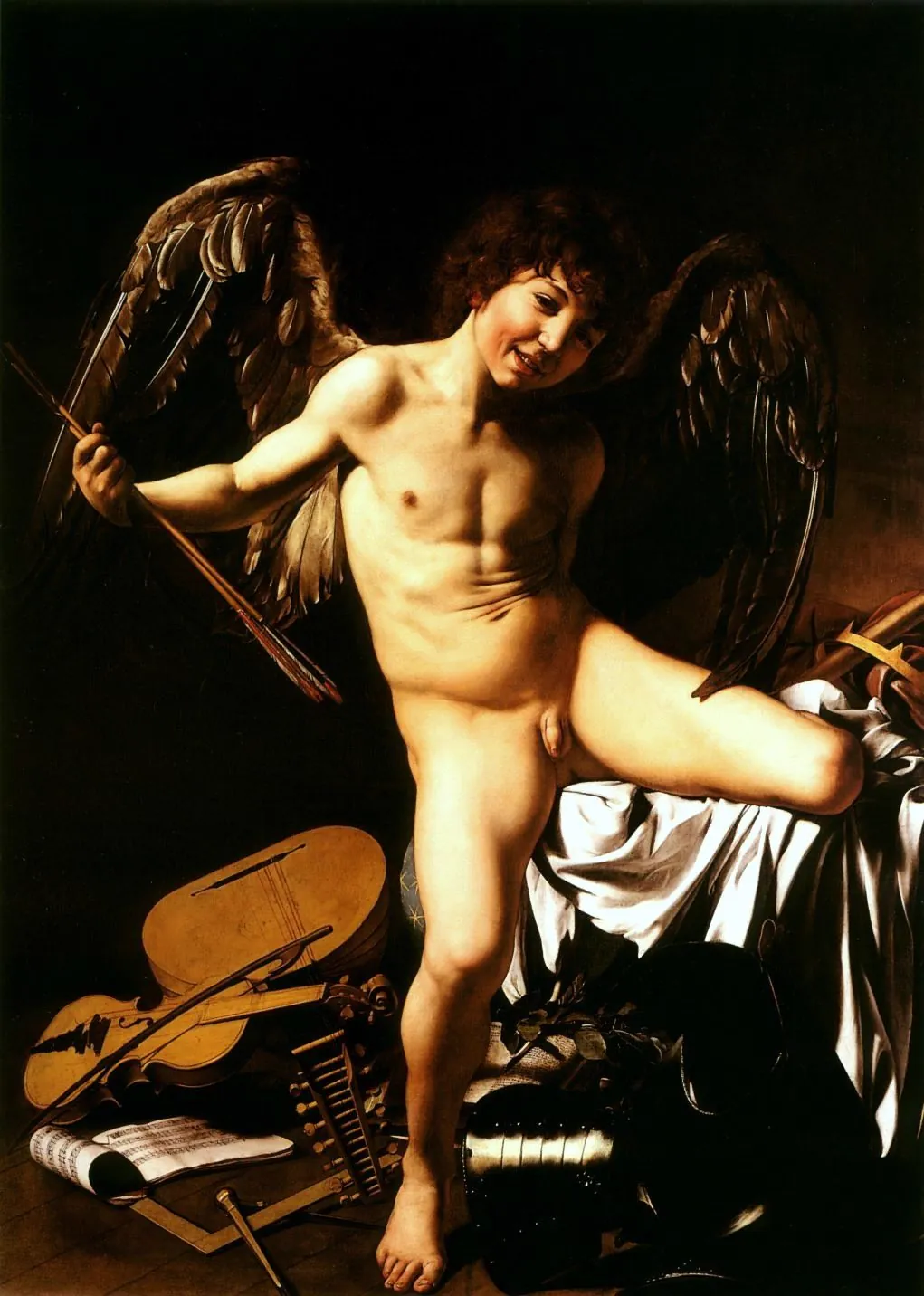
Caravaggio, Amor Vincit Omnia ("Love Conquers All"), c. 1601–02, oil on canvas, ~156×113 cm. Gemäldegalerie, Berlin. Public domain, via Wikimedia Commons.
Michelangelo (1475–1564) wrote roughly 300 poems, a large share addressed in passionate terms to the young Roman nobleman Tommaso dei Cavalieri. Here the documentary record is precise: his grandnephew, Michelangelo the Younger, changed the masculine pronouns to feminine when he first published the poems in 1623, and the original masculine address was restored by John Addington Symonds in his 1893 translation and biography. The censorship and its reversal are established fact; what they mean about his sexuality is debated, from a homoerotic reading to a Neoplatonic ideal of spiritual love. Leonardo da Vinci (1452–1519) was, at about 24 in 1476, anonymously accused with three others of sodomy with a male model, Jacopo Saltarelli; the charge was dismissed for lack of corroborating witnesses. His long association with his pupil "Salai" (Gian Giacomo Caprotti) is also part of the documentary record. The 1476 accusation is a legal document, not a self-statement, and we keep the distinction. Debated / historical interpretation
Caravaggio'sAmor Vincit Omnia (above) shows a nude, smiling adolescent Cupid trampling the symbols of human endeavor. A contemporary English visitor recorded the Cupid as modeled by Caravaggio's "own boy or servant that laid with him"; the art historian Gianni Papi proposed this was Cecco del Caravaggio (Francesco Boneri), an identification that is itself contested. The painting's eroticism is documented; the artist's identity is interpretive, and we hold that line. Work verifiedIdentity debated
The firmest pre-modern case is Rosa Bonheur (1822–1899), France's most celebrated woman painter of the nineteenth century. She lived more than forty years with Nathalie Micas until Micas's death in 1889, then with the American painter Anna Klumpke, and is buried with both at Père Lachaise. In the 1850s she obtained a police "permission de travestissement" to wear trousers, a legal permit required because an 1800 French ordinance barred women from wearing them, so she could study animals at livestock markets. Her masterpiece The Horse Fair (1852–55) hangs at the Metropolitan Museum. VerifiedIdentity: scholarly consensus (no modern label used)
Sources: Michelangelo and Leonardo scholarship (Symonds, 1893; Florentine court records); Wikipedia and Smarthistory on Amor Vincit Omnia and Helen Langdon, Caravaggio: A Life (1998); JSTOR Daily ("Rosa Bonheur's Permission to Wear Pants"), the Met, and AWARE on Bonheur.
Chapter II
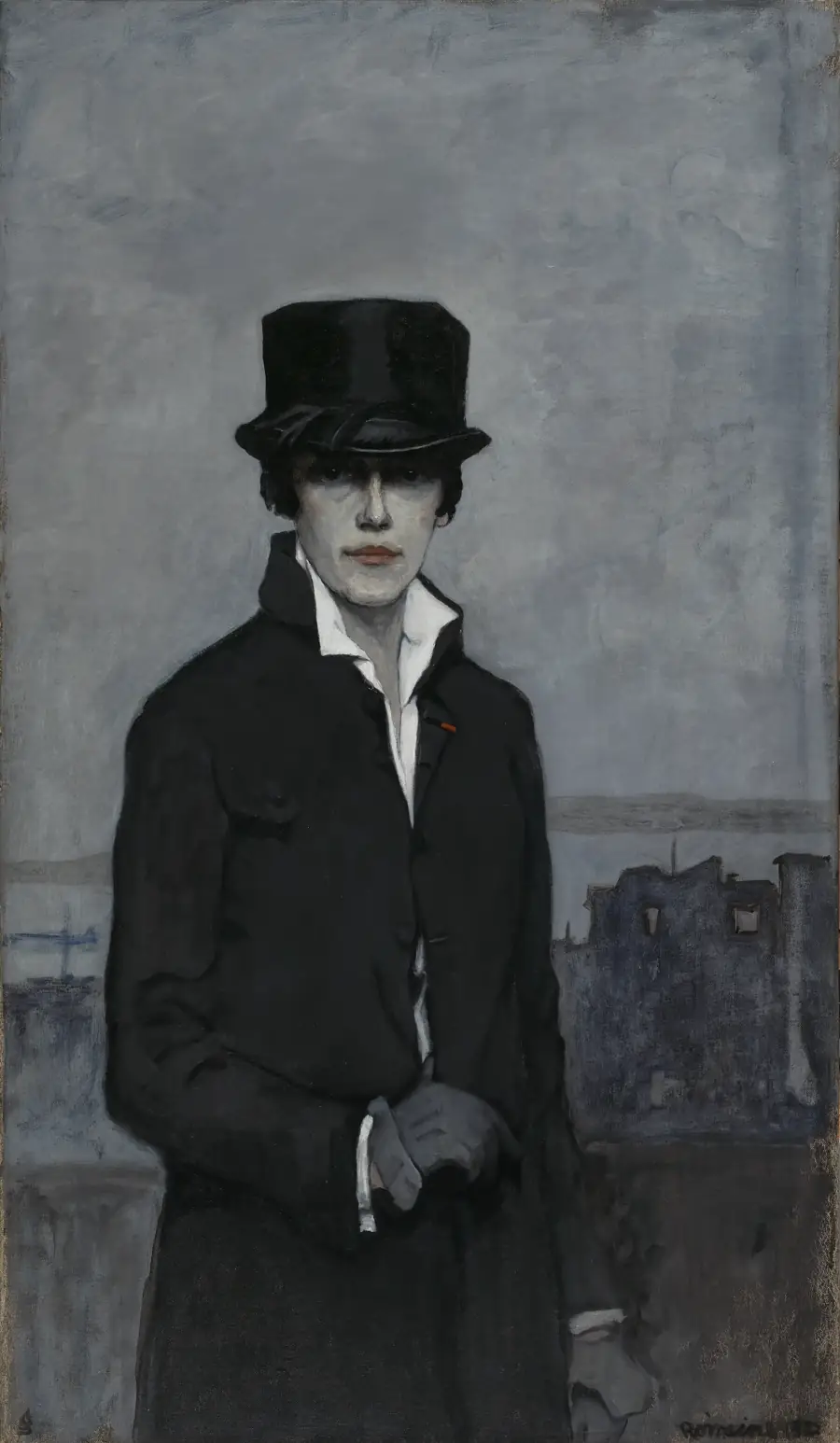
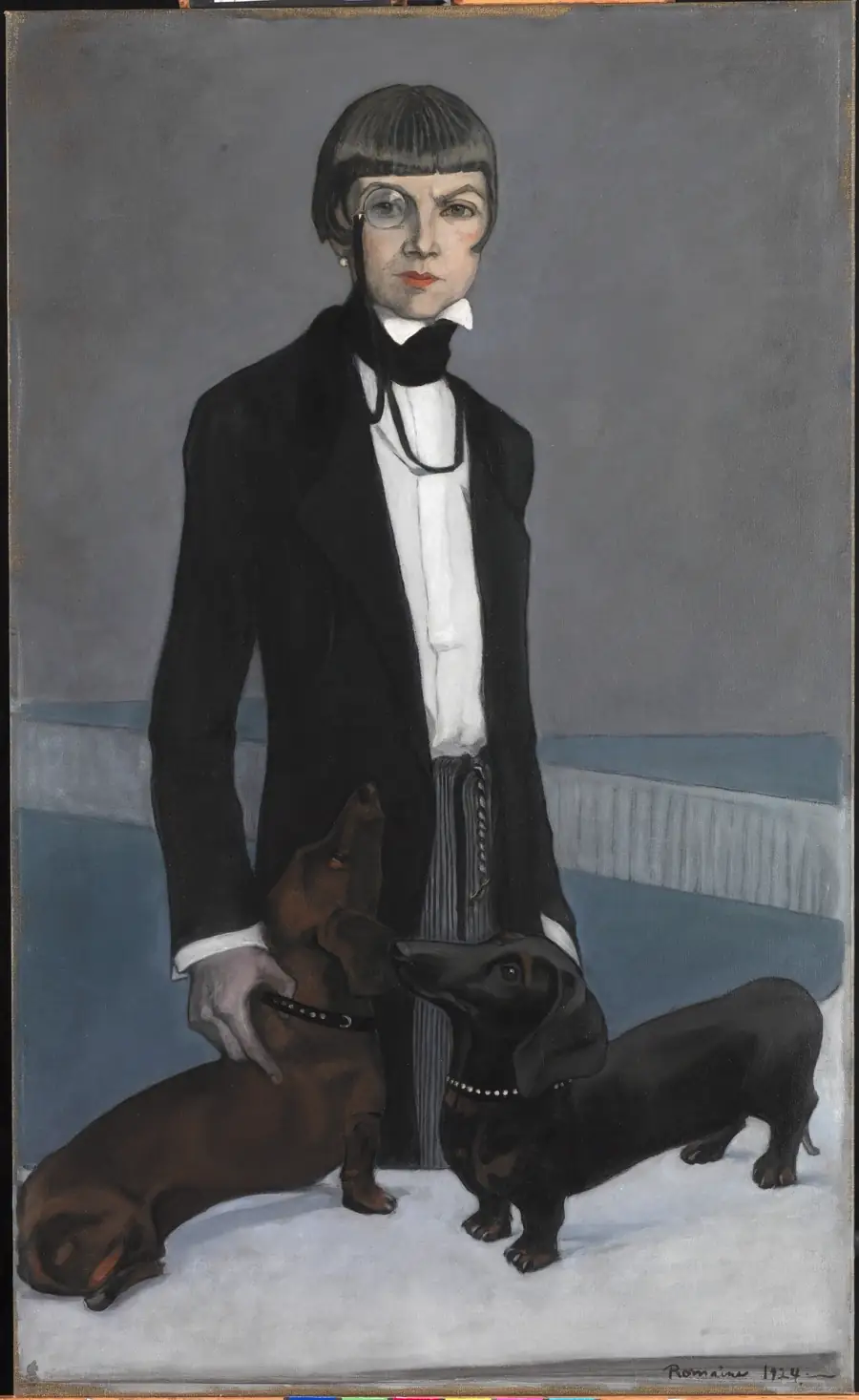
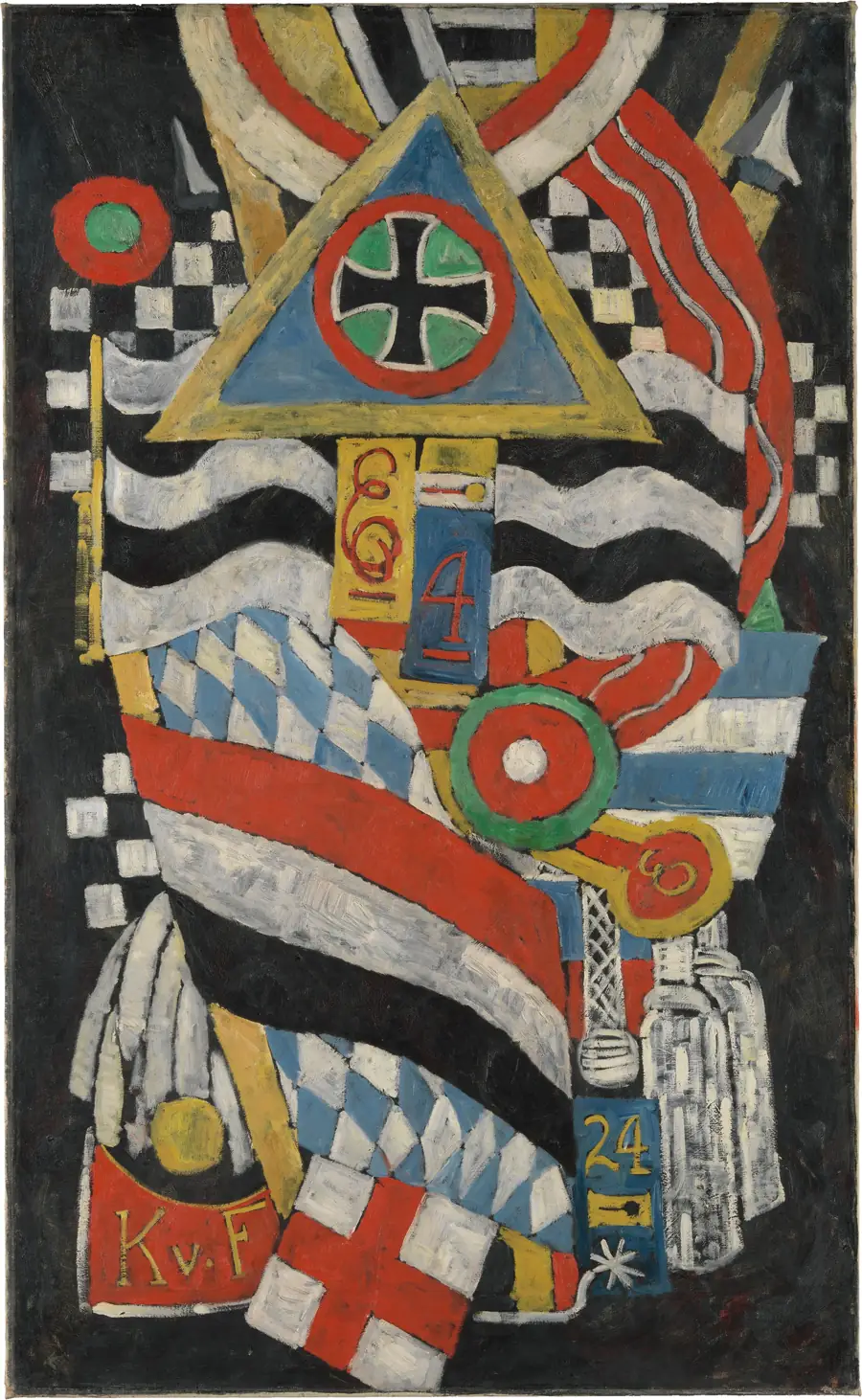
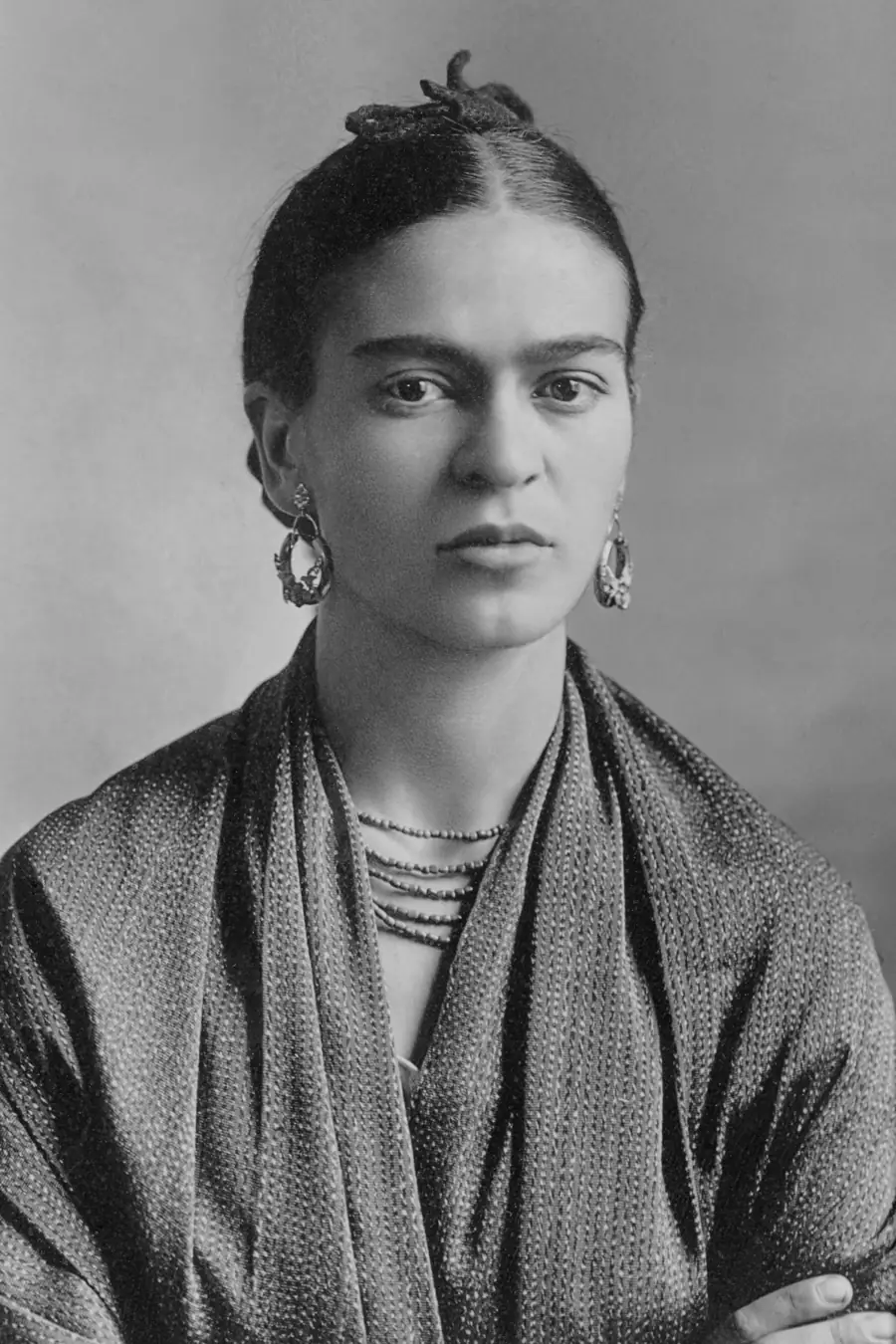
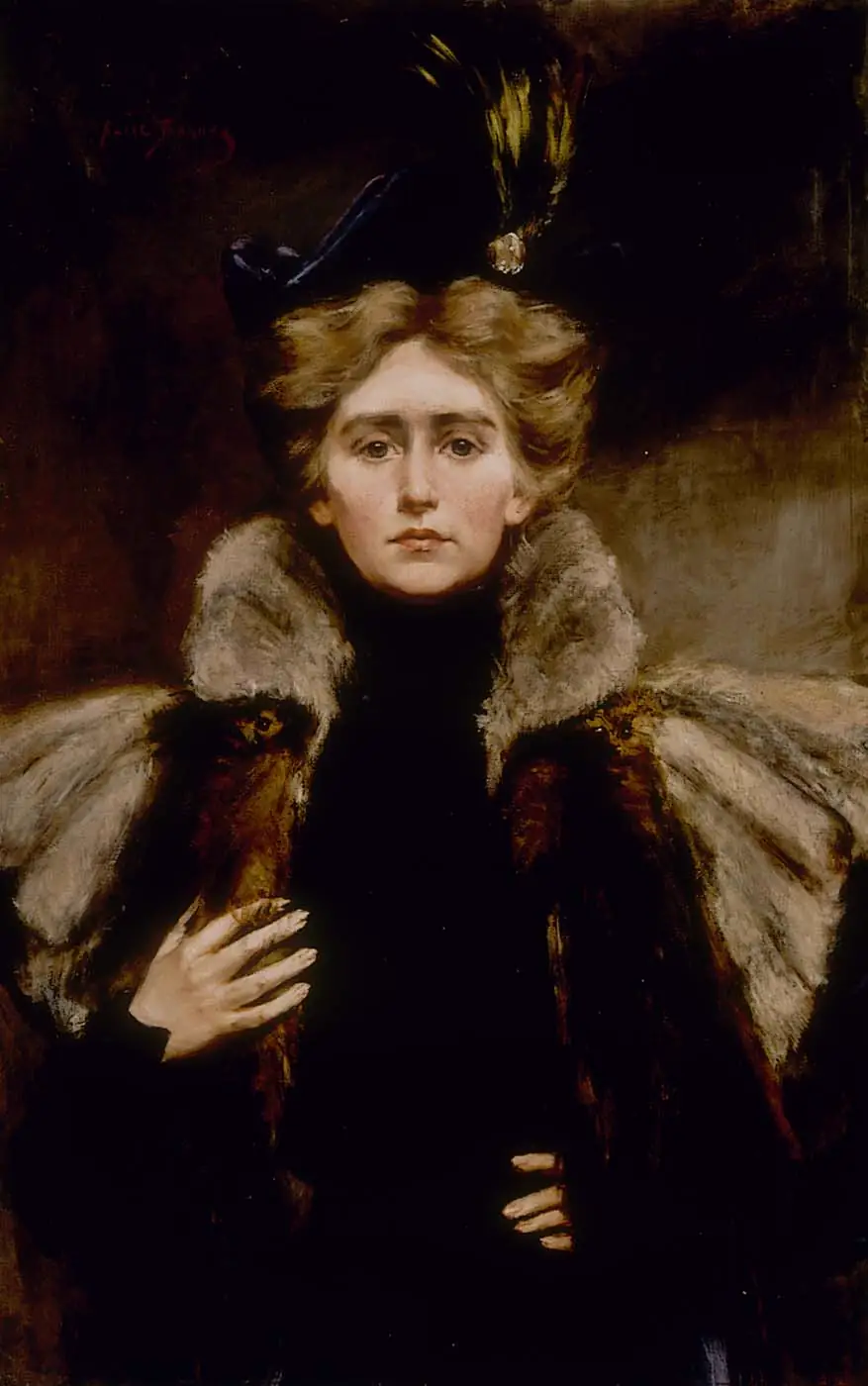
Romaine Brooks, Self-Portrait, 1923, oil on canvas. Smithsonian American Art Museum. Brooks in greatcoat and top hat, an icon of androgynous lesbian self-presentation. Romaine Brooks (1874-1970). Smithsonian American Art Museum, gift of the artist, via Wikimedia Commons.. CC0.Romaine Brooks, Una, Lady Troubridge, 1924, oil on canvas. Smithsonian American Art Museum. Troubridge, partner of Radclyffe Hall, in monocle and cropped hair with her dachshund. Romaine Brooks (1874-1970), 1924. Smithsonian American Art Museum, gift of the artist, via Wikimedia Commons.. Public domain.Marsden Hartley, Portrait of a German Officer, 1914, oil on canvas. The Metropolitan Museum of Art. A coded elegy for Lieutenant Karl von Freyburg, encoding his initials, regiment, and age at death. Marsden Hartley (1877-1943). The Metropolitan Museum of Art, accession 49.70.42, via Wikimedia Commons.. Public domain.Frida Kahlo photographed by her father Guillermo Kahlo, 1932. Kahlo's documented bisexuality is discussed in Chapter II; her paintings remain in copyright and are described, not shown. Guillermo Kahlo (1871-1941), October 16, 1932. Via Wikimedia Commons.. Public domain.Natalie Clifford Barney in a fur cape, painted by her mother Alice Pike Barney, 1897. Smithsonian American Art Museum. Barney's Paris salon was the hub of sapphic modernism and Romaine Brooks's partner for fifty years. Alice Pike Barney (1857-1931), 1897. Smithsonian American Art Museum, via Wikimedia Commons.. Public domain.
Early modernism (c. 1900–1945)
In Paris and Berlin between the wars, queer artists made some of modernism's defining images, and one of them painted a love letter to a dead soldier in code.
Romaine Brooks (1874–1970) was a leading figure of the Paris lesbian expatriate counterculture and the partner of writer Natalie Clifford Barney, whose salon was a hub of sapphic modernism, for some fifty years. Her 1923 Self-Portrait (oil on canvas, 117.5×68.3 cm), now at the Smithsonian American Art Museum and released by it to the public domain, shows her in a man's greatcoat, top hat, and collared shirt, an icon of androgynous lesbian self-presentation. The Smithsonian describes her work as calling attention to the obstacles she faced as an open lesbian. Verified
Marsden Hartley (1877–1943) painted Portrait of a German Officer (1914, 173.4×105.1 cm, the Met), an abstract elegy for Lieutenant Karl von Freyburg, the Prussian officer Hartley loved, who was killed on October 7, 1914, early in the First World War. The canvas encodes his initials "K.v.F.," his regiment number 4, his age at death 24, and the Iron Cross. It is one of the most moving coded love portraits in American art. Verified
Hannah Höch (1889–1978), Dada's photomontage pioneer and co-inventor of political photomontage, lived about nine years (from 1926) with the Dutch writer Til Brugman; her landmark Cut with the Kitchen Knife… (1919–20) is in Berlin's Nationalgalerie. Frida Kahlo (1907–1954) is widely documented as bisexual; we keep that documented bisexuality distinct from the less-documented specifics of her reported affairs, including the one with singer Chavela Vargas, which rests largely on Vargas's later statements (Vargas said she burned Kahlo's letters) and includes a frequently quoted Kahlo letter of disputed authenticity, which we flag rather than quote as fact. Verified worksKahlo bisexuality: consensusVargas specifics: oral, unverified
Sources: the Smithsonian American Art Museum and the Smithsonian American Women's History Museum on Brooks; the Met and Smarthistory on Hartley; Wikipedia and Weimar-subculture scholarship on Höch; Britannica ("Was Frida Kahlo LGBTQ?") and biography.com on Kahlo.
Chapter III
The Harlem Renaissance
The Harlem Renaissance is recognized as a milieu with significant queer presence, and it is also a lesson in how the visual record can be thinner than the literary one, a gap we show rather than fill.
The 1920s flowering of Black art and letters around Harlem included queer writers and performers, Langston Hughes, Countee Cullen, the blues stars Gladys Bentley and Ma Rainey (see the Music exhibit). On the visual side, the clearest bridge is Richard Bruce Nugent (1906–1987), a writer and visual artist whose "Smoke, Lilies and Jade," published in the single 1926 issue of the magazine Fire!!, is regarded as the first openly homoerotic work by a Black American writer; he was also a draughtsman of homoerotic illustrations and was openly gay. The sculptor Richmond Barthé (1901–1989), whose sensuous male nudes such as Feral Benga (1935) are read as homoerotic, anchors the period's visual record. Scholarly consensus
Absence as a finding
"The Harlem Renaissance was queer" is true as a description of the milieu, but the queer visual-art record of the period is thinner and more interpretive than the literary one. We name specific individuals only with their own sourcing, and we record that thinness itself as a finding to research, not a gap to paper over.
Sources: standard Harlem Renaissance scholarship; biographies of Richard Bruce Nugent and Richmond Barthé; the documentary and archival record of Fire!! (1926).
Chapter IV
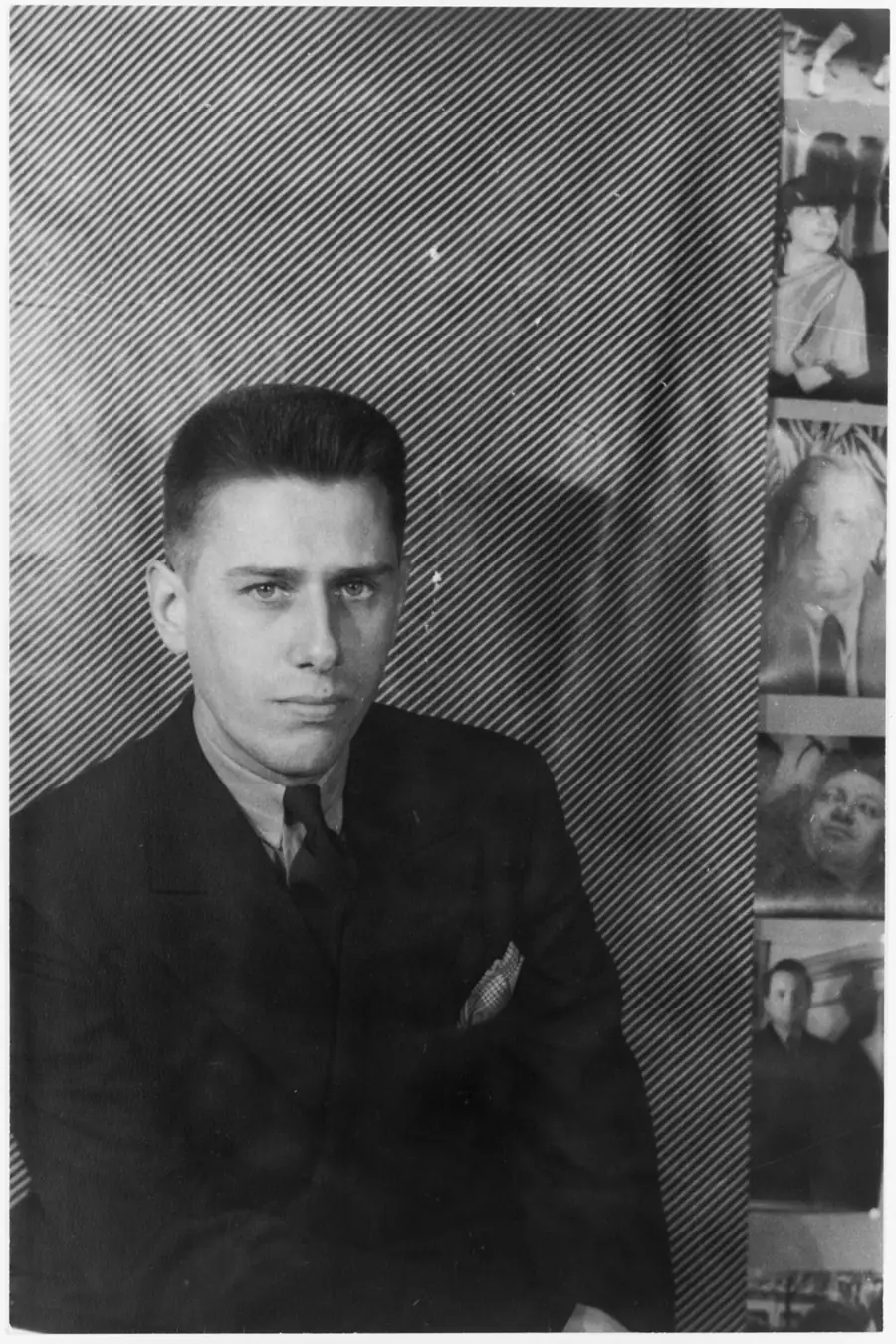
Paul Cadmus photographed by Carl Van Vechten, 1937. Library of Congress. Cadmus painted The Fleet's In!, removed from exhibition by the U.S. Navy, and is named in Chapter IV. Carl Van Vechten (1880-1964), December 7, 1937. Van Vechten Collection, Library of Congress Prints and Photographs Division, via Wikimedia Commons.. Public domain.
Mid-century (1930s–1970s)
As open homosexuality remained criminalized, a handful of painters lived and worked openly anyway, and one of them was censored by the U.S. Navy.
Paul Cadmus (1904–1999), a magic-realist who lived openly with his partner Jon Andersson, painted The Fleet's In! (1934), sailors carousing with women and an implied gay pickup. The Navy removed it from a public exhibition, making Cadmus a cause célèbre; the painting is held by the Navy Art Collection. Francis Bacon (1909–1992) was openly gay in an England where male homosexuality was illegal until 1967, and his relationship with George Dyer, whose 1971 death haunts the late triptychs, profoundly shaped his work. Self-identified / consensus
Andy Warhol (1928–1987) was open about his sexuality in a way unusual for the 1950s, when the mainstream art world rejected his early "swish" gay drawings; his Factory was a hub of queer creativity, including the trans "superstars" Candy Darling and others among his circle. David Hockney (b. 1937) has been openly gay since the 1960s, when homosexuality was still criminalized in Britain, and painted gay domesticity matter-of-factly in We Two Boys Together Clinging (1961) and Domestic Scene, Los Angeles (1963); the California pool paintings such as A Bigger Splash (1967, Tate) read within a gay sensibility. VerifiedHockney living · public facts only
Sources: Navy Art Collection records and standard Cadmus biography; Tate and standard Bacon scholarship; the Andy Warhol Museum; Tate and Hockney's own published statements.
Chapter V
The AIDS era (c. 1985–1996)
The crisis produced an art of emergency: posters meant to save lives, collectives that turned advertising against the state, and a portrait that the visitor is invited to carry away.
Keith Haring (1958–1990), an AIDS activist diagnosed with HIV in 1988 who founded the Keith Haring Foundation in 1989 to fund AIDS organizations and children's programs, made the "Ignorance = Fear / Silence = Death" poster for ACT UP. David Wojnarowicz (1954–1992) made Untitled (One Day This Kid…) (1990–91), a childhood photograph of the artist ringed by text forecasting the persecution a gay child will face; first shown in May 1990, it is in the Whitney's collection. Wojnarowicz died of AIDS-related illness on July 22, 1992. Verified
The Silence=Death Project was a six-person New York collective, Avram Finkelstein, Brian Howard, Oliver Johnston, Charles Kreloff, Chris Lione, and Jorge Socarras, formed in 1985, whose pink-triangle-on-black poster (1986, on the streets by early 1987) reclaimed the Nazi-camp badge and was then adopted by ACT UP, founded March 1987. The collective Gran Fury, spun out of ACT UP with members including Avram Finkelstein, Tom Kalin, Marlene McCarty, Donald Moffett, and Robert Vazquez-Pacheco, made "Kissing Doesn't Kill" (1989) and "The Government Has Blood on Its Hands"; the Canadian trio General Idea turned Robert Indiana's "LOVE" typography into a viral "AIDS" image (1987), and two of its three members died of AIDS in 1994. Félix González-Torres (1957–1996) made "Untitled" (Portrait of Ross in L.A.) (1991), an ideal 175-pound spill of wrapped candy, the healthy body weight of his partner Ross Laycock, that visitors take away and that is endlessly replenished; it is at the Art Institute of Chicago. Verified
The visitor takes a candy; the spill is replenished. The work refuses to let the man it portrays simply disappear.
On González-Torres, "Untitled" (Portrait of Ross in L.A.), 1991
Sources: the Keith Haring Foundation; the Whitney and the Wojnarowicz Foundation; Wikipedia and the Brooklyn Museum on the Silence=Death Project; Wikipedia and The Art Story on Gran Fury; the Art Institute of Chicago on González-Torres. Note: all of these works are in copyright; described here, not reproduced, until licensed.
Chapter VI
The Quilt
The largest piece of community folk art in the world is a memorial, and it began as one activist's idea on a San Francisco street.
A memorial the size of the National Mall
The NAMES Project AIDS Memorial Quilt
First displayed October 11, 1987 · 1,920 panels then · some 50,000 now
Conceived by activist Cleve Jones in San Francisco in 1985 and built by the NAMES Project Foundation, the AIDS Memorial Quilt was first displayed on October 11, 1987, on the National Mall in Washington, D.C., during the National March on Washington for Lesbian and Gay Rights. That first display held 1,920 panels, was already larger than a football field, and was seen by roughly half a million people over the weekend. Each panel is the size of a grave, hand-sewn by the friends, lovers, and families of the dead. Verified
The Quilt now holds some 50,000 panels bearing around 110,000 names, and its records are kept by the Library of Congress and the National AIDS Memorial. It is at once the period's most important work of vernacular art and one of its most complete archives of loss, which is why it sits at the center of this exhibit rather than in a footnote. Verified
1,920
panels at the first display, Oct 11, 1987
~500k
visitors to the Mall that weekend
~110k
names sewn into the Quilt today
Sources: History.com (Oct 11, 1987), Wikipedia, the Smithsonian Institution Archives, and the Library of Congress AIDS Memorial Quilt Records. Federal/NPS photographs of the 1987 Mall display are largely public domain and a cleared-image opportunity (verify per file); press-agency photographs are not.
Chapter VII
Contemporary & global (living artists)
The field today is photographic, global, and led by living artists who name themselves, which changes both what we can show and what we owe them.
Catherine Opie (b. 1961), an out lesbian photographer, carved a house and two women holding hands into the skin of her own back for Self-Portrait/Cutting (1993), a longing for a lesbian family the law would not recognize, and followed it with Self-Portrait/Pervert (1994); both are in the Solomon R. Guggenheim Museum. Verified
Zanele Muholi (b. 1972), the South African visual activist, is non-binary and uses they/them, and we use they/them throughout. Their ongoing Faces and Phases (begun 2006) builds a portrait archive of Black LGBTQI lives, and Somnyama Ngonyama / Hail the Dark Lioness (begun 2014) turns the camera on themselves; a major retrospective filled Tate Modern. Verified
Internationally, Bhupen Khakhar (1934–2003) was among the first major Indian artists to depict gay themes openly (You Can't Please All, 1981, Tate). Beyond a few anchors, the documentation of global queer art is uneven, and for living artists in places where being LGBTQ+ is dangerous we will not extrapolate identity from subject matter alone, a safety and consent rule, not merely a sourcing one. Living people · public facts only · consent & safety gate
Sources: the Guggenheim and Smarthistory on Opie; Britannica and Tate on Muholi (they/them); Tate on Khakhar. Opie's and Muholi's photographs are in copyright and require permission; described here, not reproduced.
Chapter VIII
How we know, and what we are still confirming
Three kinds of claim, never blurredMethod
Every artist carries a tag: self-identified, scholarly consensus, or debated. Michelangelo, Leonardo, and Caravaggio are shown as debated, and the Kahlo–Vargas specifics as oral and unverified; that transparency is itself part of the exhibit.
The copyright wall is realRights
The canon through early modernism can be illustrated with public-domain works (Caravaggio, Bonheur, Brooks, Hartley). Nearly everything from the AIDS era onward, Haring, Wojnarowicz, Gran Fury, General Idea, González-Torres, Opie, Muholi, is in copyright; we describe those works and budget for licensing rather than reproduce from the web. Installation shots of in-copyright works are not a loophole.
Threads to add in a fuller buildFinding
Trans and gender-nonconforming artists as a named thread (Greer Lankton, Tourmaline), 1970s lesbian-feminist art (Harmony Hammond, "A Lesbian Show," 1978), the Mapplethorpe / NEA "culture wars" of 1989–90, and Latin American and African queer art beyond the single anchors.
Help us hang the next wall
An artist, a work, a local queer art history we have missed? Bring it to us, sourced and with care.
Key sources: the Met; the Smithsonian American Art Museum; the Whitney; the Art Institute of Chicago; the Guggenheim; Tate; the Keith Haring Foundation; the Library of Congress. Full citations are held in the museum's research record.

 Museum