From a censored composer's diaries to the gayest No. 1 in chart history.
Span 1840s–todayGenres Classical, blues, jazz, disco, rock, pop, hip-hop, R&BReach Global, with honest gaps marked
Chapter 0
Overture
Queer people did not arrive in music recently. They wrote the standards, invented genres, named the dances, and gave the twentieth century some of its most enduring sound, often while the law, the church, or the record label demanded their silence.
This exhibit follows that thread across roughly two centuries and seven genres. It is built from a sourced research dossier of dozens of figures and landmark works, and it is organized the way a museum is, room by room, so you can take it one screen at a time rather than scroll an endless wall.
You will meet a Russian composer whose diaries were censored after his death; the blues women of 1920s Harlem who sang openly about loving women on records you could buy; the disco star who willed his royalties to AIDS charities; the rapper who put the most explicitly gay song in chart history at No. 1. We tell each story only as far as the record supports it, and we mark, in plain sight, where identity is documented, where it is debated, and where the evidence runs out.
7
genres, from opera to hip-hop
3
kinds of claim we keep separate: documented, debated, unknown
180+
years, from Tchaikovsky's birth to today
A note on what we claim
We name a musician as LGBTQ+ only on the basis of their own public words or clear scholarly consensus. Where a figure's identity was contested, shifted over time, or is a matter of historical interpretation, we say so plainly rather than tidy it into a label. Recordings, lyrics, and album art are almost all still under copyright; the photographs in this exhibit are public-domain or Creative Commons images, credited where required. Living artists appear on public, documented facts only.
Chapter I
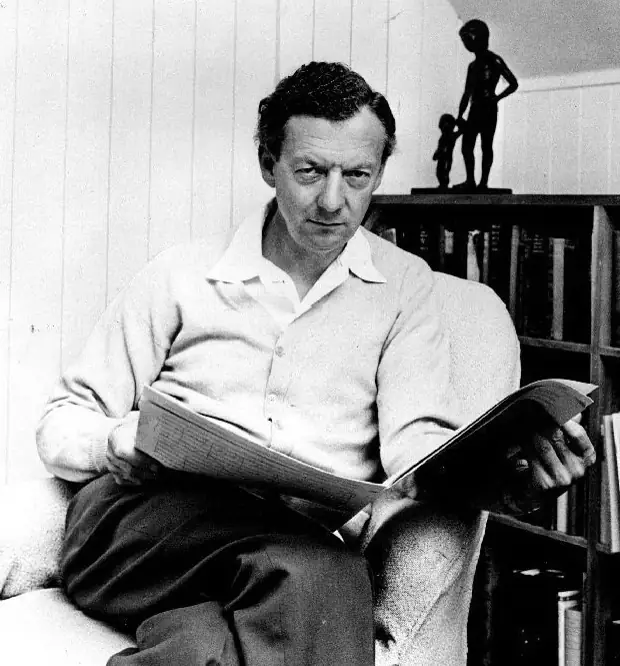
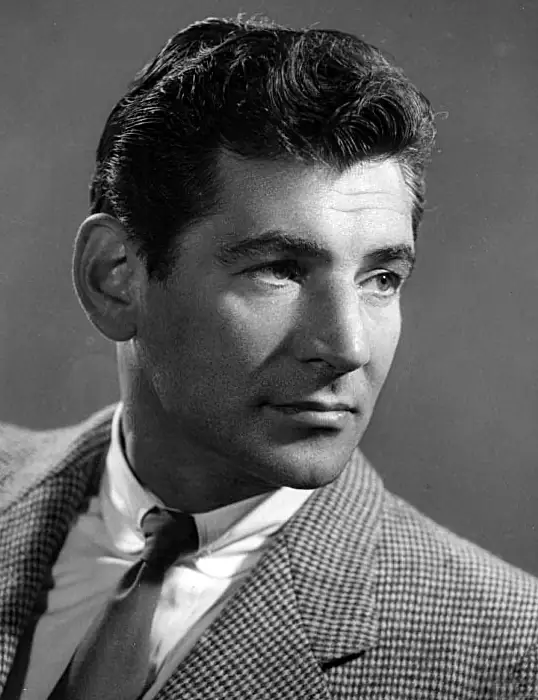
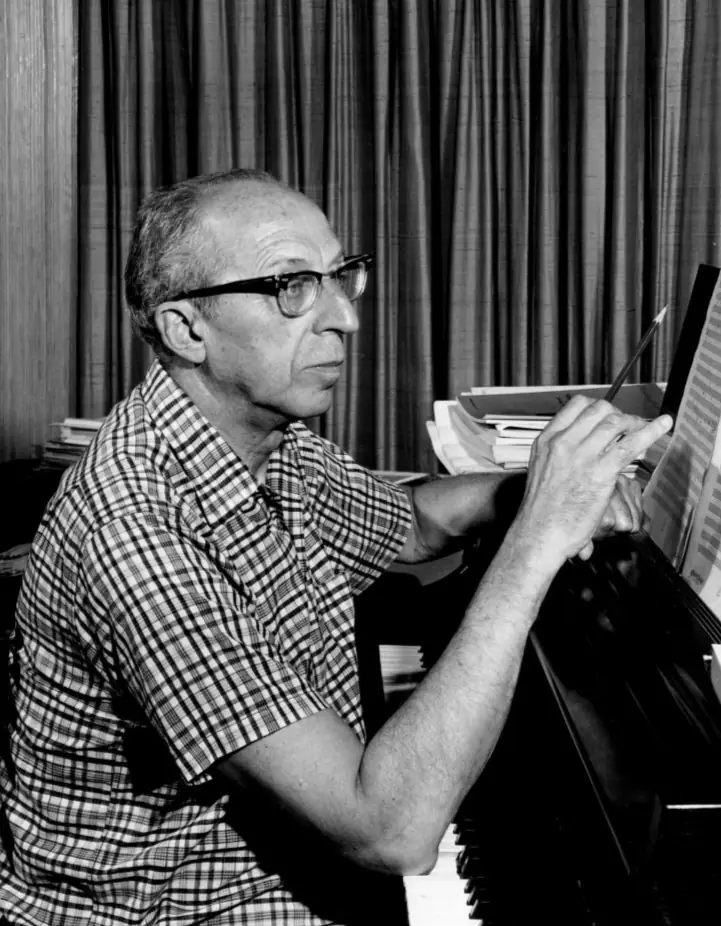
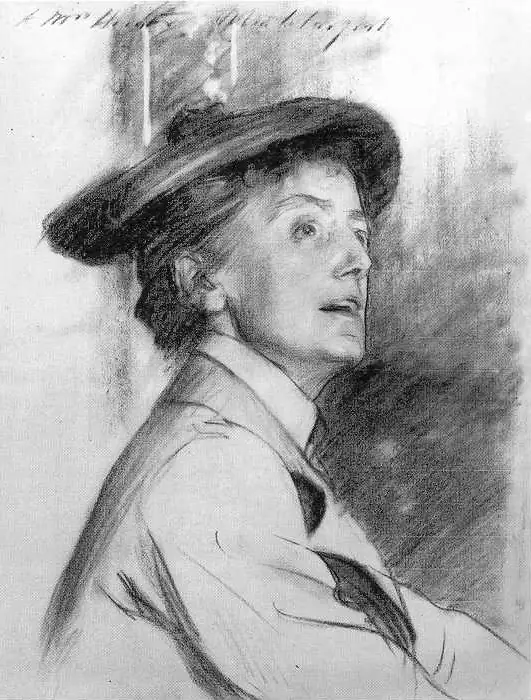
Composer Benjamin Britten in a 1968 London Records publicity photograph. London Records publicity photograph (original photo by Hans Wild), 1968. Public domain, via Wikimedia Commons.. Public domain.Leonard Bernstein in a 1950s publicity portrait. Publicity photograph, photographer unknown, 1950s. Public domain, via Wikimedia Commons.. Public domain.Aaron Copland at the piano in a 1962 CBS television photograph. CBS Television publicity photograph, 1962. Public domain, via Wikimedia Commons.. Public domain.Dame Ethel Smyth, composer and suffragette, drawn by John Singer Sargent in 1901. Chalk drawing by John Singer Sargent, 1901 (National Portrait Gallery, London). Public domain, via Wikimedia Commons.. Public domain.
Classical & opera
The concert hall looks like the straightest room in music history. It is not. It is one of the most thoroughly closeted, and one of the most thoroughly censored.
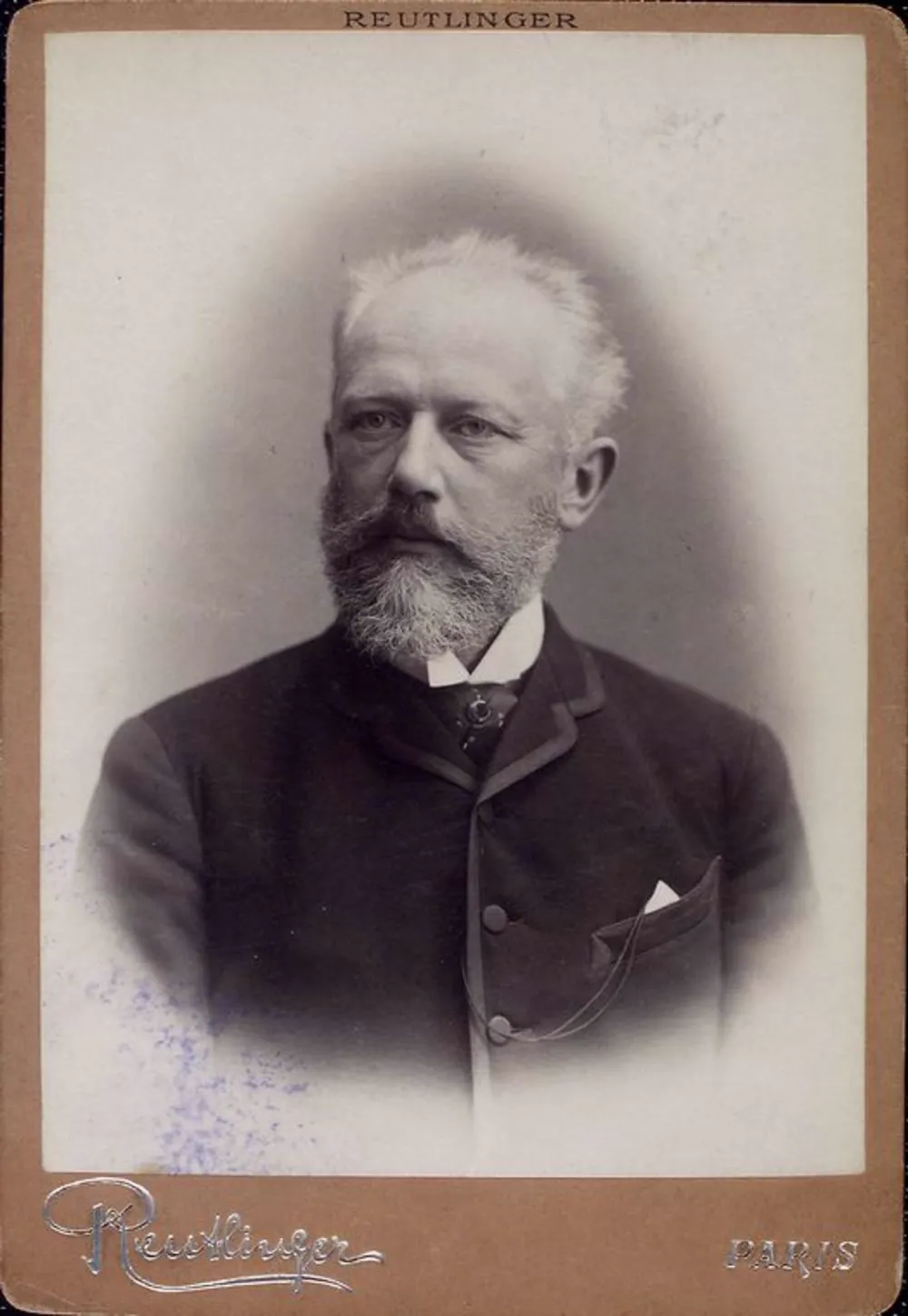
Pyotr Ilyich Tchaikovsky, photographed by Reutlinger. Public domain, via Wikimedia Commons.
Pyotr Ilyich Tchaikovsky (1840–1893) is the museum's clearest teaching case for the difference between a fact and an interpretation. Biographers generally conclude he was homosexual, but the degree of his comfort with it is actively debated: David Brown argued Tchaikovsky "felt tainted within himself," while Alexander Poznansky argues he came to see his sexuality as natural and felt no unbearable guilt. What is not in dispute is that Soviet musicologists suppressed and altered his diaries and correspondence, which is exactly why a clean claim is impossible. His Symphony No. 6 ("Pathétique") of 1893 is not a "gay work"; he is a figure whose sexuality was documented, hidden, and argued over. Contested / historical interpretation
The censorship is the fact. The inner life is the argument. We show you both, and we don't pretend the argument is settled.
From the museum's research notes
Benjamin Britten (1913–1976) and Peter Pears (1910–1986) are the section's firmest anchor. They met in 1937 and were personal and professional partners from 1939 until Britten's death, nearly forty years, and used the word "marriage" for their relationship from the 1940s. 365 of their letters survive, published in 2016 as My Beloved Man: The Letters of Benjamin Britten and Peter Pears. Britten's opera Peter Grimes premiered at Sadler's Wells, London, in June 1945 with Pears, who had suggested George Crabbe's poetry as the source, in the title role; the opera's theme of an outsider hounded by his town is widely read as coded. Britten Pears Arts at Aldeburgh is the modern custodian of their legacy. Verified
Leonard Bernstein (1918–1990) married Felicia Montealegre in 1951; the marriage was understood to allow his relationships with men. Montealegre wrote to him, "You are a homosexual and may never change," and his daughter Jamie confirmed his same-sex relationships in her 2018 memoir. His mentor Aaron Copland (1900–1990), the composer who arguably defined the "American sound" with Appalachian Spring, Fanfare for the Common Man, and Rodeo, is documented by his biographers (above all Howard Pollack's 1999 life) as a gay man. The point lands hard: a queer composer helped write the national-American idiom. Whether Bernstein and Copland were ever lovers is suggested by their letters but not established, and we say so. VerifiedBernstein–Copland intimacy: not proven
Sources: Wikipedia summarizing the Brown–Poznansky debate and Poznansky, Tchaikovsky: The Quest for the Inner Man (1991); Britten Pears Arts ("Who was Peter Pears?"; My Beloved Man) and the Peter Grimes production record; Yale University Press, "Did Leonard Bernstein's Wife Know He Was Gay?" (2023); Howard Pollack, Aaron Copland (1999).
Chapter II
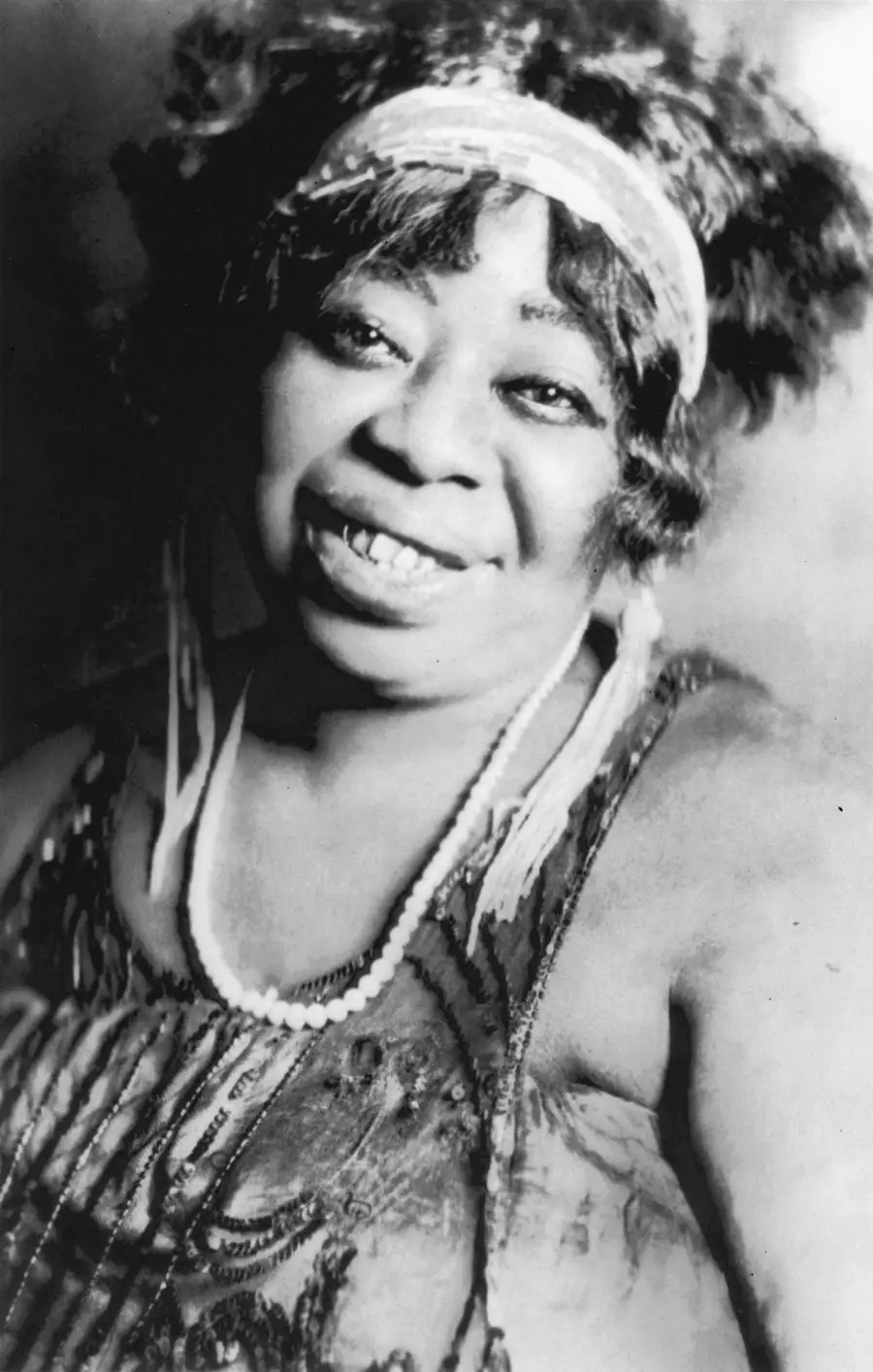
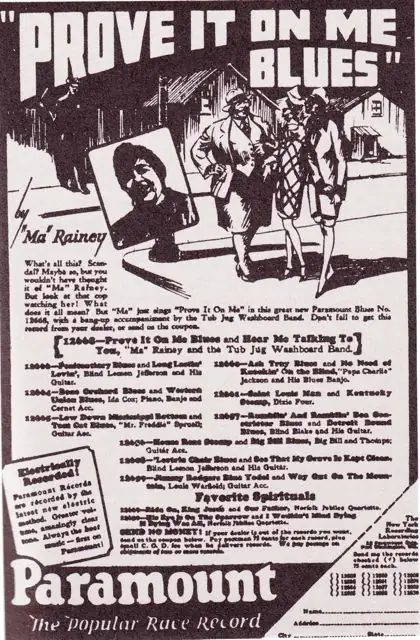
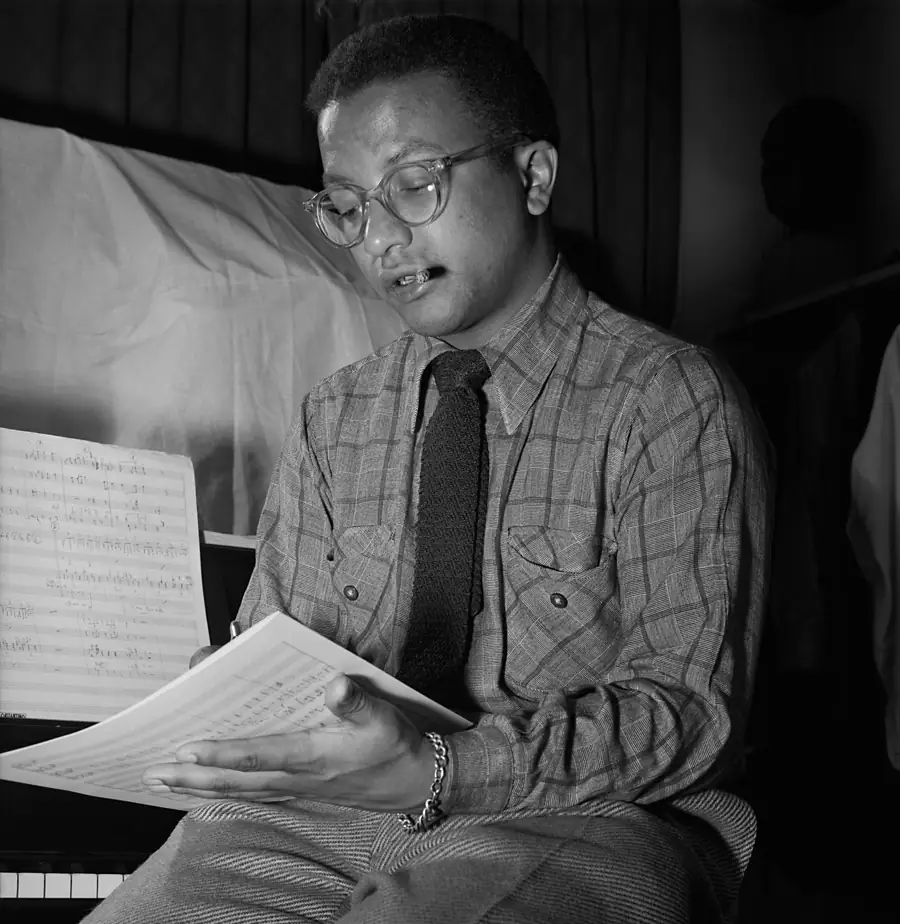
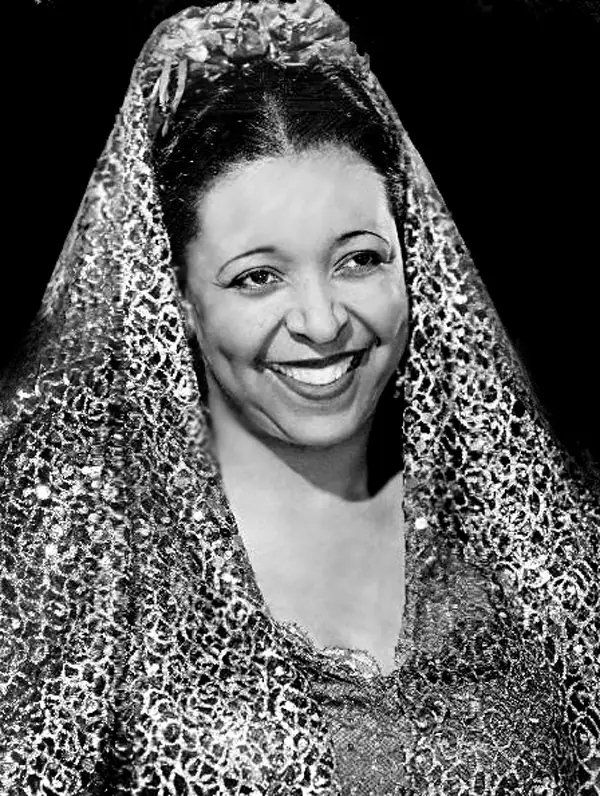
Gertrude Ma Rainey, the Mother of the Blues, in a 1920s studio portrait. Unknown author. Public domain, via Wikimedia Commons.. Public domain.The 1928 Paramount advertisement for Ma Rainey's Prove It On Me Blues, showing her in a suit and tie courting two women as a policeman watches. Paramount Records advertisement, unknown artist. Public domain, via Wikimedia Commons.. Public domain.Billy Strayhorn, photographed by William P. Gottlieb in New York between 1946 and 1948. Photograph by William P. Gottlieb, c. 1946-1948. Public domain (William P. Gottlieb Collection, Library of Congress), via Wikimedia Commons.. Public domain.Singer and actress Ethel Waters in a 1943 publicity photograph. William Morris Agency publicity photograph, 1943. Public domain, via Wikimedia Commons.. Public domain.
Blues & jazz
Decades before "coming out" was a phrase anyone used, the blues women of the 1920s sang about loving women on records you could buy, and a Black gay man quietly wrote some of the most beautiful music in the American songbook.
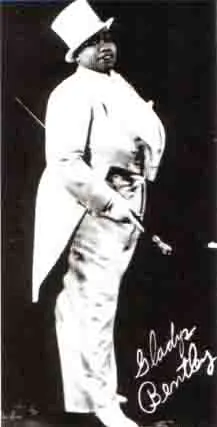
Gladys Bentley. Public domain, via Wikimedia Commons.
Gertrude "Ma" Rainey (1886–1939), the "Mother of the Blues," recorded "Prove It On Me Blues" in 1928. The lyric is unambiguous: "It's true I wear a collar and a tie… Talk to the gals just like any old man." The record's promotional advertisement pictured Rainey in a man's suit and tie, courting two women while a policeman watched. She is documented as attracted to women; because she was also married to a man, scholars debate "lesbian" versus "bisexual." A documented 1925 arrest at a party involving women, after which Bessie Smith reportedly bailed her out, is part of the record. Corroborated
Gladys Bentley (1907–1960) was one of the most famous openly lesbian performers of her era. She performed in a man's tuxedo and top hat, sang risqué lyrics in a deep growl, and flirted with women in the audience as the resident star of Harry Hansberry's Clam House, a gay speakeasy in Harlem. Her story does not end in triumph: in the McCarthy years she published a pressured 1952 Ebony essay, "I Am a Woman Again," claiming to have "cured" herself and married a man. We present that retreat as part of the story of repression, not as a contradiction to hide. Verified
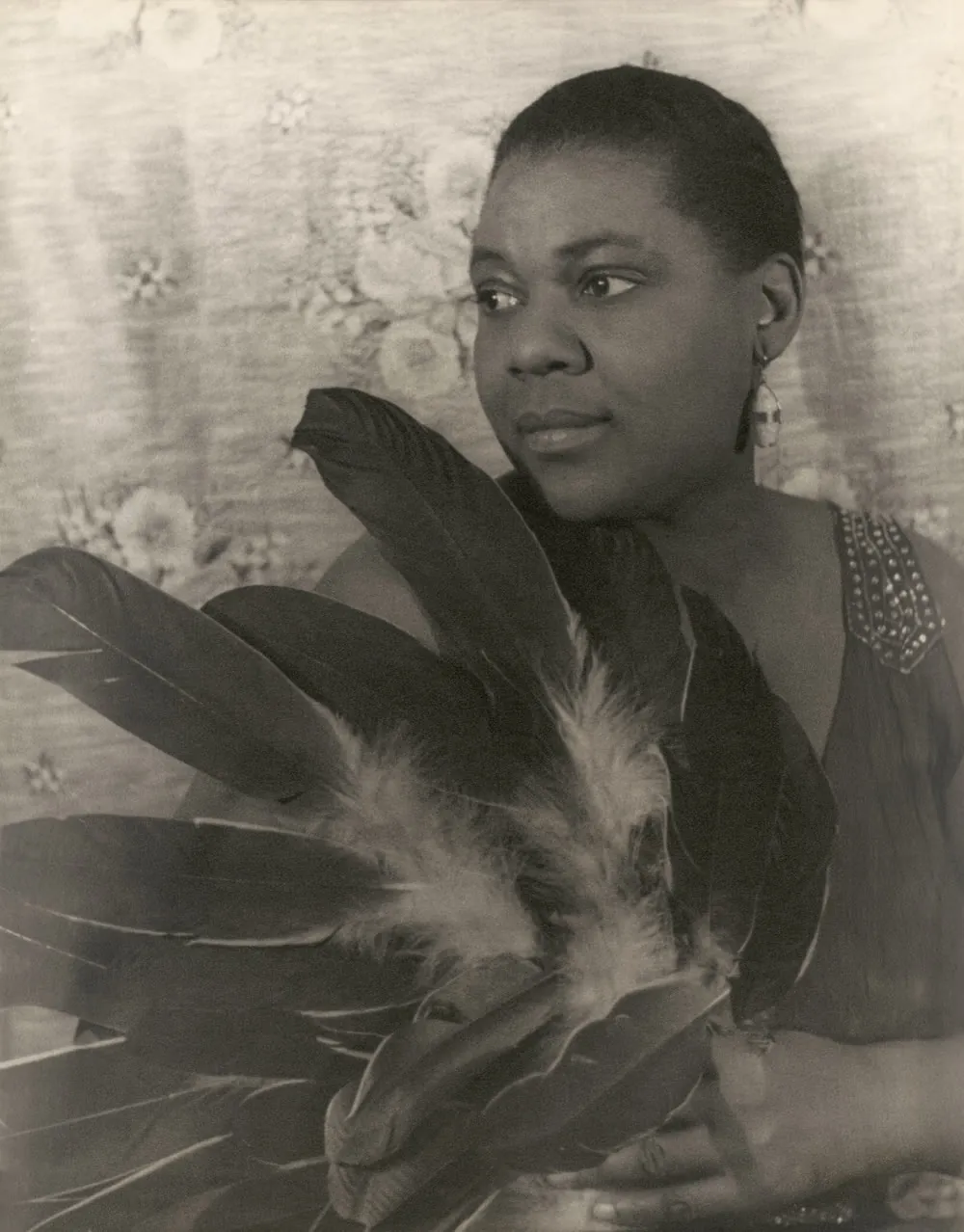
Bessie Smith, photographed by Carl Van Vechten, 1936. Public domain, via Wikimedia Commons.
Bessie Smith (1894–1937), the "Empress of the Blues" and the most popular female blues singer of the late 1920s and 1930s, is documented as bisexual and part of a circle of queer Black women performers. We treat that as scholarly consensus rather than a public statement she ever made; the concept of "coming out" did not exist in her milieu. Billy Strayhorn (1915–1967) lived as an openly gay Black man in the 1940s through the 1960s, at real professional cost, with his long-term partner Aaron Bridgers. He wrote "Lush Life" as a teenager and "Something to Live For," and from 1938 was Duke Ellington's principal composing and arranging partner, author of "Take the 'A' Train," the Ellington band's signature; the standard biography is David Hajdu's Lush Life (1996). VerifiedSmith: scholarly consensus
Together these four make a lineage, not a scattering of exceptions, and a documentary, Robert Philipson's T'Ain't Nobody's Bizness: Queer Blues Divas of the 1920s, treats Rainey, Bentley, and Smith as exactly that. Corroborated
Sources: Jonathan Ned Katz, OutHistory, and Billboard on Rainey's "Prove It On Me"; Smithsonian and the National Museum of African American History and Culture on Bentley; Collectors Weekly on Smith; NPR ("The Lush Life of Billy Strayhorn") and the NYC LGBTQ Historic Sites Project on Strayhorn.
Chapter III
Disco
Disco was a queer space before it was a pop format. The dance floor was the closet's opposite, and two of its defining acts came straight out of gay nightlife.
Sylvester (Sylvester James Jr., 1947–1988) was one of the first openly gay performers to reach bestseller status, flamboyantly out and gender-fluid in mainstream interviews at a time when that was nearly unheard of. "You Make Me Feel (Mighty Real)" (1978, from Step II) reached No. 8 in the UK and was later added to the U.S. Library of Congress National Recording Registry, which holds an essay on the song. Sylvester spoke openly about dying of AIDS and its impact on the Black community, and willed his royalties to Project Open Hand and the AIDS Emergency Fund. He is the hinge between this chapter and Chapter VII. Verified
The Village People were formed in 1977 by the openly gay French producer Jacques Morali, who conceived the group to capitalize on gay nightlife after seeing the costumes, cowboy, biker, construction worker, at a Greenwich Village costume ball. "Y.M.C.A." (October 1978, from Cruisin') is, by the Library of Congress's own account, a gay anthem, widely understood to reference the YMCA's reputation as a cruising spot; member Randy Jones has said the target audience was "Black, Latin, and gay underground clubs." Here we are careful: the group's concept and producer were queer-led, but that is not a claim about every member's private identity, and lead singer Victor Willis has publicly disputed gay readings of the lyrics. We frame the act as a product of queer culture, not as a roster of identities. VerifiedMember identities: not claimed
Per member Randy Jones, the target audience was "Black, Latin, and gay underground clubs." The mainstream just danced along.
On "Y.M.C.A.," via the Library of Congress
Sources: Library of Congress (the National Recording Registry essay on "You Make Me Feel (Mighty Real)"; "How 'Y.M.C.A.' Became a Gay Anthem," 2021); NPR American Anthem; standard reference on Sylvester and the Village People.
Chapter IV
Rock & pop: the first to say it
Rock and pop are where the public declaration became possible, and where we see most clearly that "coming out" is rarely a single clean moment.
Little Richard (1932–2020), a founding architect of rock 'n' roll, said he was gay at various points, a 1995 Penthouse statement put it bluntly, "I've been gay all my life", and also repeatedly renounced his sexuality on religious grounds across his life. We present that honestly as a documented, lifelong oscillation between affirmation and faith-driven renunciation, not a single tidy label. Complicated / repeatedly contested
David Bowie shows the same instability in public form. In a 1972 Melody Maker interview he said he was gay; in 1976 (Playboy) he said bisexual; in 1983 (Rolling Stone) he called the declaration "the biggest mistake I ever made" and later described himself as "a closet heterosexual." His statements changed materially over time, so we present him as context, a figure whose self-described identity shifted publicly, while his documented, lasting through-line is his impact on queer self-expression and androgyny. Statements shifted over time
Elton John (b. 1947) came out as bisexual in Rolling Stone on October 7, 1976 ("I think everybody's bisexual to a certain degree") and later publicly identified as gay; he married David Furnish in 2014 and founded the Elton John AIDS Foundation in 1992. Freddie Mercury (1946–1991) of Queen was engaged to Mary Austin, later told her he was bisexual, remained close, and left her the bulk of his estate; his partner from 1985 was Jim Hutton. Both men carry into Chapter VII. VerifiedElton John living · public facts only
Sources: Billboard, "Little Richard Grappling With His Sexuality & Religion"; Bowie's own interviews (Melody Maker 1972, Playboy 1976, Rolling Stone 1983); Rolling Stone's 1976 Elton John cover story; Wikipedia and Smooth Radio on Mercury.
Chapter V
Rock & pop: the anthems and the firsts
If Chapter IV is about ambivalence, this one is about clarity, the artists who said it plainly and paid for it, and the songs that became movement anthems.
k.d. lang (b. 1961, Canada) came out as a lesbian in The Advocate in June 1992, frequently cited as the first major-label artist to come out publicly. Melissa Etheridge (b. 1961) came out publicly in January 1993 at the Triangle Ball celebrating Bill Clinton's inauguration. Tom Robinson (b. 1950, UK) wrote "(Sing If You're) Glad to Be Gay" for a 1976 London Pride event; released in 1978 by the Tom Robinson Band, it became widely known as Britain's gay anthem. VerifiedLiving people · public facts only · consent gate
1972
Bowie tells Melody Maker he is gay
1976
Elton John comes out as bisexual in Rolling Stone
1992–93
k.d. lang, then Etheridge, come out at the top of the charts
The roster of out artists kept growing. George Michael (1963–2016) came out as gay in 1998; Sam Smith (b. 1992) is out as gay and came out publicly as non-binary, using they/them, in 2019; and the Canadian twin duo Tegan and Sara (b. 1980) have been out lesbian indie-pop artists and LGBTQ+ advocates throughout their career. VerifiedGeorge Michael & Sam Smith specifics: primaries to confirm
We also flag, honestly, the figures our research surfaced but did not fully source in this pass, Neil Tennant of the Pet Shop Boys (widely reported to have discussed being gay in a 1994 Attitude interview) and others, and we hold them for a confirmed primary citation before any print use rather than assert them here. Reported · primary citation pending
Sources: Wikipedia and The Advocate coverage on k.d. lang; GLAAD on Etheridge's Triangle Ball moment; Wikipedia and The History Project (Boston) on "Glad to Be Gay"; Billboard, "History of Coming Out in Music."
Chapter VI
Hip-hop & R&B
For a genre long marked by public homophobia, the last fifteen years have been a turning, led by a Tumblr letter and the most explicitly gay No. 1 in chart history.
On July 4, 2012, days before releasing Channel Orange, Frank Ocean (b. 1987) published an open letter, originally written for the album's liner notes, describing his first love, a man, when he was nineteen. It was a landmark for an artist in the hip-hop/R&B sphere, and he has not adopted a fixed label since; we report what he wrote, not a term imposed on him. Verified
Lil Nas X (Montero Lamar Hill, b. 1999) came out as gay on the last day of Pride Month 2019. "MONTERO (Call Me By Your Name)" (2021) debuted at No. 1 on the Billboard Hot 100; critics called it the most overtly gay No. 1 in the chart's history, and the video's queer imagery drew both major attention and backlash. Janelle Monáe (b. 1985) came out as pansexual/queer in a 2018 Rolling Stone interview and as nonbinary in 2022 (she/they). We report each artist's own stated terms. VerifiedLiving people · public facts only · consent gate
From a coded blues record in 1928 to an openly gay No. 1 in 2021: the same courage, ninety-three years apart.
From the museum's research notes
Sources: The FADER, "Why Frank Ocean's Letter Still Matters"; Variety and Slate on "MONTERO"; Global Citizen and Rolling Stone coverage of Monáe (original 2018 interview to be re-pulled before print use).
Chapter VII
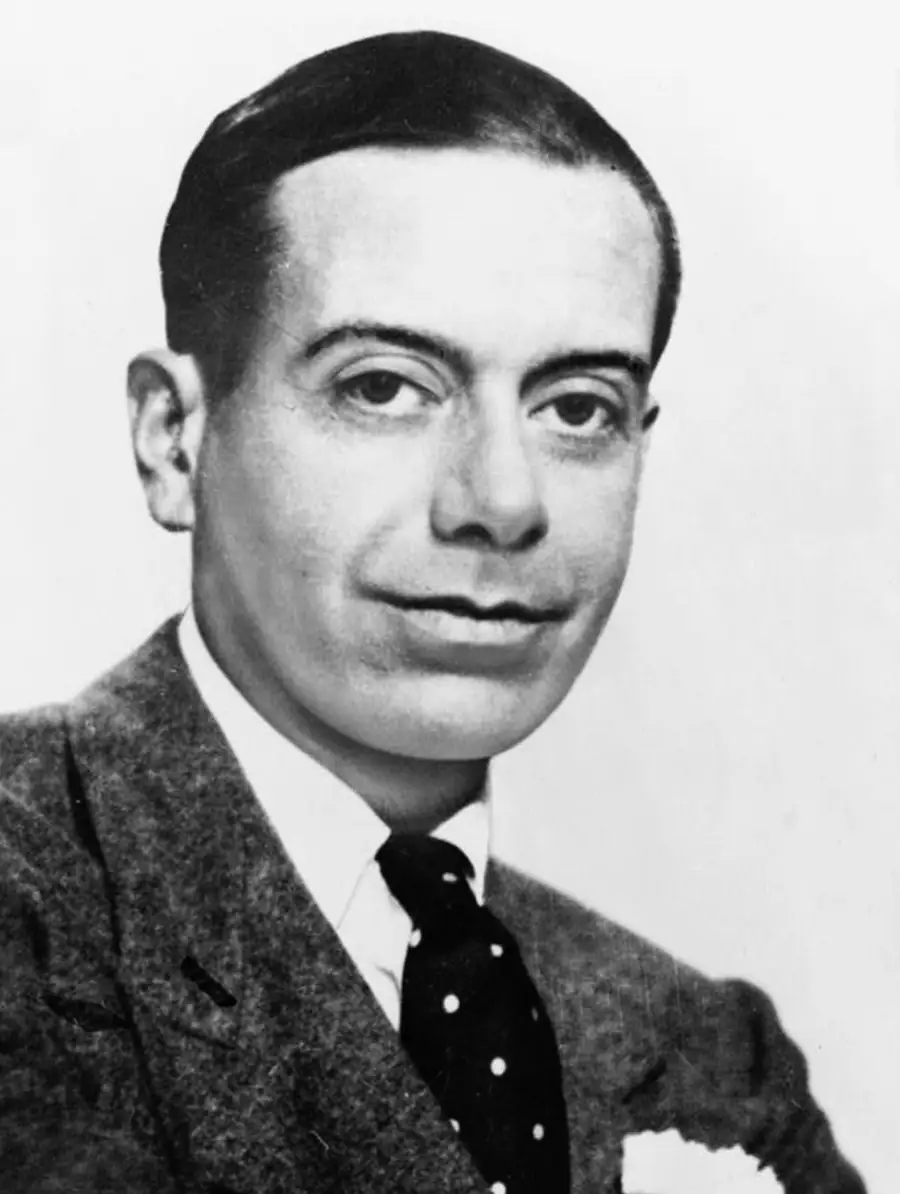
Composer and songwriter Cole Porter, whose songbook anchored the 1990 AIDS benefit album Red Hot and Blue. Unattributed, via the Library of Congress. Public domain, via Wikimedia Commons.. Public domain.
The AIDS era in music
The crisis tore through the music world, and the music world answered with benefit records, memorial songs, and grief turned into work.
"That's What Friends Are For" (1985), recorded by Dionne Warwick with Elton John, Gladys Knight, and Stevie Wonder and written by Burt Bacharach and Carole Bayer Sager, was released as a benefit for the American Foundation for AIDS Research (amfAR). It raised more than US$3 million, was the No. 1 single of 1986 in the United States, and won Grammys for Song of the Year and Best Pop Performance by a Duo or Group. Verified
In memory
Sylvester · Freddie Mercury · Klaus Nomi
Among the many voices the epidemic took
Sylvester died of AIDS complications on December 16, 1988, age 41. Freddie Mercury issued a public statement confirming he had AIDS on November 23, 1991, and died the next day, November 24. Klaus Nomi (1944–1983), the avant-garde new-wave countertenor, was among the earliest public figures to die of AIDS, a reminder that the crisis hit the experimental and queer music scenes very early. The benefit album Red Hot + Blue (1990), a Cole Porter tribute featuring major pop artists, became a landmark of music-industry AIDS fundraising. VerifiedRed Hot + Blue & Nomi: confirm a primary citation before print
This chapter does not stand alone: Sylvester is in Chapter III, Mercury and Elton John in Chapter IV. The epidemic is woven through the whole century of this exhibit, because it was woven through the whole of this music. Verified
Sources: Wikipedia and amfAR on "That's What Friends Are For"; Smooth Radio on Mercury's final statement; reference works on Sylvester and Klaus Nomi (single primary citations to be pinned before print).
Chapter VIII
The map and its silences
An honest music history has to admit its own shape.
The documented, citable record of LGBTQ+ music we could reach is heavily weighted toward the English-speaking West: the United States, the United Kingdom, Canada. That is partly real history, the recording industry and the press that covered it were concentrated there, and partly a gap in the sources available to an English-language research pass.
Verifiable records for queer musicians across the Global South, the Arab world, East and South Asia, Africa, and Latin America, beyond a few global stars such as Ricky Martin (who came out in March 2010 and was called a "game-changer" for Latin and global artists), were thin in our research. We mark that as a finding, not a verdict. It is a map of where this exhibit must grow next, with regional-language sources and community consultation, not a claim that the history is not there. Coverage gap · finding
Help us fill the silence
If you hold the record of a queer musician or scene the histories overlook, especially outside the Anglophone West, help us document it, sourced and with care.
We assert a musician's LGBTQ+ identity only from their own public words or clear scholarly consensus, and we flag every case, Tchaikovsky, Bowie, Little Richard, Ma Rainey's lesbian-vs-bisexual debate, where it is contested or shifted.
A handful of primary citations to pinVerifying
A single direct source for Bowie's statements, the Pet Shop Boys / Neil Tennant interview, Red Hot + Blue, Klaus Nomi, George Michael, and Monáe's original 2018 interview, before any of these reach print.
Recordings and images stay in their laneRights
Every recording, lyric, and album cover named here is in copyright; the photographs shown are public-domain or Creative Commons, credited. Iconic art and audio require licensing before use, and a fair-use line for brief lyric quotation is a legal review, not a guess.
Living artists are gated for consentConsent
A public coming-out is not the same as consent to appear in this museum; living figures pass a separate consent step before publication.
Key sources: Library of Congress; Britten Pears Arts; Smithsonian / NMAAHC; Rolling Stone; Billboard; NPR; OutHistory; the NYC LGBTQ Historic Sites Project; amfAR. Full citations are held in the museum's research record.

 Museum