For decades doctors decided how intersex children's bodies should look before those children could speak, and the movement that pushed back held its first public protest in Boston in 1996.
Room 0
Decided Without Them
November 8 is Intersex Day of Remembrance, kept on the birthday of Herculine Barbin. Barbin was a French intersex person born in 1838, and Barbin's own account of that life survives in print. Verified
In 1955 John Money and his team at Johns Hopkins introduced protocols for managing intersex babies. On October 26, 1996, intersex activists picketed the annual meeting of the American Academy of Pediatrics in Boston. In October 2020, Boston Children's Hospital pledged to stop two genital surgeries on patients too young to take part in the decision. Corroborated
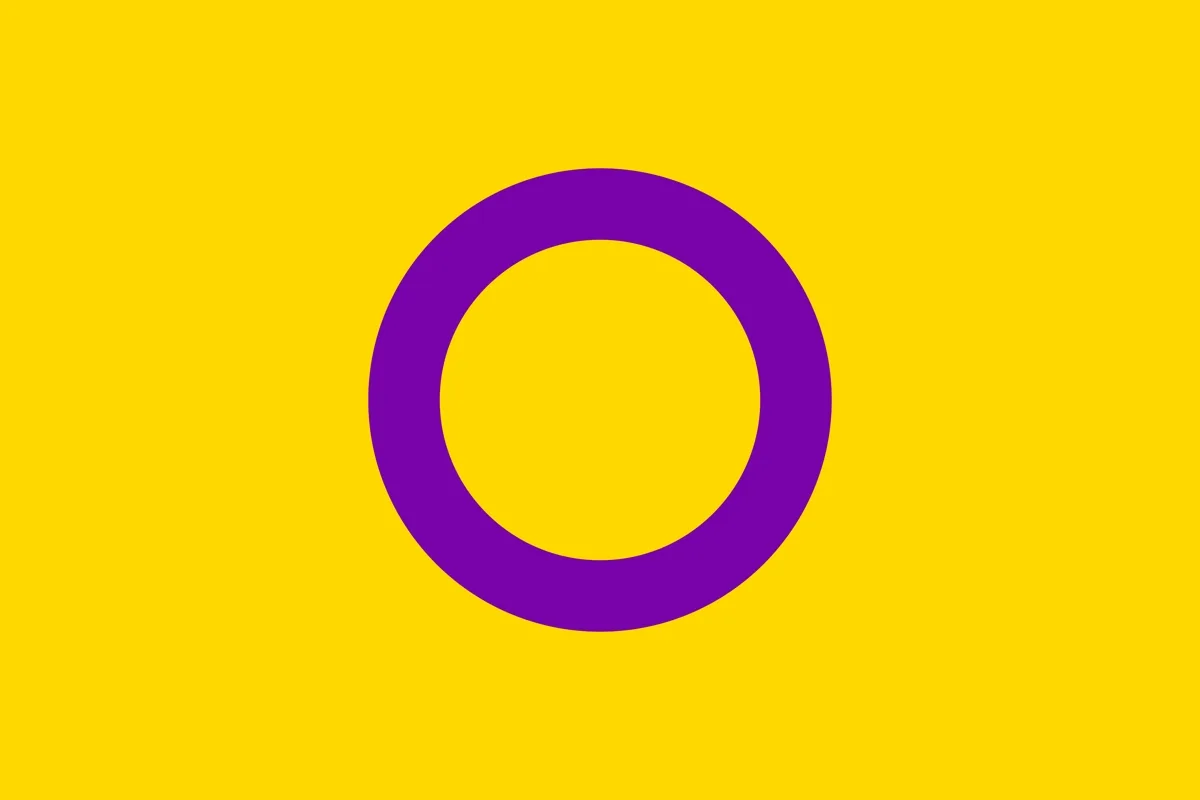
Hero image: Intersex flag designed by Morgan Carpenter, Intersex Human Rights Australia, 2013 (CC0).
Room 1
An umbrella term for differences in sex traits
interACT: Advocates for Intersex Youth, a group based in Massachusetts, defines it this way: "Intersex is an umbrella term for differences in sex traits or reproductive anatomy." Intersex people are born with these differences or develop them in childhood, the group says. The differences can be in "genitalia, hormones, internal anatomy, or chromosomes, compared to the usual two ways that human bodies develop." Verified
The United Nations Free and Equal campaign describes intersex people as "born with sex characteristics (including genitals, gonads and chromosome patterns) that do not fit typical binary notions of male or female bodies." Verified
Some intersex traits are noticed at birth, interACT adds, while others "don't show up until puberty or later in life." A person can learn they are intersex as a teenager or as an adult. Verified
The estimates below range from about 0.018% to as high as 2% of births, because each study counts different conditions. Corroborated
The UN fact sheet says that "according to experts, between 0.05% and 1.7% of the population is born with intersex traits." Verified
A 2000 review from Brown University in Providence, with Anne Fausto-Sterling among its authors, said the frequency "may be as high as 2% of live births." For genital surgery, its estimate was "between 1 and 2 per 1,000 live births." Verified
In 2002 Sax, in a reply in the Journal of Sex Research, argued that the review counted conditions most clinicians do not call intersex, such as Klinefelter syndrome and Turner syndrome. Without them, Sax put the figure at "about 0.018%." Verified
The Intersex Society of North America counted babies whose bodies look different enough at birth that a specialist is called. For those babies, it put the number at "about 1 in 1500 to 1 in 2000 births." Verified
interACT itself uses the higher estimate, "About 1.7% of people are born intersex." It also says that "1 in 2,000 babies (0.05% of humans) are born with genital differences that a doctor might suggest changing with unnecessary surgery." Verified
interACT calls "hermaphrodite" a word that, in its words, "is usually considered a slur." It also says intersex people do not prefer the term "ambiguous genitalia," because it is "only ambiguous to those making assumptions and decisions about our bodies." Verified
Many doctors now say "differences" or "disorders of sex development," shortened to DSD. In 2006, an international medical consensus proposed that term (Room 4). interACT notes that "Many intersex people reject the term 'DSD' because it supports the idea that their bodies are wrong," and it generally does not use the term. Verified
Morgan Carpenter, of Intersex Human Rights Australia, created the intersex flag in 2013. That December the flag was licensed under Creative Commons Zero, so intersex people and organizations can share it freely in a human rights setting. Verified
Intersex flag designed by Morgan Carpenter, Intersex Human Rights Australia, 2013 (CC0)
Sources
interACT: Advocates for Intersex Youth, "What is intersex? Frequently Asked Questions and Intersex Definitions," https://interactadvocates.org/faq/
Blackless M, Charuvastra A, Derryck A, Fausto-Sterling A, Lauzanne K, Lee E, "How sexually dimorphic are we? Review and synthesis," American Journal of Human Biology 12(2):151 to 166, 2000, PMID 11534012 (Brown University, Department of Molecular and Cell Biology and Biochemistry)
Sax L, "How common is intersex? A response to Anne Fausto-Sterling," Journal of Sex Research 39(3):174 to 178, 2002, PMID 12476264
Herculine Barbin was born on November 8, 1838, in Saint-Jean-d'Angély in western France. Assigned female at birth, Barbin was raised in a convent. In 1857 Barbin took a teaching post at a girls' school and fell in love with another teacher. Verified
When the relationship was noticed, Barbin was put through a medical inspection and declared intersex. A French court then changed the civil record, and the national library of France records the ruling exactly. A judgment of June 21, 1860, set the sex as male and the first name as Abel. Barbin was made to leave a life lived as a woman and start again as a man. Verified
In 1868, Barbin died by suicide in Paris. The Bibliothèque nationale de France records the date as March 13, 1868, though we have not found a second source for the day and month. VerifiedUnknown: a second source for the day and month
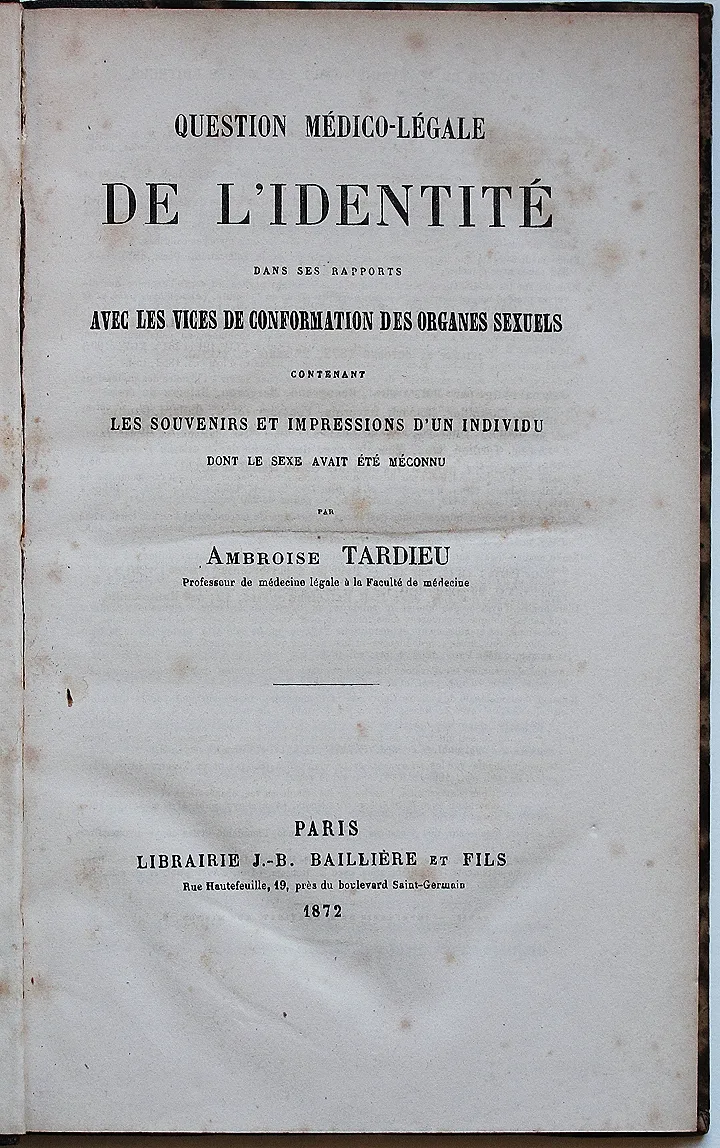
In 1872 Auguste Ambroise Tardieu printed part of Barbin's written account in Paris, under the name "Alexina B.", inside a medico-legal study titled Question médico-légale de l'identité. That was how the memoir first reached readers, four years after Barbin's death. Verified
In 1978 the philosopher Michel Foucault presented a French edition through Gallimard, titled Herculine Barbin, dite Alexina B. An English translation by Richard McDougall followed in 1980, from Pantheon Books in New York and Harvester Press in Brighton, England. Verified
Title page, Ambroise Tardieu, Question medico-legale de l'identite, 1872, the book that first printed part of Barbin's memoir. Scan by Gerard Koskovich, CC BY-SA 3.0, via Wikimedia Commons
We found no photograph of Barbin with a museum or archive provenance, so this room shows the book instead. Images shared online as Barbin stay out until an archive can stand behind one. Unknown: an authenticated portrait
Intersex Day of Remembrance falls on Barbin's birthday, November 8. According to the Intersex Day project, it appears to have first been held on November 8, 2005, as Intersex Solidarity Day. Joëlle-Circé Laramée, then Canadian spokeswoman for Organisation Intersex International, had called on everyone who cared about intersex human rights to mark the date. Verified
Bibliothèque nationale de France, catalogue record cb346041993, Herculine Barbin, dite Alexina B., presented by Michel Foucault, Gallimard, 1978
HistoryofMedicine.com (Garrison and Morton), Tardieu, Question médico-légale de l'identité, Paris, J.-B. Baillière et fils, 1872, https://www.historyofmedicine.com/id/15651
Wellcome Collection, catalogue record, Herculine Barbin: being the recently discovered memoirs of a nineteenth-century French hermaphrodite, Harvester Press, 1980, https://wellcomecollection.org/works/ff4ayqpb
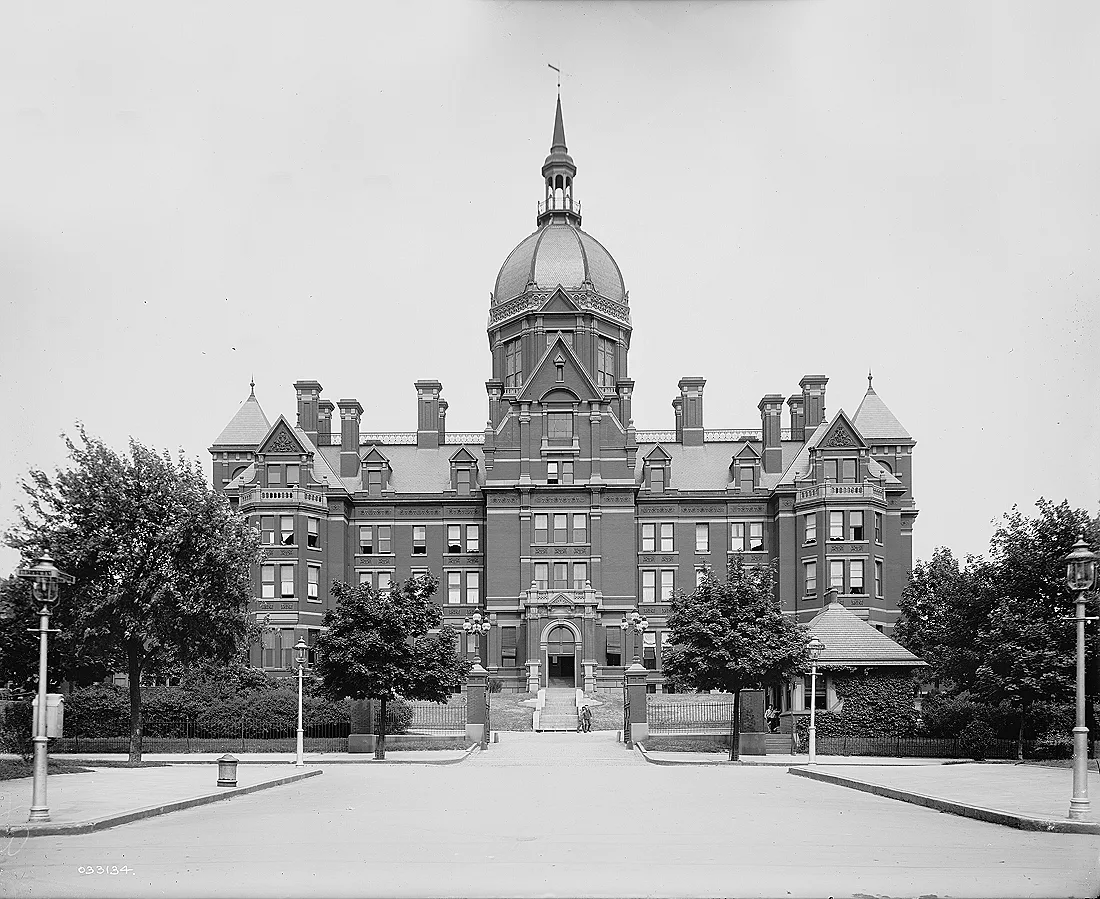
In 1955 the psychologist John Money and his team introduced protocols for intersex children at Johns Hopkins. A summary of Alison Redick's 2005 article in the Cardozo Journal of Equal Rights and Social Justice says the protocols "aimed to enforce binary gender norms." Verified
Money argued, in the words of the Intersex Society of North America, "that gender identity was largely mutable early in life, that nurture was more important than nature." In 2014 the World Health Organization and six United Nations agencies described what followed for many children. "Intersex persons, in particular, have been subjected to cosmetic and other non-medically necessary surgery in infancy, leading to sterility, without informed consent of either the person in question or their parents or guardians." Corroborated
Johns Hopkins Hospital, Baltimore, about 1900. Detroit Publishing Company, Library of Congress. Public domain
Money's chief support for the theory came from a famous case known as "John/Joan." In 1967 Money recommended that a baby boy whose penis had been destroyed in an accident be raised as a girl. For decades, the Intersex Society of North America wrote, "Money erroneously touted a successful outcome." Corroborated
That child, David Reimer, was not born intersex, yet his case was held up as proof for the way intersex babies were treated. In 1997 Milton Diamond, of the University of Hawaii, and Keith Sigmundson published a long-term follow-up of the case in the Archives of Pediatrics and Adolescent Medicine. Their summary ends with a warning to the field: "Subsequent cases should, however, be managed in light of this new evidence." Verified
Reimer took his own life in Winnipeg on May 4, 2004, at 38. Bodies Like Ours, a peer support group, reported his death in a release that month. Verified
Cheryl Chase, the founder of the Intersex Society of North America, started it in 1993. ISNA's history says she began the group because of "her own attempts to recover her history of sex-reassignment in infancy and medically-induced shame." It adds that most of her former care providers showed little interest in what had happened to her. Verified
OHCHR, UN Women, UNAIDS, UNDP, UNFPA, UNICEF and WHO, "Eliminating forced, coercive and otherwise involuntary sterilization: An interagency statement," World Health Organization, 2014, ISBN 9789241507325
Diamond M, Sigmundson HK, "Sex reassignment at birth: Long-term review and clinical implications," Archives of Pediatrics and Adolescent Medicine 151(3):298 to 304, 1997, doi:10.1001/archpedi.1997.02170400084015
In 1993 Anne Fausto-Sterling, a biologist at Brown University in Providence, published "The Five Sexes: Why Male and Female Are Not Enough" in The Sciences. In response, according to the group's own history, "Cheryl Chase wrote a letter to The Sciences announcing the founding of the Intersex Society of North America (ISNA)." Corroborated
ISNA began as a support group, and its history says it "quickly turned into an advocacy group because its members realized that they had suffered from similar problems." Human Rights Watch later summed up its stance: "ISNA's message was not anti-doctor, or even anti-surgery, but pro-informed consent." Corroborated
For two years before the protest, ISNA had been sending out a newsletter under a name its members chose, "Hermaphrodites with Attitude." In its 2018 essay, Human Rights Watch places the newsletter among ISNA's "momentous historical agitations." Corroborated
On October 26, 1996, the American Academy of Pediatrics was holding its annual meeting in Boston. Morgan Holmes made the trip with Max Beck, and the two stayed at the apartment of Riki-Anne Wilchins. Holmes wrote that when they "arrived on the morning of the 26th at the Boston Convention Centre" they learned they were not on the schedule to speak. They took their case outside instead, where "Max, myself and a dozen or so allies, including David Valentine" unfurled a banner out front. Holmes no longer recalls whether the banner went up that same afternoon or the next day. Out magazine and the Intersex Day project both say allies from Transexual Menace stood with them. Corroborated
Human Rights Watch later wrote of the protest, "It was a small group, and many participants were allies, but it struck a chord." Verified
It was the only public protest ISNA ever staged, and it is remembered as the first public demonstration by intersex people in North America. In 2025 the City of Boston called it "the first public demonstration by intersex people in the United States." Corroborated
Holmes names the place only as the Boston Convention Centre, and no second source we found names the building. Unknown: which convention building
October 26 is now marked around the world as Intersex Awareness Day, and the Boston City Council formally recognized October 26, 2025, as Intersex Awareness Day in the city where it started. Corroborated
An international consensus of about 50 experts, convened by the Lawson Wilkins Pediatric Endocrine Society and the European Society for Paediatric Endocrinology, met in 2006. They wrote that "Terms such as intersex, pseudohermaphroditism, hermaphroditism, sex reversal, and gender based diagnostic labels are particularly controversial." Then they added, "The term 'disorders of sex development' (DSD) is proposed." Many intersex people still reject the proposed term, as Room 1 explains. Verified
ISNA closed in 2008, after convening the group of clinicians and advocates that became Accord Alliance, which opened that March. ISNA said its funds and assets would be transferred to Accord Alliance and its historical archives preserved at the Kinsey Institute at Indiana University. The ISNA website now tells visitors that "ISNA's work is continued by interACT: Advocates for Intersex Youth." Verified
Sources
Anne Fausto-Sterling, curriculum vitae, Brown University profile (Nancy Duke Lewis Professor Emerita of Biology): "The Five Sexes: Why Male and Female Are Not Enough," The Sciences 33, March/April 1993, 20 to 24, https://vivo.brown.edu/display/afaustos
Hughes IA, Houk C, Ahmed SF, Lee PA, "Consensus statement on management of intersex disorders," Archives of Disease in Childhood 91(7):554 to 563, 2006, https://pmc.ncbi.nlm.nih.gov/articles/PMC2082839/ ; also Journal of Pediatric Urology 2(3):148 to 162, 2006 (50 international experts; LWPES and ESPE); Pediatrics 118(2):e488 to 500, 2006
Boston Children's and the Massachusetts Medical Society
Between 2018 and 2020 the Massachusetts Medical Society and Boston Children's Hospital both changed course on surgery for intersex children. Kimberly Zieselman, an intersex woman raised in Massachusetts, was among those pressing for it. Corroborated
In 2018, a resolution on intersex care came before the Massachusetts Medical Society. Zieselman, the executive director of the Massachusetts-based group interACT, testified for it. By December 2019 the society had adopted a policy that, as Human Rights Watch quoted it, "defers medical or surgical intervention until the child is able to participate in decision making." The policy makes one exception, "when life-threatening circumstances require emergency intervention." The society's policy is professional guidance, with no force of law. Verified
WGBH reported in 2019 that at 41 Zieselman "got hold of her medical records from Massachusetts General Hospital." She told the station she was talking with state lawmakers about proposing a bill to protect intersex children. Verified
In July 2020 Lurie Children's Hospital in Chicago posted what advocates called "a first-of-its-kind public apology," after a three-year campaign by the Intersex Justice Project. It became the first hospital in the United States to commit to ending unnecessary genital surgeries on intersex children. Its statement read, "We empathize with intersex individuals who were harmed by the treatment that they received," and, "we apologize and are truly sorry." Corroborated
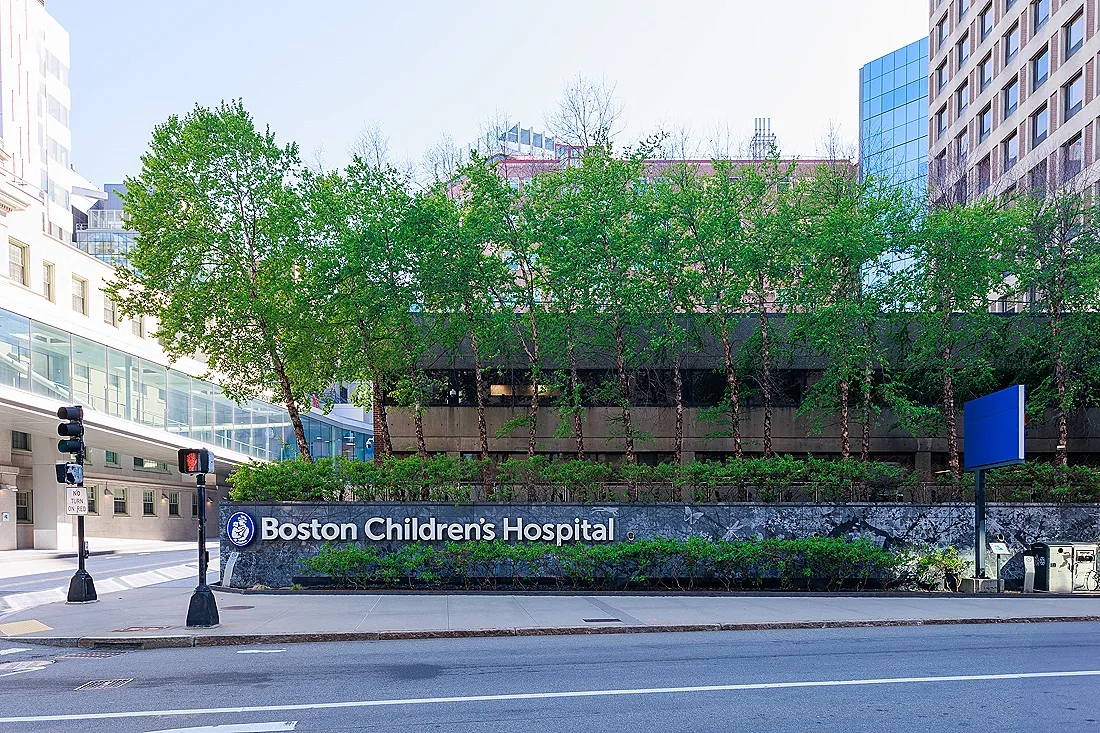
Boston Children's Hospital followed in October 2020, as "the second U.S. hospital to commit to ending the practice of 'normalizing' surgery on intersex infants," in interACT's words. The hospital said "we will not perform clitoroplasty or vaginoplasty in patients who are too young to participate in a meaningful discussion of the implications of these surgeries." It kept one exception, for cases where "anatomical differences threaten the physical health of the child." Corroborated
interACT noted that, unlike Lurie's statement, the Boston policy did not leave out children with congenital adrenal hyperplasia, one of the most common intersex variations. It also credited the Massachusetts Medical Society's 2019 position as one reason for the change. Corroborated
Zieselman said in interACT's October 2020 release, "As an intersex woman who was raised in Massachusetts, I am proud that BCH finally recognized the dignity of intersex people." Verified
The hospital's program today is called BEING-U, short for Behavioral Health, Endocrinology, Gynecology, Urology. Its team includes "endocrinology, urology, social work, and psychology," and its page still states the same limit on those two surgeries. Verified
Boston Children's Hospital. Photo by Kenneth C. Zirkel, CC BY-SA 4.0, via Wikimedia Commons
A search of the Massachusetts Legislature's bill records for the 193rd and 194th sessions found no bill that would defer or ban intersex surgery. The search used the terms "intersex," "sex characteristics" and "variations in sex characteristics." Unknown: any Massachusetts intersex surgery bill
Next door, Rhode Island lawmakers filed matching bills in March 2021, Senate bill 593 and House bill 6171. They would have barred certain surgeries on children under 12 born with variations in their physical sex characteristics, "unless required to address an immediate risk of physical harm." We found no later bill in either state and could not confirm the final outcome from the legislature's own records. Unknown: the final outcome of the 2021 Rhode Island bills
Massachusetts did change how its documents record sex for every resident, starting with licenses. In November 2019 the Registry of Motor Vehicles began offering an "X" marker on licenses. The state budget signed on July 29, 2024, lets a person ask to change the sex designation on a birth record. The new designation may be one "including, but not limited to, 'female', 'male' or 'X'." On licenses and IDs, an "X" now requires "No documentation." Neither change was written for intersex people in particular, though both apply to them. Corroborated
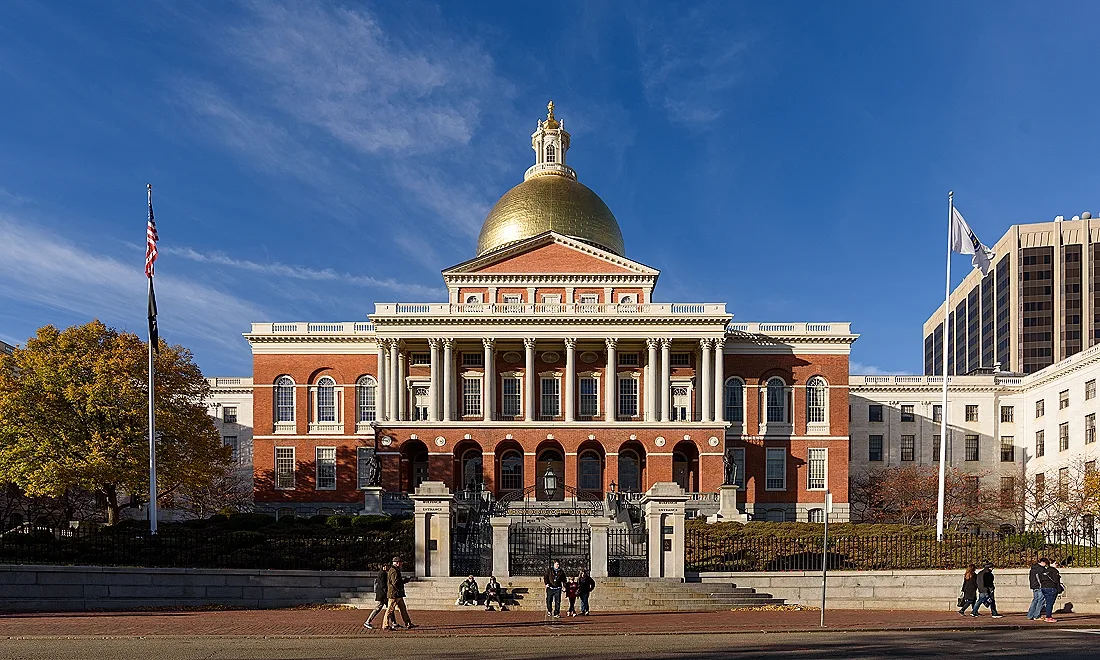
Massachusetts State House. Photo by King of Hearts, CC BY-SA 4.0, via Wikimedia Commons
In 2014 the World Health Organization joined six United Nations bodies in a statement on forced sterilization. The six were OHCHR, UN Women, UNAIDS, UNDP, UNFPA and UNICEF. The statement named intersex people directly, saying they "have been subjected to cosmetic and other non-medically necessary surgery in infancy." Verified
In 2015 Malta adopted the Gender Identity, Gender Expression and Sex Characteristics Act. The UN Free and Equal campaign calls it "the first law to prohibit surgery and treatment on the sex characteristics of minors without informed consent." Verified
For Intersex Awareness Day in 2016, United Nations and regional human rights experts issued a joint statement. The signers included the UN Committee against Torture and the UN Committee on the Rights of the Child. Its headline read, "End violence and harmful medical practices on intersex children and adults." The statement said, "They urge Governments to prohibit harmful medical practices on intersex children, including unnecessary surgery and treatment without their informed consent, and sterilization." Verified
On April 4, 2024, the UN Human Rights Council in Geneva adopted its first resolution on intersex people. Resolution 55/14, "Combating discrimination, violence and harmful practices against intersex persons," passed by a recorded vote of 24 to 0, with 23 abstentions, and the United States voted in favor. The Council expressed "grave concern" about "medically unnecessary or deferrable interventions, which may be irreversible, with respect to sex characteristics, performed without the full, free and informed consent of the person." It asked the UN human rights office to prepare a report for the Council's sixtieth session. Corroborated
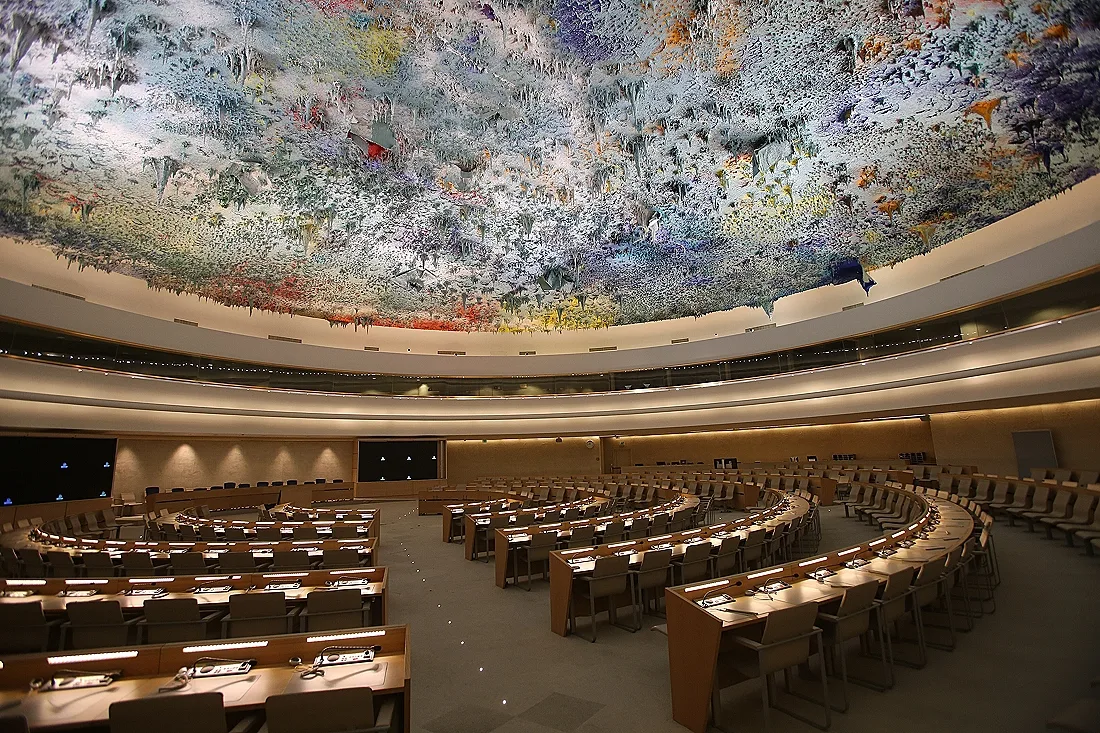
Human Rights and Alliance of Civilizations Room, Palais des Nations, Geneva, where the Human Rights Council meets. Photo by Ludovic Courtes, CC BY-SA 3.0, via Wikimedia Commons
Sources
OHCHR, UN Women, UNAIDS, UNDP, UNFPA, UNICEF and WHO, "Eliminating forced, coercive and otherwise involuntary sterilization: An interagency statement," World Health Organization, 2014, ISBN 9789241507325
OHCHR, "End violence and harmful medical practices on intersex children and adults, UN and regional experts urge," Oct. 24, 2016, NewsID 20739 (archived copy)
On November 8, 2026, our researchers searched nine newsrooms and the Library of Congress newspaper collection for any story about an intersex person, family or event on the South Coast. They were the Standard-Times at SouthCoast Today, the Herald News, The New Bedford Light, Fall River Reporter, New Bedford Guide, the Providence Journal, Rhode Island public radio and NBC 10.
The searches turned up no local article about intersex people and no South Coast person speaking on the record as intersex. The outlets listed no local Intersex Awareness Day event, and our Library of Congress search turned up no old South Coast item about an intersex person. Unknown: local press and archive items
That silence does not prove that nothing happened on the South Coast. The archives at UMass Dartmouth, the New Bedford Whaling Museum research library, the New Bedford Free Public Library and the Fall River Historical Society were not searched in time for this opening. Letters to their staff are being drafted, and anything they find will be added here with its citation. Unknown: archive holdings not yet searched
If the UN's estimate of 0.05% to 1.7% holds on the South Coast as it does elsewhere, a city of 100,000 people would have between 50 and 1,700 intersex residents. In October the Network wrote that in a Fall River high school, a New Bedford church or a Taunton coffee line, "there are intersex people, and you have met them." Verified
Brown University Health's Pediatric Endocrinology and Diabetes Center at Hasbro Children's lists "Disorders of sexual differentiation" among the conditions it treats. One of its offices, in Fall River, is at 10 North Main Street. The page does not use the word intersex or describe a dedicated team, and the word "disorders" is the hospital's, not ours. Verified
In Boston, the BEING-U program at Boston Children's Hospital brings endocrinology, urology, social work and psychology together (Room 5). It will not perform clitoroplasty or vaginoplasty on children too young to take part in the decision, unless their physical health is at risk. Verified
In 2020, the Fenway Institute in Boston published "Affirming Primary Care for Intersex People." The guide outlines ways providers can create "respectful, affirming care environments for intersex people." Verified
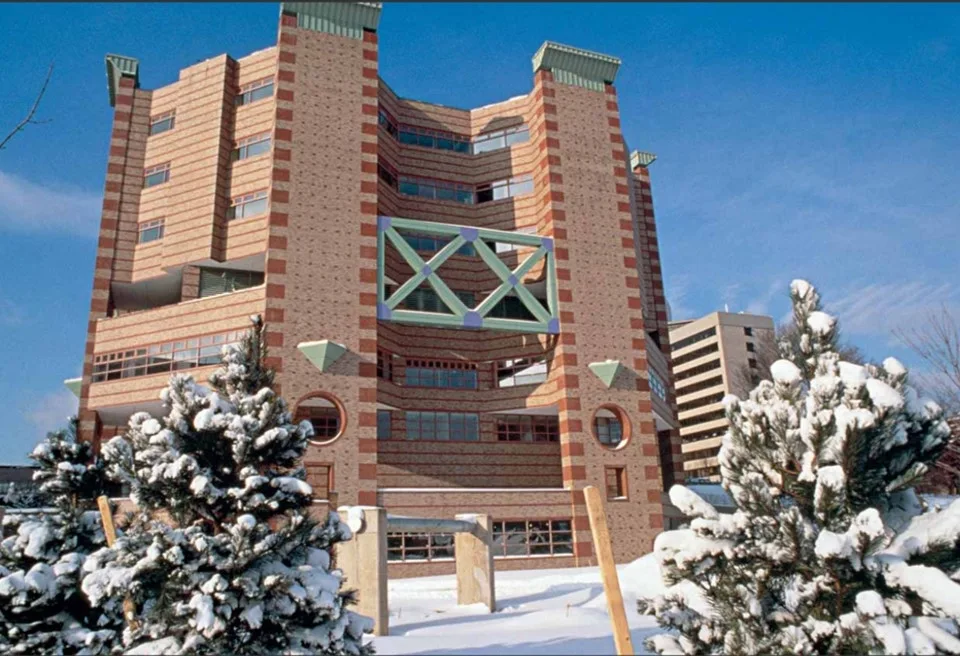
Hasbro Children's Hospital, Providence. Photo by Francois Luks, CC BY-SA 4.0, via Wikimedia Commons
The 2000 review behind the high end of the prevalence range came out of Brown University's Department of Molecular and Cell Biology and Biochemistry in Providence. One of its authors, Anne Fausto-Sterling, is now Nancy Duke Lewis Professor Emerita of Biology at Brown. Her 1993 essay, "The Five Sexes," drew the letter that announced ISNA (Room 4). Verified
In Rhode Island today, the TGI Network names intersex people in its mission. That mission is "to serve the needs of the Transgender, Gender diverse, and Intersex (TGI) communities" in "Rhode Island and surrounding areas through support, advocacy, and education." Verified
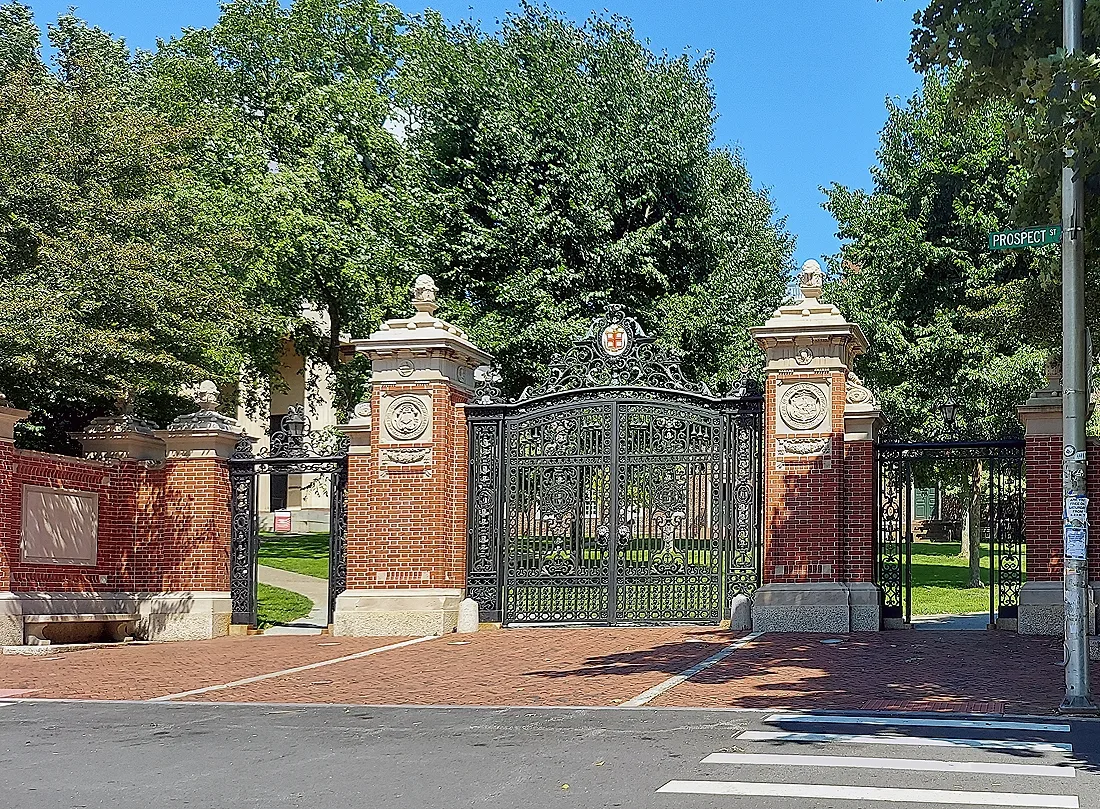
Van Wickle Gates, Brown University. Photo by P. Hughes, CC BY-SA 4.0, via Wikimedia Commons
In October 2026, for Intersex Awareness Day, the Network published "The Picket Outside the Pediatricians," a history of the 1996 Boston protest. One line from it bears repeating here: "And if you are intersex and reading this on the South Coast, the Network is yours." Verified
The Network's groups meet in New Bedford and Taunton, its New Bedford space is at 558 Pleasant Street, Suite 306, and its line for calls or texts is 774-775-2656. Verified
Taunton Green, Taunton. Photo by Daderot, CC0, via Wikimedia Commons
Sources
Searches run Nov. 8, 2026, on southcoasttoday.com, heraldnews.com, newbedfordlight.org, fallriverreporter.com, newbedfordguide.com, providencejournal.com, thepublicsradio.org, turnto10.com, and Library of Congress, Chronicling America, keyword "hermaphrodite," state Massachusetts (search log on file with the museum)
South Coast LGBTQ+ Network program record, Nov. 8, 2026 (New Bedford space, phone line, groups in New Bedford and Taunton)
Wikimedia Commons: File:Hasbro_Children's_Hospital_(the_Pediatric_Division_of_Rhode_Island_Hospital),_Providence,_RI.jpg, CC BY-SA 4.0; File:Brown_University_-_Van_Wickle_Gates.jpg, CC BY-SA 4.0; File:Taunton_Green_-_Taunton,Massachusetts-_DSC01848.jpg, CC0 1.0 (https://commons.wikimedia.org)
Room 8
Call or text 774-775-2656
Intersex people on the South Coast can call or text the Network at 774-775-2656 to put part of this history on the record. Their parents, siblings, partners and friends can call too, and so can the nurses, doctors and counselors who have cared for them here. When you call, ask about the museum.
These are the Network's consent rules for every interview, and they apply to every story told in this room.
A yes to an interview covers the conversation only, and quoting you or publishing what you said each needs its own yes.
How you are named is your choice, by your full name or by a description you approve, such as "a New Bedford parent," and that choice can change later.
The full draft comes to you before anything goes up, with at least seven days to read it, and any part of it, or all of it, can be fixed, cut or pulled.
A photo needs its own separate yes, and it covers only this exhibit unless you agree to more.
Anyone under 18 needs a parent or guardian's written consent as well as their own yes. Young people, unless both ask otherwise, are named by initials.
A change of mind is welcome at any time, including after your story is shared, and the Network has never refused a request to take a story down.
Nobody is named as intersex in this museum unless that person has chosen to say so.
If anything in this exhibit brings up something heavy, you can call or text 988 at any hour. LGBTQ+ young people can reach the Trevor Project at 1-866-488-7386 or by texting START to 678-678. The Network's own line is 774-775-2656.
Sources
South Coast LGBTQ+ Network, source consent and media release protocol
South Coast LGBTQ+ Network program record, phone line

 Museum